



 INFRA
INFRA
INFRA
INFRA
INFRA

When the SpaceX-12 rocket, developed by Elon Musk’s SpaceX, launches from Cape Canaveral, Florida, next week en route to the International Space Station National Lab, it’ll carry a new passenger: an Apollo 40 high-performance computer by Hewlett Packard Enterprise Co. specifically for use on journeys to faraway destinations such as Mars.
Call it an extreme example of edge computing, the distributed processing scenario that moves computation processes from central servers to endpoint devices in order to avoid shuttling data across a network.
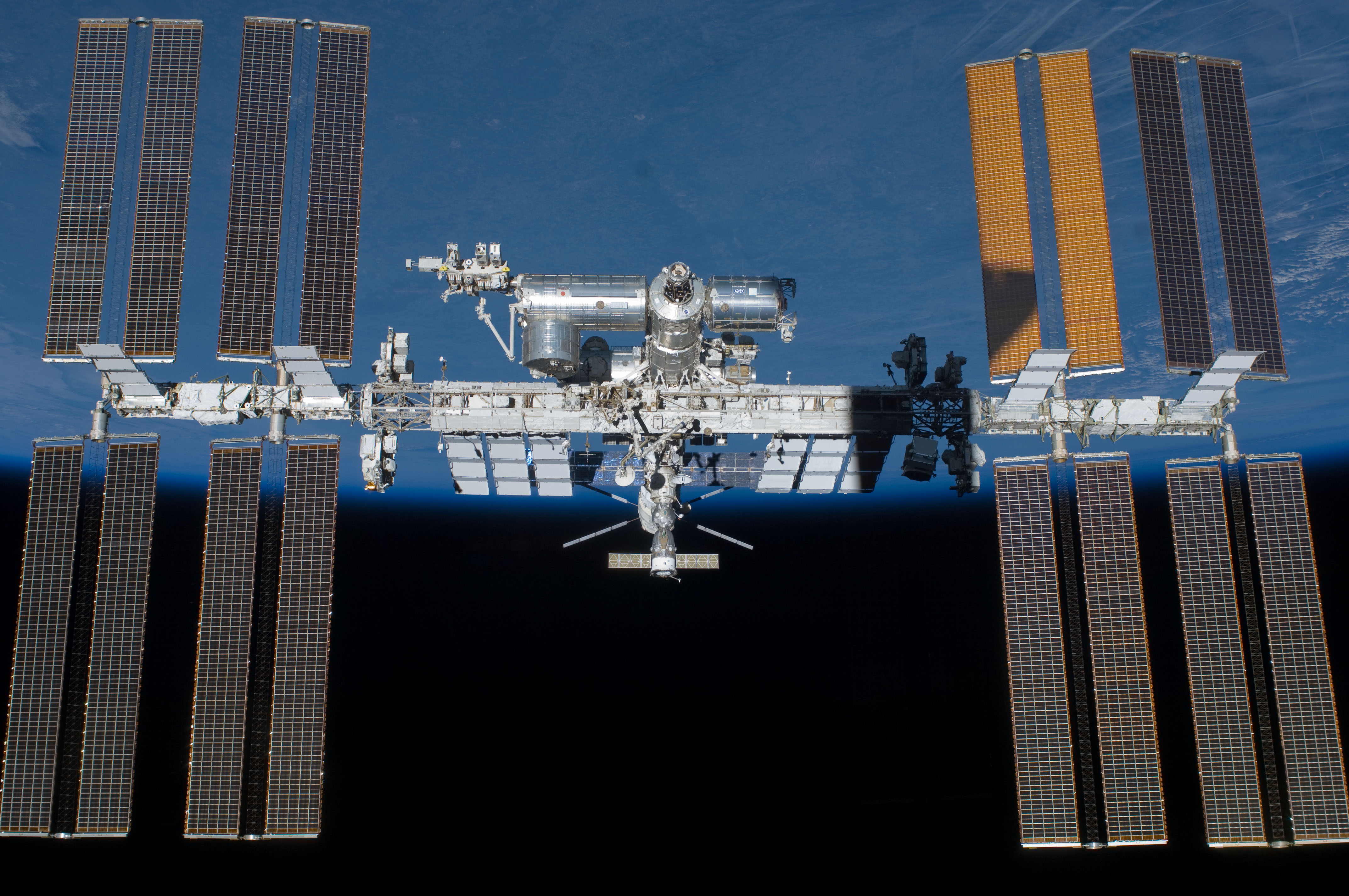
The Spaceborne Computer is part of a year-long experiment being conducted by HPE and NASA to evaluate the suitability of earthbound off-the-shelf computers to the unique challenges of space flight. The 12-month duration of the test at the space station (pictured) was chosen to coincide with the time it’s expected to take for missions to reach the red planet. “This is the first baby step toward a mission to Mars,” said Mark Fernandez, Americas technology officer of HPE’s Silicon Graphics International Corp. subsidiary.
Until now, most of the heavy lifting of computing in space has been done by systems on the ground, with results transmitted back and forth to the orbiter or moon lander. But Mars is too far away to make that approach practical. HPE estimates that data sent by a rocket ship traveling to Mars could take as much as 20 minutes to reach Earth, and another 20 minutes for a response to be returned. Such a scenario would be slow at best, dangerous at worst.
Space flight presents unusual demands that ground-based computers never see. Radiation, solar flares, subatomic particles and meteors are all moderated or deflected by the Earth’s atmosphere. There’s no telling what impact they’ll have on unshielded equipment. Power and temperature levels are also harder to control on board, where the heavy-duty line conditioning equipment of electrical grids and commercial HVAC systems are unavailable.
To cope with the uncertainty of power delivered via solar panels and onboard DC-to-AC converters, HPE developed system software that throttles power usage based on current conditions. The water-cooled supercomputer has a custom-built heat exchanger and a closed-loop circulation system that transfer heated water into an ammonia substrate that then releases it into space.
The system takes advantage of near-absolute-zero conditions outside the spacecraft to transfer chilled ammonia back to water for re-circulation to the computers. From an efficiency perspective, the setup rocks. “Our electricity is free and our cooling is free,” Fernandez said. “We have to divide by zero to calculate energy-efficiency.”
The HPE Apollo systems on this mission is an off-the-shelf, two-socket pizza box computer with Intel Corp. Broadwell processors and a 56 gigabit-per-second optical interconnect. It runs an unmodified version of Red Hat Inc.’s Linux. Engineers made some modifications, such as avoiding the use of copper wiring because of potential susceptibility to radiation. For the same reason, there are no spinning disks on board. The system has eight solid-state disks of varying size and speed for comparative testing of performance and durability.
The computer on this particular mission won’t be doing any operational work. Its sole task is to run a variety of benchmarks to determine performance and throughput. Researchers will also study computational accuracy since radiation and solar flares could potentially interfere with delicate electronic circuits and cause errors in calculations.
“One of our concerns is if all of the computers on board could come back with the same answers, but those answers are wrong,” Fernandez said. So researchers will use ground computers running the identical tasks as their space-borne counterparts to check for consistency.
The machine weighs 126 pounds, but that isn’t an issue in zero gravity. The bolts that attach it to the rack are a mere quarter-inch in size. “They certainly wouldn’t work on Earth,” Fernandez said. “Engineers focus on size, weight and power, but in this case, we have no weight.” That’s at least one thing researchers won’t be worrying about next week.
Image: NASA
… We’d like to tell you about our mission and how you can help us fulfill it. SiliconANGLE Media Inc.’s business model is based on the intrinsic value of the content, not advertising. Unlike many online publications, we don’t have a paywall or run banner advertising, because we want to keep our journalism open, without influence or the need to chase traffic.The journalism, reporting and commentary on SiliconANGLE — along with live, unscripted video from our Silicon Valley studio and globe-trotting video teams at theCUBE — take a lot of hard work, time and money. Keeping the quality high requires the support of sponsors who are aligned with our vision of ad-free journalism content.
If you like the reporting, video interviews and other ad-free content here, please take a moment to check out a sample of the video content supported by our sponsors, tweet your support, and keep coming back to SiliconANGLE.






