



 NEWS
NEWS
NEWS
NEWS
NEWS

The U.S. Department of Justice today amended a broad demand for information that sought to identity visitors to a website that had served as a conduit for protest planning during President Donald Trump’s inauguration.
Earlier this month, Justice had issued a warrant to web hosting provider DreamHost demanding that details be handed over on about 1.3 million people who had visited the website disruptj20.org.
The DoJ had requested that DreamHost provide IP addresses, email content, contact details and photos of the site’s visitors, something DreamHost called government overreach. “Regardless of your political affiliation, you should be concerned that anyone can be targeted for merely visiting a website legally disseminating political news,” DreamHost’s general counsel wrote in a blog post.
In a reply brief, U.S. Attorney Channing Phillips wrote that indeed the request was overreaching, but only because the government was unaware of what information DreamHost had regarding the website’s visitors. He wrote that the government only understood this after DreamHost had complained about the warrant.
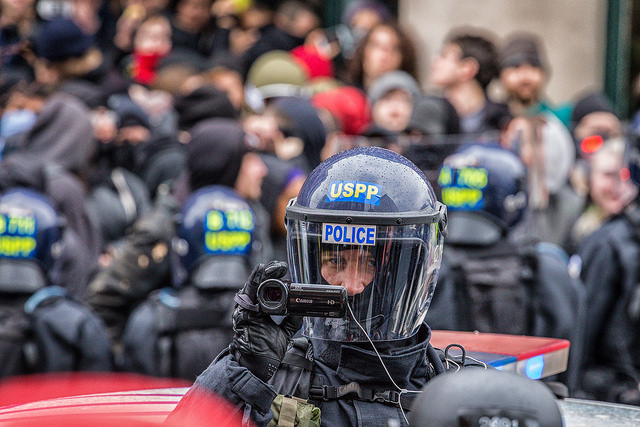
“The govemment [sic] values and respects the First Amendment right of all Americans to participate in peaceful political protests and to read protected political expression online. This Warrant has nothing to do with that right,” wrote Phillips. However, the brief explains that the First Amendment does not protect citizens when they are planning criminal acts, and the case in hand relates to premeditating a riot.
The brief further explains that the government had no interest in obtaining “records relating to the 1.3 million IP addresses that are mentioned in DreamHost’s numerous press releases and Opposition brief.” The DoJ now says it only wants information pertaining to those involved in any kind of criminal activity and so has modified the warrant.
In an interview with Gizmodo, the Electronic Frontier Foundation, which had called the initial request a “dragnet” and “unconstitutional,” said the move by the DoJ was not surprising. “Before it was more or less a dragnet and a witch hunt and now it’s just a witch hunt,” said EFF. “It’s substantially narrower but they’re still after a substantial amount of content.”
… We’d like to tell you about our mission and how you can help us fulfill it. SiliconANGLE Media Inc.’s business model is based on the intrinsic value of the content, not advertising. Unlike many online publications, we don’t have a paywall or run banner advertising, because we want to keep our journalism open, without influence or the need to chase traffic.The journalism, reporting and commentary on SiliconANGLE — along with live, unscripted video from our Silicon Valley studio and globe-trotting video teams at theCUBE — take a lot of hard work, time and money. Keeping the quality high requires the support of sponsors who are aligned with our vision of ad-free journalism content.
If you like the reporting, video interviews and other ad-free content here, please take a moment to check out a sample of the video content supported by our sponsors, tweet your support, and keep coming back to SiliconANGLE.






