



 NEWS
NEWS
NEWS
NEWS
NEWS

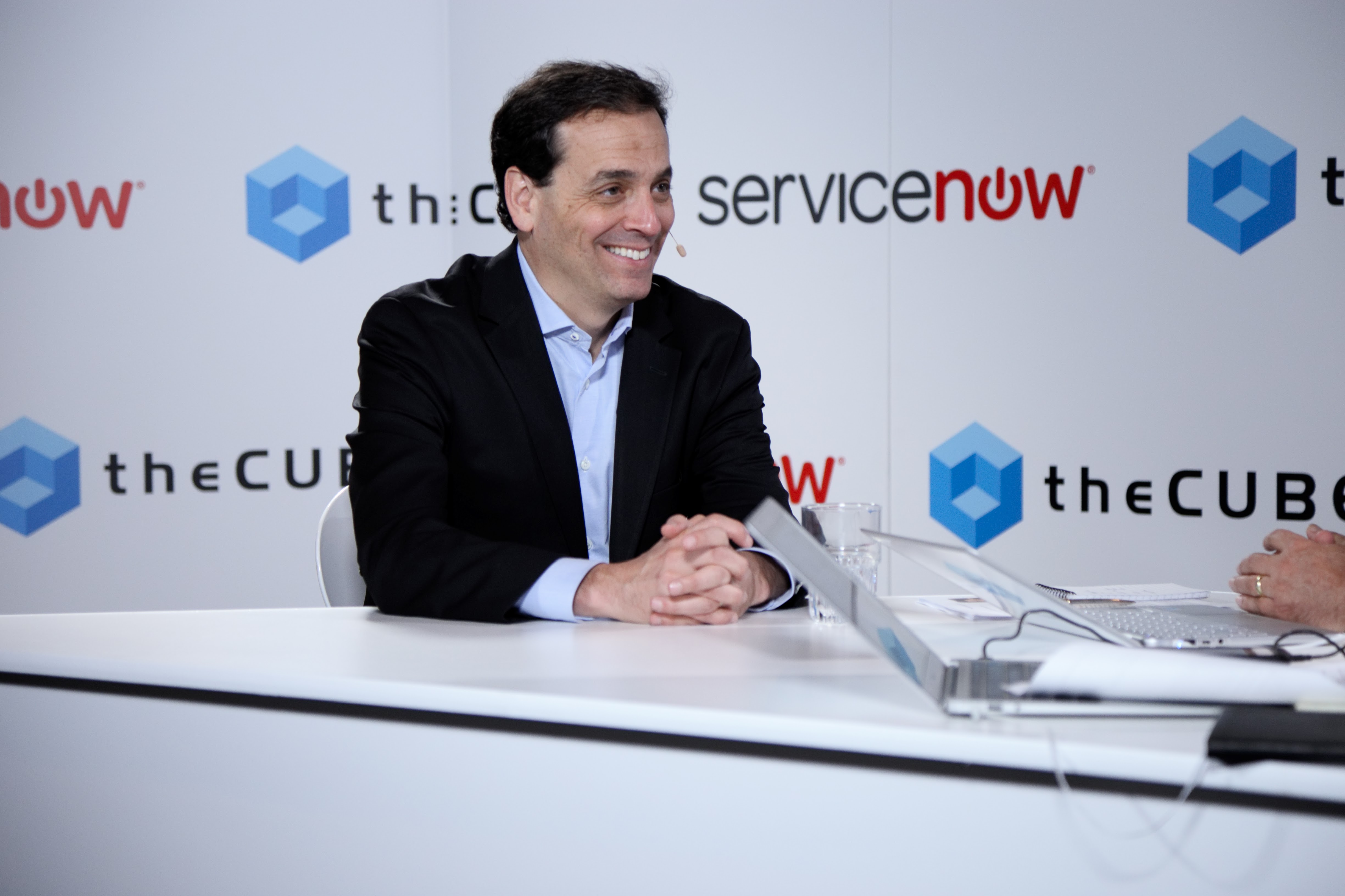
The abundance of information available today is radically changing the way people make life decisions, from dating to career selection to technology solutions, according to “New York Times” bestselling author Daniel Pink (pictured). In his book “To Sell Is Human: The Surprising Truth About Moving Others,” he describes how business leaders must fundamentally change the way they persuade their executive team, organizations and customers in the face of new information.
“Selling and buying for most of human civilization has been in a world of asymmetry where the seller always had more information than the buyer. When the seller has more information than the buyer, the seller can rip you off,” Pink said. “This is basically the history of commerce until about 10 years ago when all of a sudden we went from a world of information asymmetry to information parity — and it’s true for every domain.”
Pink spoke with Dave Vellante (@dvellante) and Jeff Frick (@JeffFrick), co-hosts of theCUBE, SiliconANGLE Media’s mobile livestreaming studio, at this year’s ServiceNow Knowledge17 event in Orlando, Florida. (* Disclosure below)
As the world shifts toward an information-driven operating models, business leaders, especially those in information technology, must adopt new practices in order to persuade other stakeholders. In addition to understanding perspectives from others and remaining confident in the face of rejection, curating information to drive a decision is paramount, according to Pink.
“Clarity has two dimensions. It used to be that if you had access to information you had an edge. Now everybody has access to information, and so the edge comes from being able to curate information and make sense of it, extract the signal from the noise,” Pink said.
IT professionals and solution providers must also change their value proposition to their customers in the face of an abundance of potential solutions to a given problem, he added.
“Problem solving is becoming less important, because if your customer knows exactly what the problem is, they can find a solution. The paradigm has shifted to the skill of problem finding; can you surface latent problems or look down the road and anticipate problems? That’s going to be incredibly important in this world of machine learning and AI,” Pink concluded.
Watch the complete video interview below, and be sure to check out more of SiliconANGLE’s and theCUBE’s coverage of ServiceNow Knowledge17. (* Disclosure: ServiceNow Inc. sponsored this Knowledge17 segment on SiliconANGLE Media’s theCUBE. Neither ServiceNow nor other sponsors have editorial control over content on theCUBE or SiliconANGLE.)
… We’d like to tell you about our mission and how you can help us fulfill it. SiliconANGLE Media Inc.’s business model is based on the intrinsic value of the content, not advertising. Unlike many online publications, we don’t have a paywall or run banner advertising, because we want to keep our journalism open, without influence or the need to chase traffic.The journalism, reporting and commentary on SiliconANGLE — along with live, unscripted video from our Silicon Valley studio and globe-trotting video teams at theCUBE — take a lot of hard work, time and money. Keeping the quality high requires the support of sponsors who are aligned with our vision of ad-free journalism content.
If you like the reporting, video interviews and other ad-free content here, please take a moment to check out a sample of the video content supported by our sponsors, tweet your support, and keep coming back to SiliconANGLE.






