



 INFRA
INFRA
INFRA
INFRA
INFRA

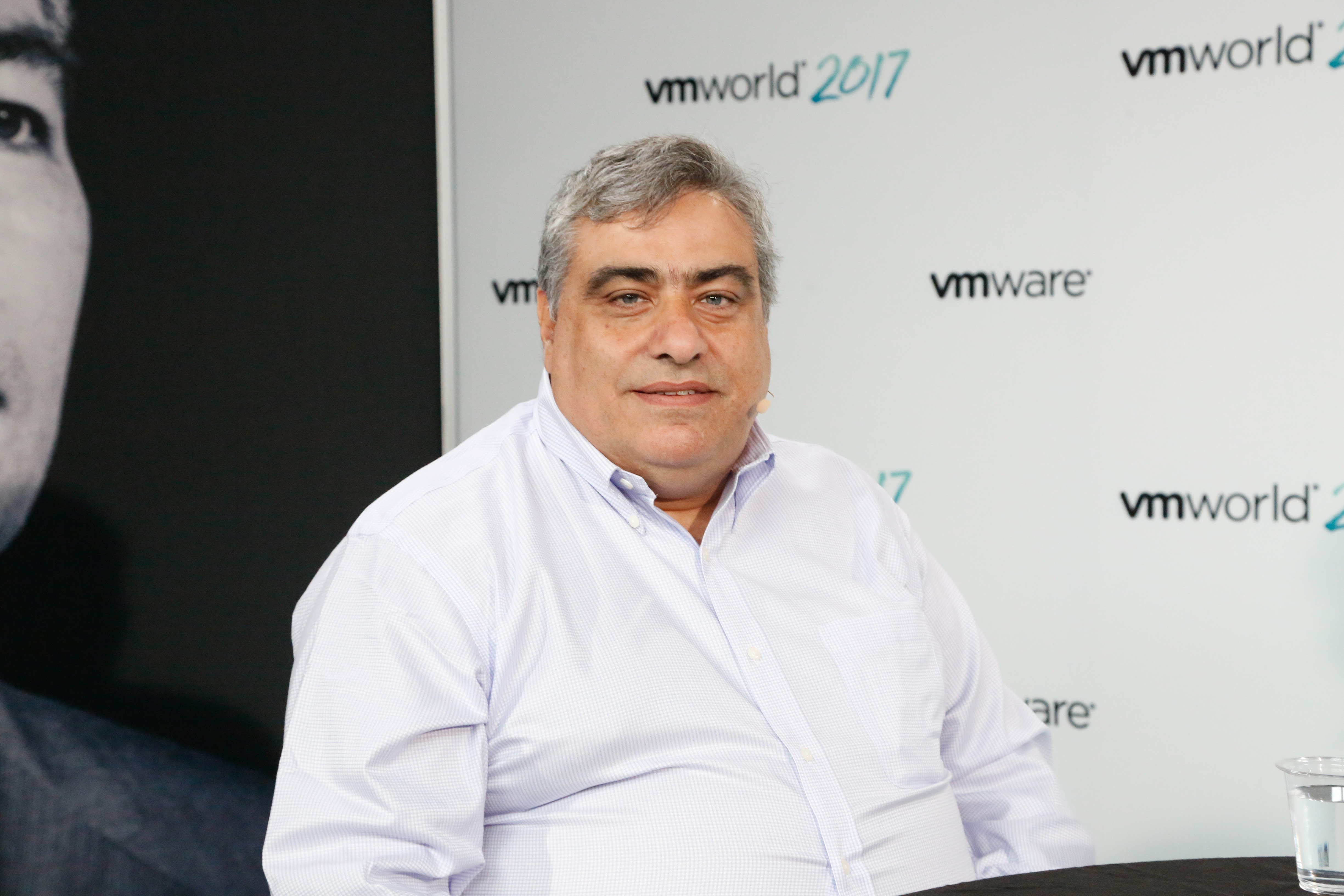
As the industry consolidates around a few cloud service providers, smaller companies are finding innovative ways to carve out market share by targeting niche, high-value use cases. Zadara Storage Inc., an enterprise storage as a service company, created an opex business model for providing storage hardware with some additional software hooks built in. Nelson Nahum (pictured), Zadara’s co-founder and chief executive officer, explained how the company’s hardware subscription model saves customers money while driving value up the stack.
“Last year at our company summit, we used to have a SAS 10K RPM drive — that was the enterprise drive. People had our system with those drives — maybe they started two years ago, maybe one year ago, maybe six months ago or even three months ago — but at some point we said, ‘You know what, we will provide flash at lower cost per Gb than spinning disk, and not only that, we will do the data migration online so that the customer will not feel anything. At the end of the migration, the customer will have higher performance flash, and guess what, at the end of the month the next invoice will go down,’” Nahum said.
Nahum spoke with host Lisa Martin (@LisaDaliMartin) and guest host John Troyer (@jtroyer) of theCUBE, SiliconANGLE Media’s mobile livestreaming studio, during this week’s VMworld in Las Vegas, Nevada. (* Disclosure below.)
Zadara’s opex-based business model for storage also connects nicely with the major cloud providers’ solutions. The company has integrations with Amazon Web Services Inc., Google Cloud and Microsoft Azure in a multi-tenant configuration that gives customers additional control over their stack, Nahum explained.
“Customers of ours have dedicated drive, dedicated controller and dedicated networking … can attach the cloud storage solution to their own active directory and will have all the capabilities that they would have on-premises,” Nahum said.
Zadara’s data storage solutions also allow custom Linux containers to reside entirely in their storage cloud, which provides additional functionality otherwise not available in a typical data instance, Nahum added.
“The other thing that is interesting with our service is that storage by definition you can write or read data but you cannot get an asynchronous notification, ‘Hey, a file was changed.’ But if you run the application in a Linux container inside the storage, then we provide this type of notification, and, say, each time a new file, JPEG, comes to the file system, we will notify the Linux container and the customer can trigger mini-applications or mini-services to do something with the data at zero latency,” Nahum stated.
Watch the complete video interview below, and be sure to check out more of SiliconANGLE’s and theCUBE’s coverage of VMworld 2017. (* Disclosure: TheCUBE is a paid media partner for VMworld 2017. Neither VMware Inc. nor Zadara Storage have editorial control over content on theCUBE or SiliconANGLE.)
… We’d like to tell you about our mission and how you can help us fulfill it. SiliconANGLE Media Inc.’s business model is based on the intrinsic value of the content, not advertising. Unlike many online publications, we don’t have a paywall or run banner advertising, because we want to keep our journalism open, without influence or the need to chase traffic.The journalism, reporting and commentary on SiliconANGLE — along with live, unscripted video from our Silicon Valley studio and globe-trotting video teams at theCUBE — take a lot of hard work, time and money. Keeping the quality high requires the support of sponsors who are aligned with our vision of ad-free journalism content.
If you like the reporting, video interviews and other ad-free content here, please take a moment to check out a sample of the video content supported by our sponsors, tweet your support, and keep coming back to SiliconANGLE.






