



 INFRA
INFRA
INFRA
INFRA
INFRA
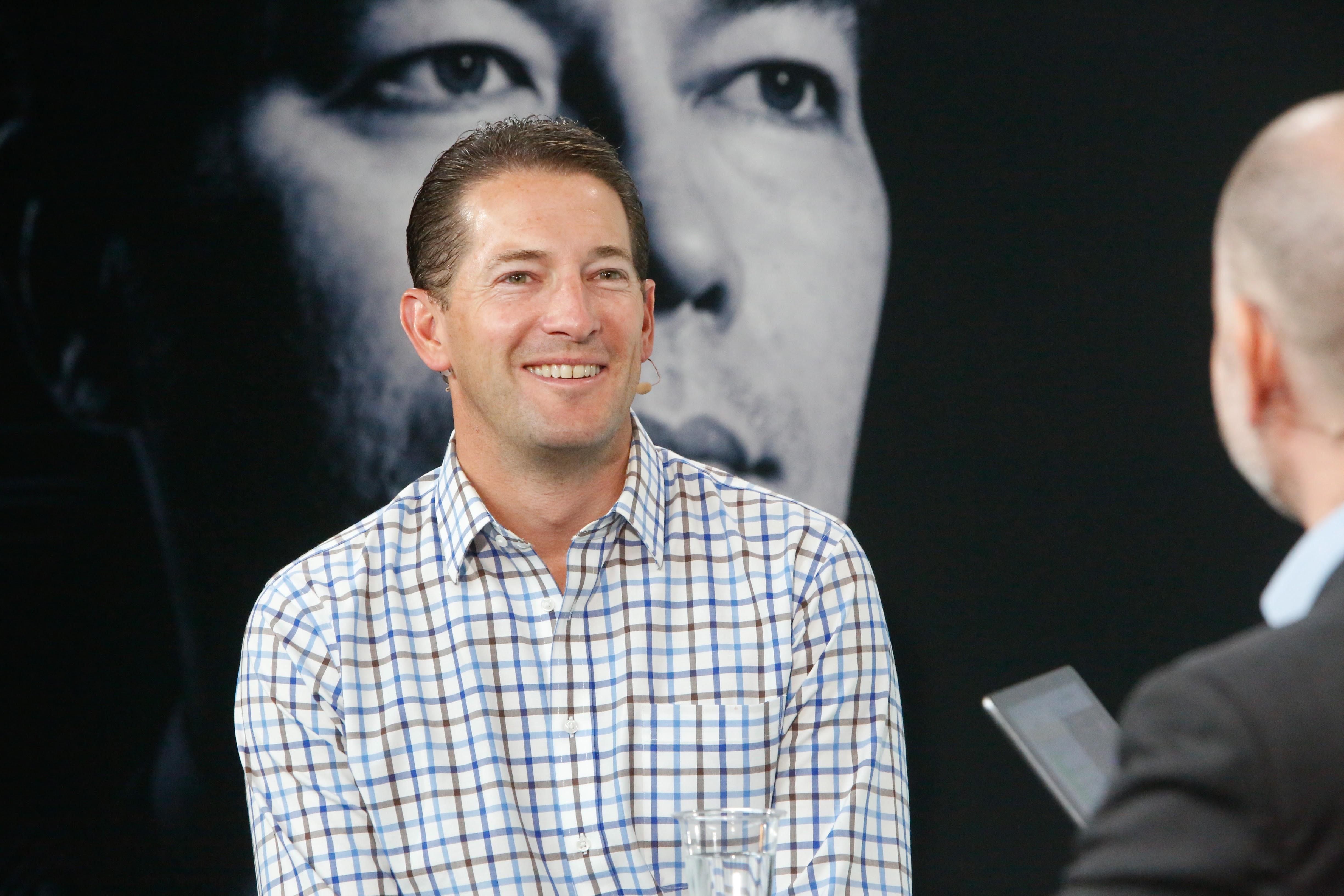
The diversity of use cases and application requirements make it impossible for a single infrastructure architecture to dominate the market. While many see this as a challenge, Steve Herrod (pictured), managing director at General Catalyst Partners, shared why he thinks this trend toward heterogeneous computing environments presents a great opportunity for innovation.
“The heterogeneity is now, ‘I am in a public cloud or a private cloud,’ or maybe, ‘Do I put my software into a container versus a VM [virtual machined]?’ So I always like looking at what is the heterogeneity and then what are real customers supposed to do with it, how do they navigate it and what companies can be built to sort of smooth it out?” Herrod said.
Herrod spoke with host Stu Miniman (@stu) and guest host Justin Warren (@jpwarren) on theCUBE, SiliconANGLE Media’s mobile live streaming studio, at this week’s VMworld in Las Vegas, Nevada. (* Disclosure below.)
There will always be a need to balance on-premises and public cloud computing stacks, according to Herrod. Where companies draw the line is highly dependent on the individual needs of the application.
“There’s always a swing back and forth between centralized and decentralized; I think what we’re really trying to figure out is what are the boundaries going to be between applications that live in the public cloud and applications that live on-premises,” Herrod said.
He also touched on the Internet of Things trend further decentralizing computing resources, by definition creating a mix of computing resources.
“There’s increasingly powerful devices, network connected, even further from the data center. So I think in the end we’re going to have these edge device things, you’re going to have your own data center and then you’re going to have a plethora of public clouds and SaaS [software as a service] offerings. Getting back to the master theme, how do you tame and let people effectively use these different layers and protect them?” Herrod asked.
While heterogeneous computing creates an integration challenge, Herrod thinks it also presents an opportunity for improving security by segmenting individual resources from each other.
“I’m really obsessed with this notion of ‘OK, we’re always going to try and stop the bad stuff from hitting, but now we have to stop it from doing damage once it’s in.’ That’s where whether it’s the segmentation that goes on in the network or whether it’s ‘I have companies that are really focused on doing it in web browsers.’ The notion that you really have to sandbox and really keep things in their place is going to be a big step forward,” Herrod concluded.
Watch the complete video interview below, and be sure to check out more of SiliconANGLE’s and theCUBE’s coverage of VMworld 2017. (* Disclosure: TheCUBE is a paid media partner for VMworld 2017. Neither VMware Inc. nor other sponsors have editorial control over content on theCUBE or SiliconANGLE.)
… We’d like to tell you about our mission and how you can help us fulfill it. SiliconANGLE Media Inc.’s business model is based on the intrinsic value of the content, not advertising. Unlike many online publications, we don’t have a paywall or run banner advertising, because we want to keep our journalism open, without influence or the need to chase traffic.The journalism, reporting and commentary on SiliconANGLE — along with live, unscripted video from our Silicon Valley studio and globe-trotting video teams at theCUBE — take a lot of hard work, time and money. Keeping the quality high requires the support of sponsors who are aligned with our vision of ad-free journalism content.
If you like the reporting, video interviews and other ad-free content here, please take a moment to check out a sample of the video content supported by our sponsors, tweet your support, and keep coming back to SiliconANGLE.






