



 CLOUD
CLOUD
CLOUD
CLOUD
CLOUD

After two years of work, the Open Container Initiative launched Version 1.0 for container runtime and image specifications in July. OCI’s foundation, formed by a number of container industry leaders, was tasked with the mission to create specifications that would support container portability across different operating systems and platforms. Red Hat Inc.’s chief technologist likes the specifications that he’s seen so far.
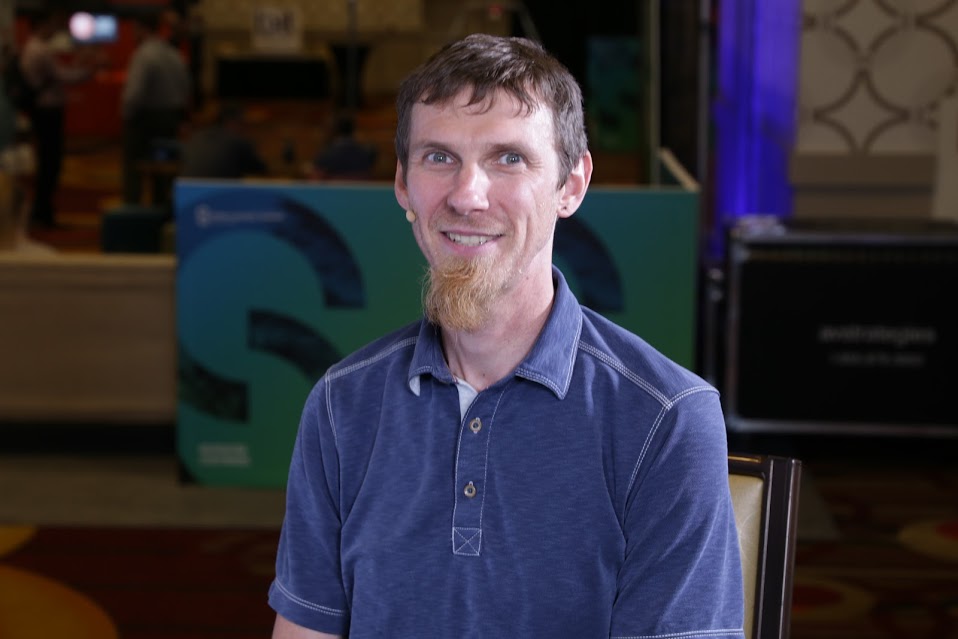
“We had some initial code associated with those specifications as part of the OCI project and expectations that we’d get further adoptions from other parts of the ecosystem, and we’re seeing the evidence of that happening today,” said Chris Wright (pictured), vice president and chief technologist, Office of Technology, at Red Hat. “It’s a great milestone.”
Wright paid a visit to theCUBE, SiliconANGLE’s mobile livestreaming studio, and spoke with co-hosts John Furrier (@furrier) and Stu Miniman (@stu) during this week’s Open Source Summit in Los Angeles. They discussed the importance of standardized container functions, a move toward serverless computing and Red Hat’s interest in distributed systems. (* Disclosure below.)
Part of the movement toward OCI is a need for standardization so that containerized images can be functional. Developers want to feel confident that the tools they build for the container space will run in a standards-compliant environment.
“We’re working in major industry trends at this point, and containers are a huge part of the industry,” Wright explained. “Ease of use and the ability to move quickly is a big driving force behind the container space.”
Enterprise interest in serverless computing, where pricing shifts to application resources instead of used capacity, is also driving interest in containers. “The container environment is a great place to host the runtime that’s supporting the serverless environment,” Wright said. “There’s a server involved, but you’re just not managing it as the application developer.”
Red Hat Enterprise Linux has a number of elements designed to facilitate scalability through distributed computing. This continues to be a key area of focus in the company’s work with developers, but it’s also a difficult technology.
“One of the things we’re trying to do is make distributed systems accessible to the broad enterprise developer population,” Wright said. “It’s a challenging space to work in.”
Watch the complete video interview below, and be sure to check out more of SiliconANGLE’s and theCUBE’s coverage of Open Source Summit 2017. (* Disclosure: TheCUBE is a paid media partner for Open Source Summit 2017. Neither The Linux Foundation nor Red Hat Inc. have editorial control over content on theCUBE or SiliconANGLE.)
… We’d like to tell you about our mission and how you can help us fulfill it. SiliconANGLE Media Inc.’s business model is based on the intrinsic value of the content, not advertising. Unlike many online publications, we don’t have a paywall or run banner advertising, because we want to keep our journalism open, without influence or the need to chase traffic.The journalism, reporting and commentary on SiliconANGLE — along with live, unscripted video from our Silicon Valley studio and globe-trotting video teams at theCUBE — take a lot of hard work, time and money. Keeping the quality high requires the support of sponsors who are aligned with our vision of ad-free journalism content.
If you like the reporting, video interviews and other ad-free content here, please take a moment to check out a sample of the video content supported by our sponsors, tweet your support, and keep coming back to SiliconANGLE.






