



 BIG DATA
BIG DATA
BIG DATA
BIG DATA

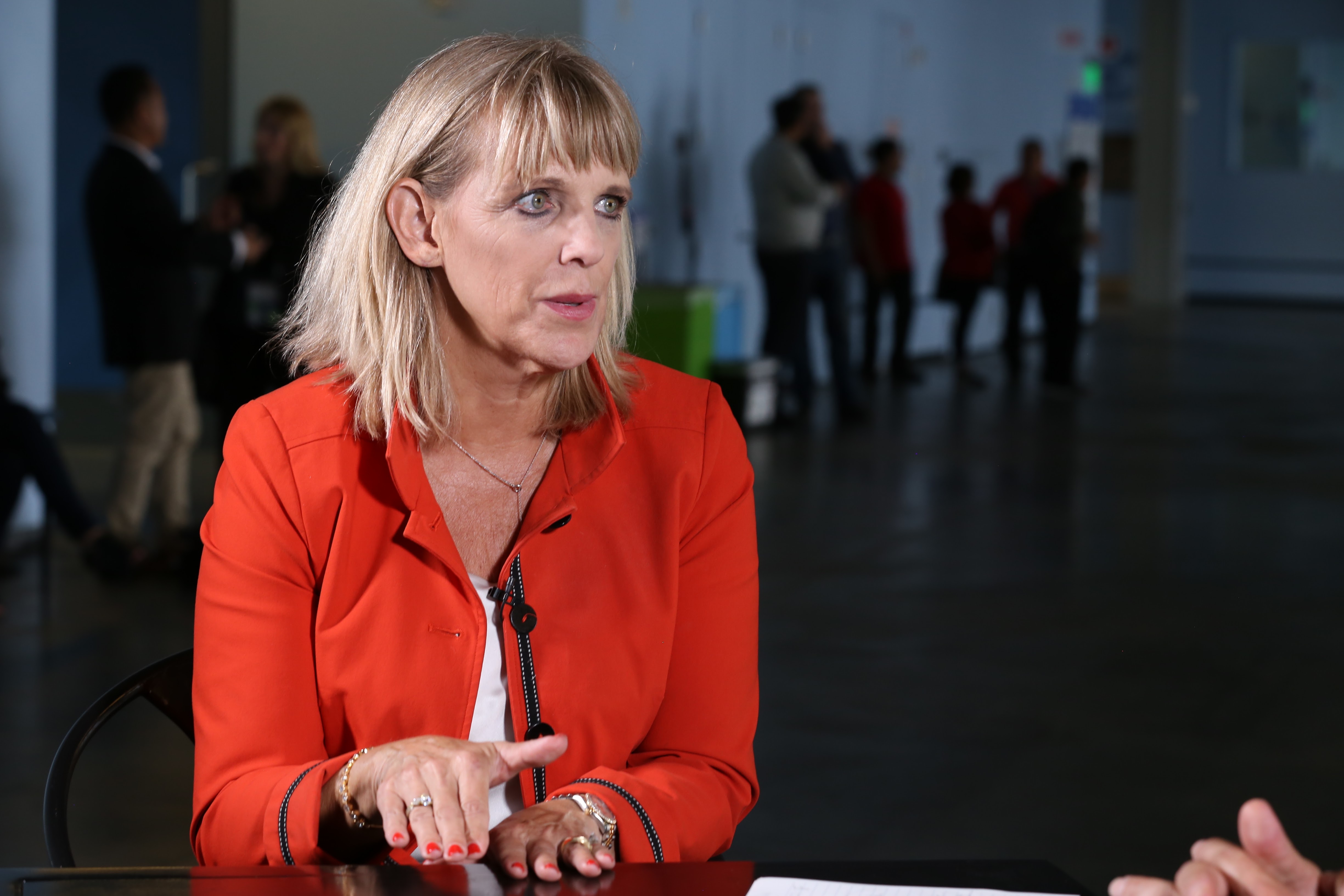
The role of the chief information officer has become increasingly nebulous as more departments within a company turn to information technology to run better and grow faster. The flow of data between these organizations not only needs to be efficient, but secure and seamless. Symantec Corp. Chief Information Officer Sheila Jordan (pictured) is in a unique position as an information technology leader at a security company to offer perspective on her role and the latest trends in the industry.
“Any CIO has the obligation to help the organization run, change and grow. Forward-thinking CEOs really understand that technology cannot only be used to run the company … but how do you use the technology to change and grow?” Jordan said.
Jordan spoke with Jeff Frick (@jefffrick), host of theCUBE, SiliconANGLE Media’s mobile livestreaming studio, during the recent PagerDuty Summit in San Francisco about her responsibility as CIO. (* Disclosure below.)
The role of a CIO to protect company assets hasn’t changed over the past years, Jordan stated. These assets include data from customers, employees and partners. What has changed, however, is the way in which these assets are managed.
“Five or seven years ago, it was these monolithic private data centers, on-premises physical data centers, massive monolithic PCs — all of that has changed,” Jordan said. “Now we’ve got to think about [software as a service] applications, cloud, infrastructure as a service, public cloud on the infrastructure side. We think about all the applications that are coming in on our mobile devices. We think about [the Internet of Things]. We think about structured and unstructured data.”
Being a CIO at a security company gives Jordan the added perspective of understanding where the IT security industry is moving next. This insight helps her executive team make more informed decisions about their product development strategy.
“Our recent report would suggest that a large enterprise has anywhere between 65 and 85 security products in their enterprise,” Jordan said. “The white spaces between those fragmented products really are breeding grounds for the bad guys to come in and stay awhile and sit, watch and observe.”
One of the visions PagerDuty has to combat risk is an integrated cyber defense platform, Jordan concluded.
Watch the complete video interview below, and be sure to check out more of SiliconANGLE’s and theCUBE’s coverage of PagerDuty Summit. (* Disclosure: PagerDuty Inc. sponsored this segment on SiliconANGLE Media’s theCUBE. Neither PagerDuty nor other sponsors have editorial control over content on theCUBE or SiliconANGLE.)
… We’d like to tell you about our mission and how you can help us fulfill it. SiliconANGLE Media Inc.’s business model is based on the intrinsic value of the content, not advertising. Unlike many online publications, we don’t have a paywall or run banner advertising, because we want to keep our journalism open, without influence or the need to chase traffic.The journalism, reporting and commentary on SiliconANGLE — along with live, unscripted video from our Silicon Valley studio and globe-trotting video teams at theCUBE — take a lot of hard work, time and money. Keeping the quality high requires the support of sponsors who are aligned with our vision of ad-free journalism content.
If you like the reporting, video interviews and other ad-free content here, please take a moment to check out a sample of the video content supported by our sponsors, tweet your support, and keep coming back to SiliconANGLE.






