



 EMERGING TECH
EMERGING TECH
EMERGING TECH
EMERGING TECH

Two of the biggest players in the autonomous vehicle segment have been quietly collaborating for years.
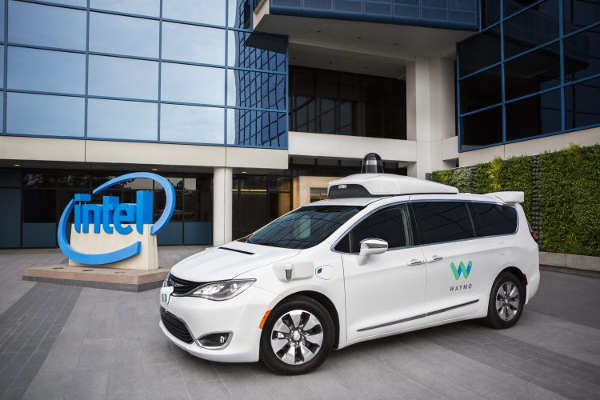
In a blog post published today, Intel Corp. Chief Executive Officer Brian Krzanich revealed the existence of a long-running partnership between his company and Waymo, Alphabet Inc.’s self-driving car division. The alliance reportedly dates all the way back to 2009, when the search giant started developing autonomous navigation technology.
“It’s a deep collaboration,” Krzanich said in an interview at the industry conference TechCrunch Disrupt today. That includes putting Waymo technology into Intel silicon, he said. “Together we think we’re going to build a product that is really capable.”
Intel most recently worked with Waymo to field a fleet of self-driving hybrid minivans. The project was born from a separate partnership with Fiat Chrysler Automobiles N.V. that the Alphabet subsidiary announced in 2016. On its end, the chip giant helped design and provided components for the navigation system that powers the vehicles.
According to Forbes, the minivans run on Intel’s server-grade Xeon processors and employ its Arria field-programmable gate arrays for image analysis. The imagery in question is presumably the visual feed from the sensors that the vehicles use to scan their surroundings. Waymo has opted to develop custom LIDAR systems instead of using off-the-shelf hardware as most other aspirants in the self-driving car segment do.
To top it off, Intel supplied the gigabit Ethernet adapters and modems that the vehicles employ to transmit data. Waymo’s fleet is set to include 100 minivans once it’s fully operational.
Yet while the partnership is certainly a significant revelation, the long-term opportunities that such an alliance could be expected to hold for Intel may not all materialize. One reason is that Google has a history of developing custom silicon for important projects.
Last year, the company revealed that it’s using a homegrown machine learning chip to support key services. Google could adopt the same approach with Waymo in the future and switch from Xeons to custom processors. In fact, it may have an outright incentive to do so given that Waymo competes with Mobileye, which Intel acquired for $15.3 billion earlier this year.
That said, the partnership is still valuable to the chip maker. The fact that Waymo chose Intel over rival Nvidia Corp. sends a strong signal to other players in the self-driving car ecosystem. That’s significant in light of the chip makers’ ongoing race to recruit auto industry allies for their respective autonomous navigation initiatives.
Plus, Intel’s engineers no doubt gained valuable lessons as part of the collaboration with Waymo that could be carried over to other projects. Krzanich wrote in his blog post that their jointly developed vehicles have clocked 3 million miles on the road so far, more than any other autonomous fleet.
With reporting from Robert Hof
… We’d like to tell you about our mission and how you can help us fulfill it. SiliconANGLE Media Inc.’s business model is based on the intrinsic value of the content, not advertising. Unlike many online publications, we don’t have a paywall or run banner advertising, because we want to keep our journalism open, without influence or the need to chase traffic.The journalism, reporting and commentary on SiliconANGLE — along with live, unscripted video from our Silicon Valley studio and globe-trotting video teams at theCUBE — take a lot of hard work, time and money. Keeping the quality high requires the support of sponsors who are aligned with our vision of ad-free journalism content.
If you like the reporting, video interviews and other ad-free content here, please take a moment to check out a sample of the video content supported by our sponsors, tweet your support, and keep coming back to SiliconANGLE.






