



 CLOUD
CLOUD
CLOUD
CLOUD
CLOUD

Hewlett Packard Enterprise Co.’s acquisition of flash array company Nimble Storage in April was like reaching into a bowl of candy and pulling out three treats instead of only one. For $1.2 billion, HPE added all-flash and hybrid flash/disk array lines, the ability to store data in the public or private cloud near big provider data centers, and a predictive analytics package. It was HPE’s answer for customers who were futilely trying to attack availability problems with traditional data protection architectures.
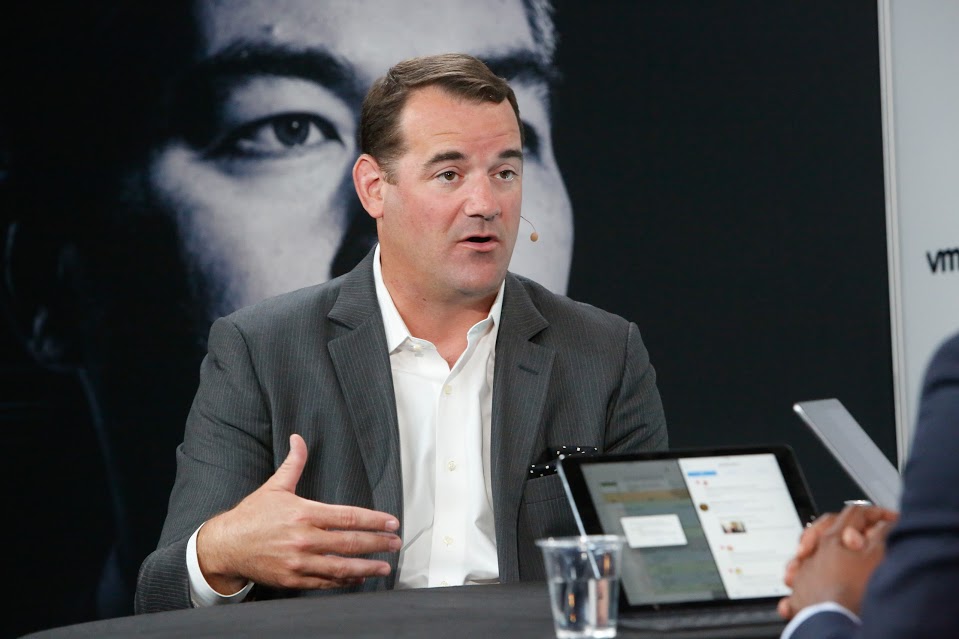
“Customers are definitely rethinking the way they’re doing availability from an application standpoint. We’re trying to meet those demands through our own technology, as well as having a robust ecosystem that we partner with,” said Patrick Osborne (pictured), senior director of product management and marketing at HPE.
Osborne paid a visit to theCUBE, SiliconANGLE’s mobile livestreaming studio, and spoke with host Stu Miniman (@stu) and guest host Keith Townsend (@CTOAdvisor) during the VMworld conference in Las Vegas, Nevada. They discussed the role of Nimble Cloud Volumes in the product portfolio, future plans for predictive analytics, and how HPE is positioning itself for edge computing and Internet of Things. (* Disclosure below.)
A key component of the acquisition was Nimble Cloud Volumes, an enterprise-grade multicloud service for storage that is capable of running applications in both Microsoft Azure and Amazon Web Services. “That’s a use case for primary storage but can easily be extended to backup, data protection and object storage,” Osborne said.
The Nimble acquisition also brought InfoSight, a predictive analytics platform that can monitor sensor data and process it using cloud-based analytics. In a recent interview, HPE’s chief executive, Meg Whitman, said that the company would roll out InfoSight to the 3PAR storage system first and then to its server line. This plan was further reinforced by Osborne.
“Infosight, predictive analytics, is something that we want to apply to our entire product line, hands down,” he said.
HPE is also pushing forward with a number of IoT initiatives as the trend continues toward a large build-up of data at the edge. The company is leveraging a strategy that offers an end-to-end solution based on its own technology and that of its partners as well.
“We want to provide a full stack for edge IoT, but from a data protection and availability standpoint it’s a difficult problem to solve,” Osborne concluded.
Watch the complete video interview below, and be sure to check out more of SiliconANGLE’s and theCUBE’s coverage of VMworld 2017. (* Disclosure: TheCUBE is a paid media partner for VMworld 2017. Neither VMware Inc. nor Hewlett Packard Enterprise Co. have editorial control over content on theCUBE or SiliconANGLE.)
… We’d like to tell you about our mission and how you can help us fulfill it. SiliconANGLE Media Inc.’s business model is based on the intrinsic value of the content, not advertising. Unlike many online publications, we don’t have a paywall or run banner advertising, because we want to keep our journalism open, without influence or the need to chase traffic.The journalism, reporting and commentary on SiliconANGLE — along with live, unscripted video from our Silicon Valley studio and globe-trotting video teams at theCUBE — take a lot of hard work, time and money. Keeping the quality high requires the support of sponsors who are aligned with our vision of ad-free journalism content.
If you like the reporting, video interviews and other ad-free content here, please take a moment to check out a sample of the video content supported by our sponsors, tweet your support, and keep coming back to SiliconANGLE.






