 BIG DATA
BIG DATA
BIG DATA







BIG DATA

Splunk Inc., best know for software that monitors and analyzes machine-generated big data, has joined the movement toward intelligent edge computing. It etched out its (not fully baked) plans to enable data analytics at “internet of things” end points today during the Splunk .conf2017 in Washington, D.C.
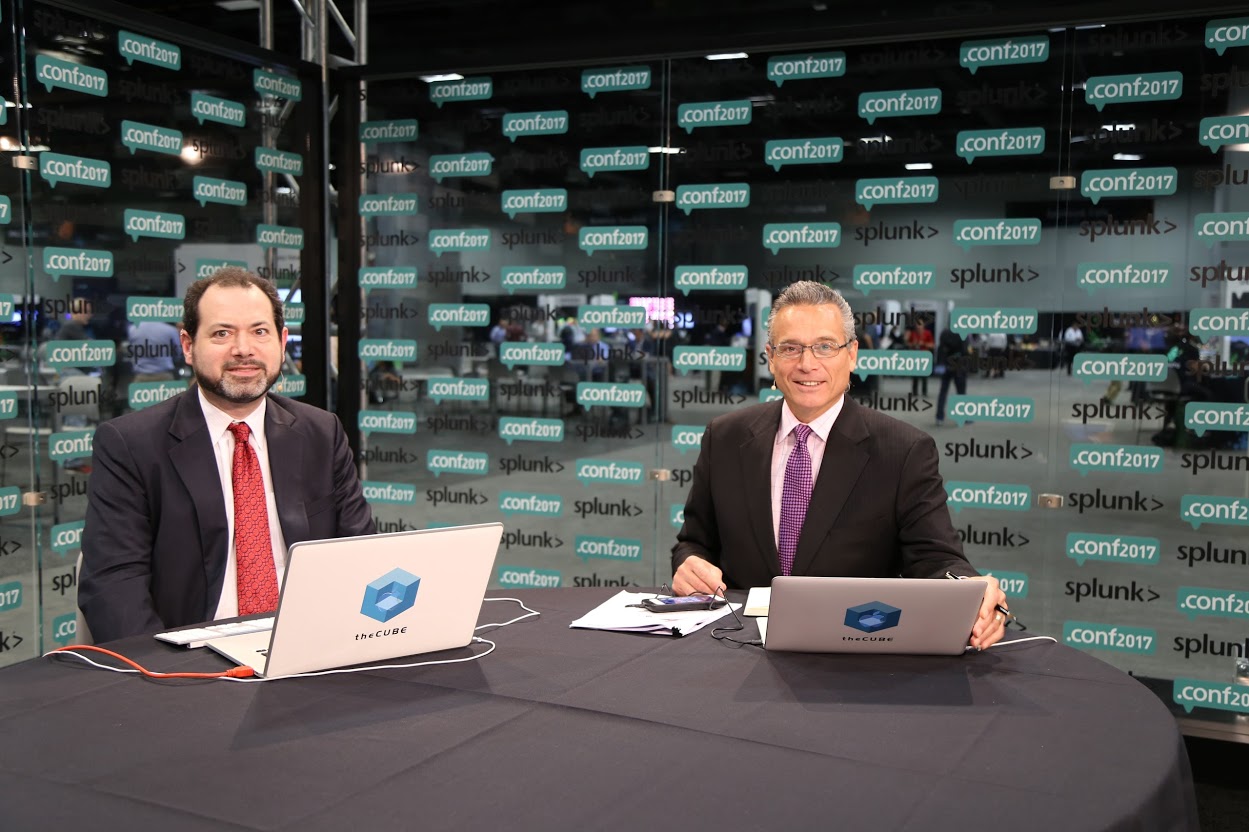
Splunk does not yet offer much in the way of edge computing — its current architecture necessitates a back-and-forth trip to a data center or cloud for analytics. “But they know that doesn’t work, because in a world of industrial assets and of consumer devices, you’re producing so many more devices,” said George Gilbert (@ggilbert41) (pictured, left), co-host of theCUBE, SiliconANGLE Media’s mobile livestreaming studio.
Gilbert took a close look at Splunk’s edge projections during this week’s conference with co-host Dave Vellante (@dvellante) (pictured, right). (* Disclosure below.)
All of these internet of things devices generate a blizzard of data at the edge. “You cannot, for latency and bandwidth reasons, send that all to the cloud to get an answer and then send it all back,” Gilbert said. This is why Wikibon Analyst and Chief Technology Officer David Floyer recently wrote that “95 percent of internet of things data will live and die at the edge, and this will grow to 99 percent over the next decade.”
Edge computing will not put cloud out to pasture. What Gilbert calls “the division of labor” sends anomalies that occur at the edge up to cloud for analysis. Through incorporating these instances, machine learning models get smarter.
“That research and refinement happens in the cloud, and when you think you have a good new model, you push it back out to the edge,” Gilbert said.
Many companies — from Pure Storage Inc. to VMware Inc. — are increasingly skewing their message toward the edge. Even Amazon Web Services Inc. has conceded that processing and analysis can occur in environments outside the AWS cloud, Vellante noted.
“Interesting to hear AWS acknowledge that, whereas five to six years ago, their dogma was: Everything goes into the cloud,” Vellante concluded.
Watch the complete video interview below, and be sure to check out more of SiliconANGLE’s and theCUBE’s coverage of Splunk .conf2017. (* Disclosure: Splunk Inc. sponsored this segment of theCUBE. Neither Splunk nor other sponsors have editorial control over content on theCUBE or SiliconANGLE.)
Support our mission to keep content open and free by engaging with theCUBE community. Join theCUBE’s Alumni Trust Network, where technology leaders connect, share intelligence and create opportunities.
Founded by tech visionaries John Furrier and Dave Vellante, SiliconANGLE Media has built a dynamic ecosystem of industry-leading digital media brands that reach 15+ million elite tech professionals. Our new proprietary theCUBE AI Video Cloud is breaking ground in audience interaction, leveraging theCUBEai.com neural network to help technology companies make data-driven decisions and stay at the forefront of industry conversations.





