



 APPS
APPS
APPS
APPS
APPS

As with all product development, the key for developing an information technology service module is understanding the true needs the end users. In order to reduce any wasted development effort on an undesirable product, Air New Zealand Ltd. adopted a clever agile-based approach for determining the right IT product to build for its employees.
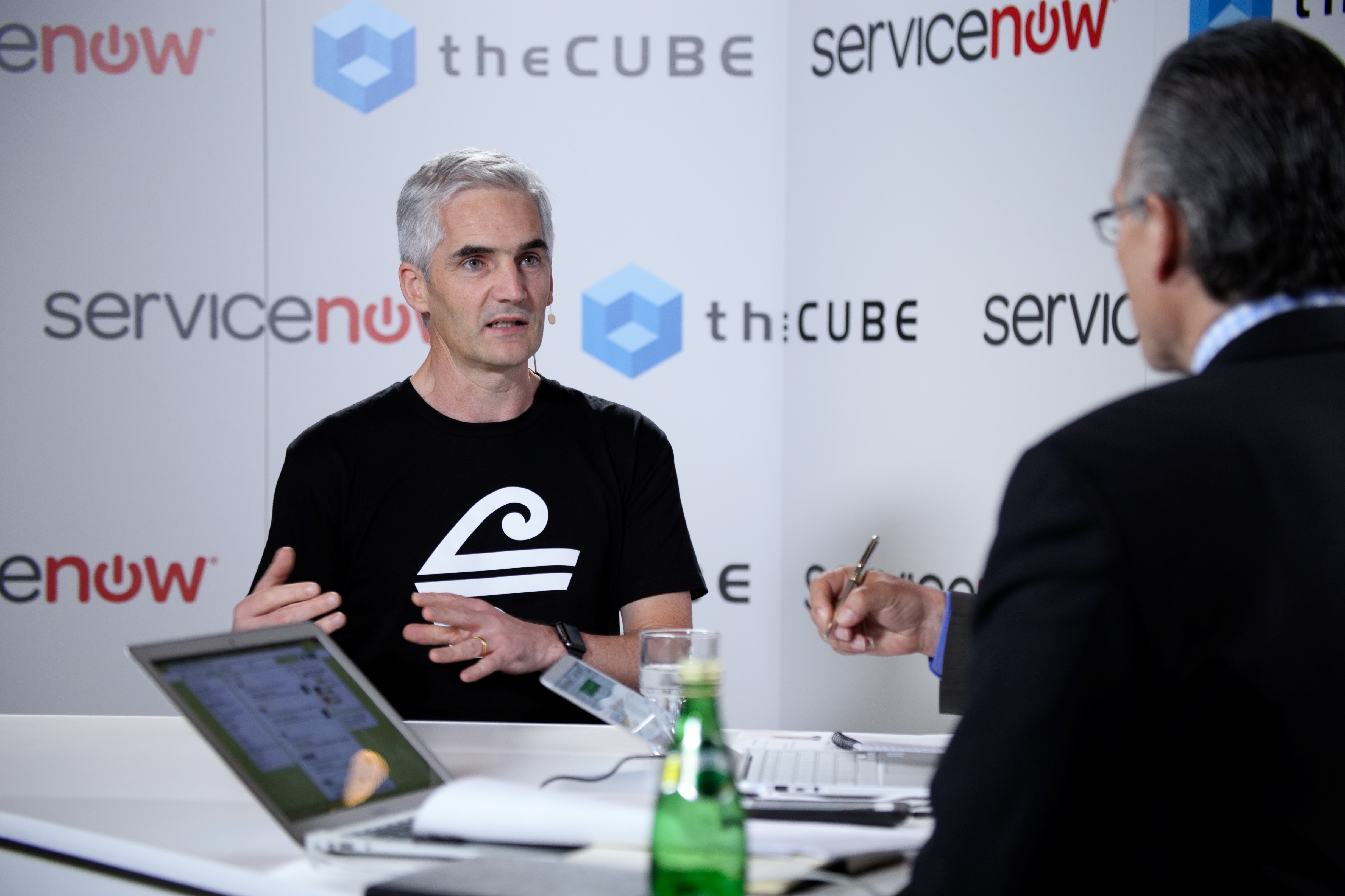
“We made a business organizational change, not just an IT project. It wasn’t IT delivering a product to the business; it was a business decision. We implemented change management. We brought in different skills, like agile ways of working, and we changed the product structure to suit,” said Rob McDonnell (pictured), head of enterprise products at Air New Zealand.
McDonnell, who manages the company’s internal software suite, spoke with Dave Vellante (@dvellante) and Jeff Frick (@JeffFrick), co-hosts of theCUBE, SiliconANGLE Media’s mobile livestreaming studio, during this year’s ServiceNow Knowledge17 event in Orlando, Florida. (* Disclosure below.)
Rather than forcing a new service product onto its internal customers, the Air New Zealand team actually did some in-depth user experience research using its existing product before transitioning the back-end platform to ServiceNow, McDonnell explained.
“We we trying to de-risk by learning more about what the experience was going to be for our customers, so we went live with a [ServiceNow] Helsinki product. In the interim, we took the existing platform, and we re-skinned it with a brand new look and feel around how we wanted our customers to experience service management,” McDonnell said.
This agile development approach saved the organization development cost in the long run by ensuring the new ServiceNow product was perfectly designed for its users from the get-go.
“We followed them and their role, rather than just rolling out a new product. So we re-skinned our existing product, and we reiterated and reiterated based on what they wanted changing the features. So we knew we had a really good product, and the day we went live, we basically just flipped a switch. … The product we went live with on the ServiceNow platform looked exactly like what we did when we de-risked it,” McDonnell concluded.
Watch the complete video interview below, and be sure to check out more of SiliconANGLE’s and theCUBE’s coverage of ServiceNow Knowledge17. (* Disclosure: ServiceNow Inc. sponsored this Knowledge17 segment on SiliconANGLE Media’s theCUBE. Neither ServiceNow nor other sponsors have editorial control over content on theCUBE or SiliconANGLE.)
… We’d like to tell you about our mission and how you can help us fulfill it. SiliconANGLE Media Inc.’s business model is based on the intrinsic value of the content, not advertising. Unlike many online publications, we don’t have a paywall or run banner advertising, because we want to keep our journalism open, without influence or the need to chase traffic.The journalism, reporting and commentary on SiliconANGLE — along with live, unscripted video from our Silicon Valley studio and globe-trotting video teams at theCUBE — take a lot of hard work, time and money. Keeping the quality high requires the support of sponsors who are aligned with our vision of ad-free journalism content.
If you like the reporting, video interviews and other ad-free content here, please take a moment to check out a sample of the video content supported by our sponsors, tweet your support, and keep coming back to SiliconANGLE.






