



 EMERGING TECH
EMERGING TECH
EMERGING TECH
EMERGING TECH

The U.S. Securities and Exchange Commission has finally taken its first serious action against dubious initial coin offerings by charging an operator behind two startups promoting coins linked to diamonds and real estate.
Maksim Zaslavskiy, whose location remains unclear, but according to his LinkedIn profile is running at least one of the initial coin offerings in San Juan, Puerto Rico, stands accused of selling unregistered securities and selling digital tokens or coins that don’t really exist. The SEC alleges that investors in REcoin Group Foundation and Diamond Reserve Club, have been told they can expect sizable returns from the companies’ operations when neither has any real operations.
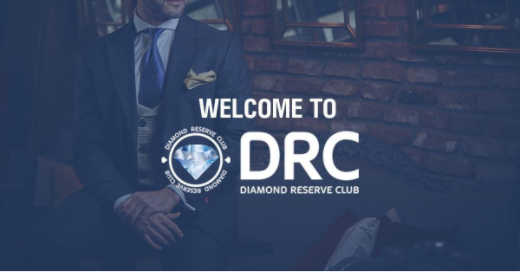
Diamond Reserve Club, as the name suggests, was being pitched as an ICO that would invest in diamonds while also obtaining discounts for individual investors. The SEC alleges that the company has never purchased diamonds despite telling investors that it had.
The second ICO, REcoin, was pitched as “The First Ever Cryptocurrency Backed by Real Estate” with claims that the company had already employed various professionals to invest the proceeds of the coin raise into real estate ventures. Like Diamond Reserve Club, the SEC claims that Zaslavskiy had employed no one and that he had also lied to potential investors in claiming the company had already raised between $2 million and $4 million when the real figure was $300,000.
The decision to take action against Zaslavskiy, which follows an announcement from the SEC in July that ICOs are subject to securities law, is the first of its type in the rapidly growing market.
What potentially could be interesting is that at least with Diamond World Club, the ICO was not selling equity in the company but “memberships.” This is notable because there were some suggestions that only ICOs making equity offerings were covered by the SEC ruling, not ICOs that were offering coins or tokens that could be redeemed for a product. A “membership” may fall in between the two, but at the same time it’s clearly not an equity raise, meaning that the SEC is now extending its scope to non-equity-based ICOs.
The SEC, on behalf of the U.S. government, may not be alone in taking action against rogue ICOs. News out of Switzerland on Friday suggested that the country’s Financial Market Supervisory Authority is investigating a number of Swiss ICOs “to determine whether regulatory provisions have been breached.”
Instead of investigating coin offerings for potential noncompliant or fraudulent behavior, China and South Korea have simply decided to ban ICOs outright.
… We’d like to tell you about our mission and how you can help us fulfill it. SiliconANGLE Media Inc.’s business model is based on the intrinsic value of the content, not advertising. Unlike many online publications, we don’t have a paywall or run banner advertising, because we want to keep our journalism open, without influence or the need to chase traffic.The journalism, reporting and commentary on SiliconANGLE — along with live, unscripted video from our Silicon Valley studio and globe-trotting video teams at theCUBE — take a lot of hard work, time and money. Keeping the quality high requires the support of sponsors who are aligned with our vision of ad-free journalism content.
If you like the reporting, video interviews and other ad-free content here, please take a moment to check out a sample of the video content supported by our sponsors, tweet your support, and keep coming back to SiliconANGLE.






