



 EMERGING TECH
EMERGING TECH
EMERGING TECH
EMERGING TECH

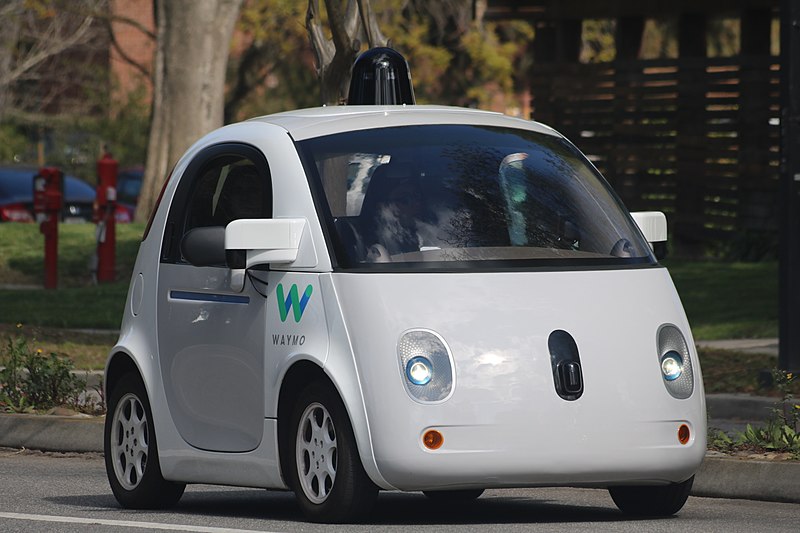
Waymo Inc. is fighting back against negative public sentiment about self-driving cars with a new “public education” campaign that is intended to sell the benefits.
The company, formerly known as Google LLC’s self-driving car project, has teamed with Mothers Against Drunk Driving, the National Safety Council, the Foundation for Blind Children, the East Valley Partnership and the Foundation for Senior Living to launch “Let’s Talk Self Driving,” a campaign that that will combine online and traditional forms of advertising to explain to the doubting masses that self-driving cars are not only safe but the future of transportation.
Unsurprisingly, the campaign is launching in Phoenix, Arizona, the same city Waymo started testing its self-driving car ride-hailing service in back in April. According to a report last week, Waymo is also on the verge of launching a full service with its self-driving cars that will compete with Uber Technologies Inc. in Phoenix. So it’s possible that the “education campaign” is really nothing more than a public relations blitz prior to the service going live.
“Education begins with awareness, so we’re starting this campaign with a series of digital, outdoor, and radio advertising in Arizona,” Waymo Chief Executive Officer John Krafcik said in a post on Medium. “In addition, the Let’s Talk Self-Driving website will be updated with additional resources about self-driving technology. Our hope is to grow this conversation into a national dialogue and provide opportunities for people to learn about, and get up close to, this technology.”
Playing the “human drivers are more dangerous” angle, Krafcik added that “when 94 percent of road crashes today involve human error, self-driving cars promise a future where anyone can ride with a driver that never gets drunk, tired, or distracted.”
Despite the promise of a safe, self-driving future, many people are still skeptical about the technology. A survey of 1,500 people in the U.S. and Germany by Gartner Consumer Trends in August found that 55 percent of the people they spoke to would not ride in a fully autonomous car, but 70 percent would ride in a car that was partially autonomous. A survey from Pew released last week found that while two-thirds of U.S. adults expect most cars to be driverless within the next half century, 56 percent said they would not ride in a driverless car if given the opportunity.
Given that level of consumer concern, an education campaign does make sense, even if it’s clear that Waymo is not running the campaign strictly for benevolent purposes but as much for its own commercial benefit.
… We’d like to tell you about our mission and how you can help us fulfill it. SiliconANGLE Media Inc.’s business model is based on the intrinsic value of the content, not advertising. Unlike many online publications, we don’t have a paywall or run banner advertising, because we want to keep our journalism open, without influence or the need to chase traffic.The journalism, reporting and commentary on SiliconANGLE — along with live, unscripted video from our Silicon Valley studio and globe-trotting video teams at theCUBE — take a lot of hard work, time and money. Keeping the quality high requires the support of sponsors who are aligned with our vision of ad-free journalism content.
If you like the reporting, video interviews and other ad-free content here, please take a moment to check out a sample of the video content supported by our sponsors, tweet your support, and keep coming back to SiliconANGLE.







