



 EMERGING TECH
EMERGING TECH
EMERGING TECH
EMERGING TECH

Although technologies such as augmented reality and virtual reality are considered to be in the earliest stages of consumer adoption, they offer significant potential to reshape brand marketing campaigns. AR on the mobile platform holds major promise as users embrace smartphone cameras, a key delivery vehicle for augmented reality content.
The premise behind AR is discovery and storytelling, seeking to appeal to the side of us that is curious and thirsts for knowledge. This is right in the wheelhouse of ethnographers, who study people and culture.
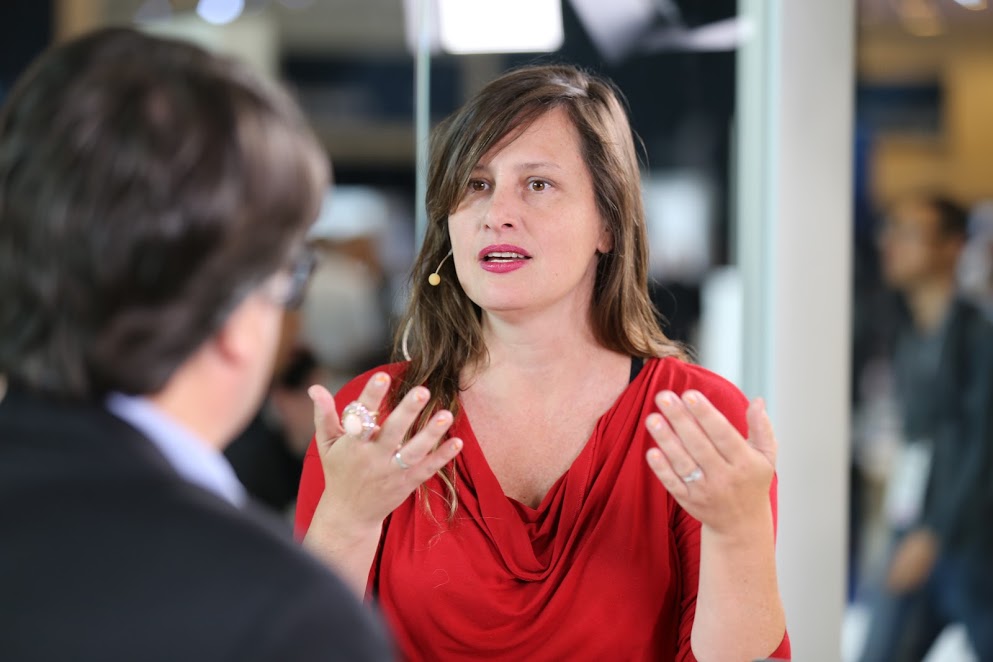
“Ethnography and social science are getting embedded into what people are creating now, and I’m thrilled to see that. We’re just at the cusp of it really taking hold for consumers,” said Leah Hunter (pictured), co-founder and chief executive officer of The Village Couture and a frequent contributor to Fast Company and Forbes.
Hunter paid a visit to the set of theCUBE, SiliconANGLE’s mobile livestreaming studio, and spoke with host John Furrier (@furrier) at the Samsung Developer Conference in San Francisco, California. They discussed the potential application of AR for industrial use and current tools available to developers in the space.
There are signs that AR could blossom soon and become a major force in digital communication. Recent reports have revealed a building set up by Facebook specifically to develop AR-related projects. Pokemon GO became a global AR-fueled craze last year as millions visually tracked digital creatures through a smartphone app. And industrial use cases, such as realistic digital renderings by Chevrolet, are growing as reported by Hunter who wrote a book on the subject.
“I discovered that industrial AR was the most powerful place to play, because there were real-world examples of AR actually helping people,” Hunter said.
There is also a nascent ecosystem of augmented reality platforms and tools for developers. Apple offers ARKit as its AR development platform, while Google has countered with ARCore to stimulate new products. The availability of platforms such as these encourages ethnographers like Hunter, but there is still a long way to go.
“It hasn’t completely lived up to expectations, but there has been a flurry of activity by people experimenting to see how it can be applied in a consumer way,” said Hunter in discussing ARKit. “It’s moving there, but it’s nowhere near ready yet.”
Watch the complete video interview below, and be sure to check out more of SiliconANGLE’s and theCUBE’s coverage of the Samsung Developer Conference.
… We’d like to tell you about our mission and how you can help us fulfill it. SiliconANGLE Media Inc.’s business model is based on the intrinsic value of the content, not advertising. Unlike many online publications, we don’t have a paywall or run banner advertising, because we want to keep our journalism open, without influence or the need to chase traffic.The journalism, reporting and commentary on SiliconANGLE — along with live, unscripted video from our Silicon Valley studio and globe-trotting video teams at theCUBE — take a lot of hard work, time and money. Keeping the quality high requires the support of sponsors who are aligned with our vision of ad-free journalism content.
If you like the reporting, video interviews and other ad-free content here, please take a moment to check out a sample of the video content supported by our sponsors, tweet your support, and keep coming back to SiliconANGLE.






