



 INFRA
INFRA
INFRA
INFRA
INFRA

Dell EMC is giving its hyperconverged infrastructure portfolio a major boost.
The data center equipment supplier, which operates under the Dell Technologies Inc. umbrella, today unveiled an upgraded version of the Dell EMC Cloud for Microsoft Azure Stack appliance. It combines server equipment, storage and networking gear in a chassis that comes installed with the Azure Stack software. The latter platform was developed by Microsoft Corp. to let companies create on-premises environments that replicate the features of its popular public cloud.
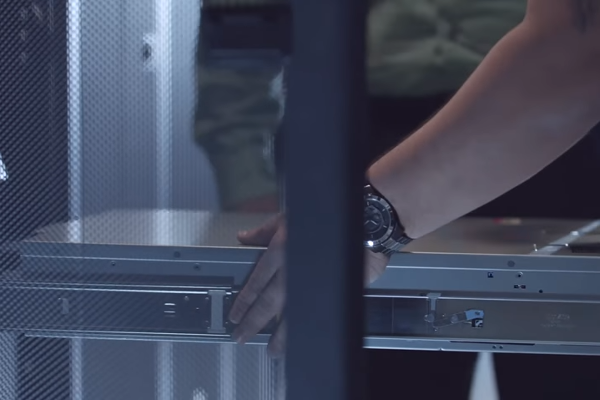
Dell EMC is one of several hardware suppliers that offer systems based on Azure Stack. The new version of the company’s appliance is based on the 14th generation PowerEdge server series (pictured) that it debuted earlier this year, which will in turn ship with Intel Corp.’s upcoming Xeon Scalable Processors. The new chips are touted as on average 165 percent faster than their predecessors.
This performance is reflected in the specifications of Dell EMC’s new appliance. According to the company, the system is capable of running about one and a half times more virtual machines than the previous model under comparable operational conditions.
The appliance also inherits the software enhancements that Intel has baked into the Xeon Scalable Processors. Among the most notable is the Key Protection Technology, a feature that provides the ability encrypt and decrypt data without having to store the cipher used for the task in the system memory. This makes it considerably more difficult for hackers to access the key.
Paul Galjan, an executive with Dell EMC, said he expects his company to be the first to market with an Azure Stack appliance powered by Intel’s latest-generation processors. The new system will go on sale next month and the first units are set to be shipped in December.
Dell EMC Cloud for Microsoft Azure Stack will be available in three configurations. Specifications range from 24 processing cores with 384 gigabytes of memory in the smallest model, to the largest model’s 48 cores and 657GB memory pool. Over in the storage department, the appliance offers up to 10 terabytes of disk capacity plus as much as 1920GB of flash for holding frequently accessed data.
… We’d like to tell you about our mission and how you can help us fulfill it. SiliconANGLE Media Inc.’s business model is based on the intrinsic value of the content, not advertising. Unlike many online publications, we don’t have a paywall or run banner advertising, because we want to keep our journalism open, without influence or the need to chase traffic.The journalism, reporting and commentary on SiliconANGLE — along with live, unscripted video from our Silicon Valley studio and globe-trotting video teams at theCUBE — take a lot of hard work, time and money. Keeping the quality high requires the support of sponsors who are aligned with our vision of ad-free journalism content.
If you like the reporting, video interviews and other ad-free content here, please take a moment to check out a sample of the video content supported by our sponsors, tweet your support, and keep coming back to SiliconANGLE.






