



 BIG DATA
BIG DATA
BIG DATA
BIG DATA

The inertia associated with large data sets has been problematic for software developers and operational practitioners looking to optimize performance or cost in their infrastructures. One recent initiative from data management company NetApp Inc., called Data Fabric, enables these historically large, high-inertia data sets to become highly mobile, giving more power to companies to do what’s right for their business.
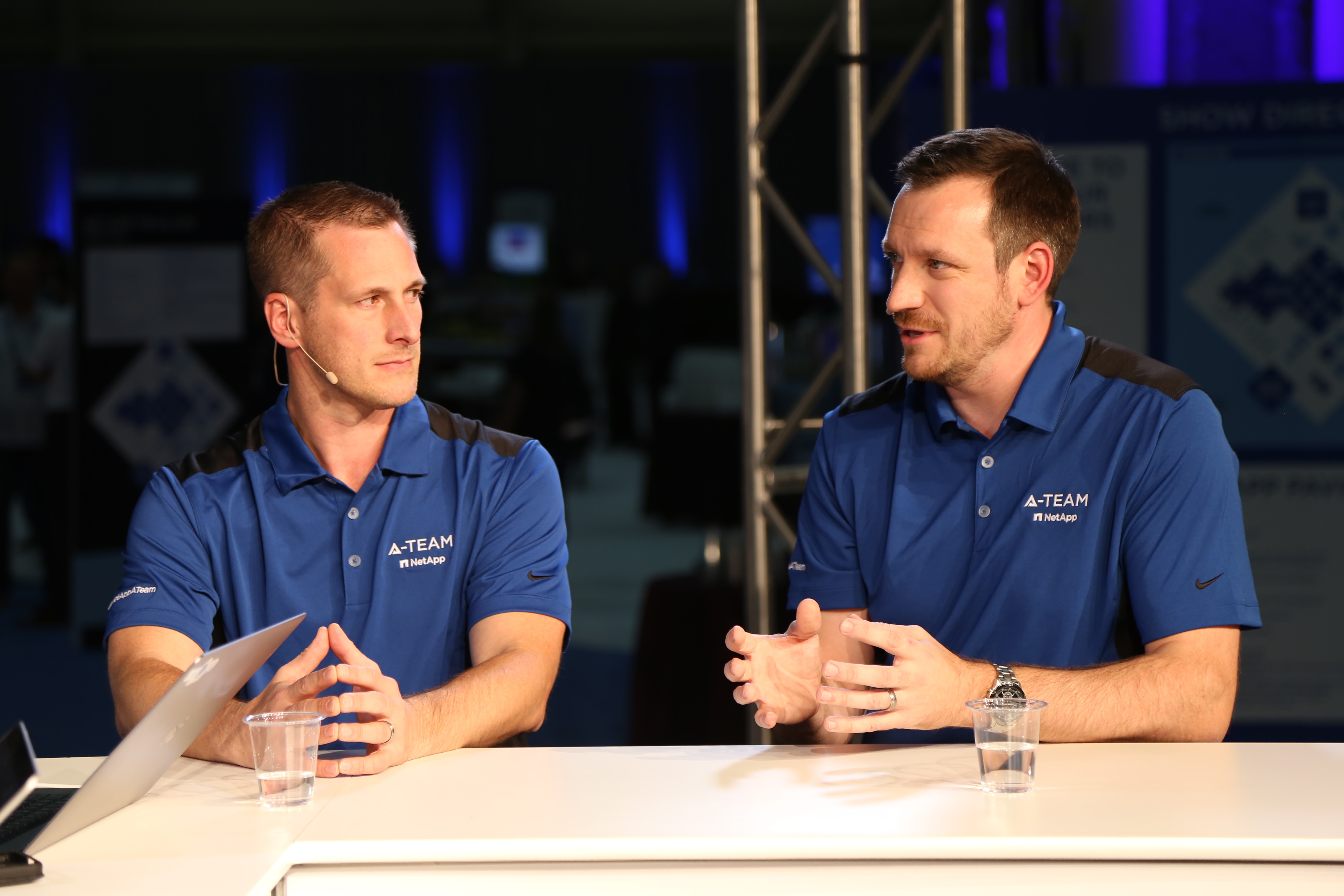
“The tools that NetApp are starting to bring out around this, and giving us the capability and flexibility to give control back to the customer … and be able to move the data to where [it’s] best placed for what the business needs is a great conversation to have,” said Mark Carlton (pictured, right), group technical manager of Concorde Technology Group.
Carlton and Adam Bergh (pictured, left), data center practice director at Presidio Inc., spoke with host John Furrier (@furrier) and guest host Keith Townsend (@CTOAdvisor) of theCUBE, SiliconANGLE Media’s mobile livestreaming studio, during the NetApp Insights event in Las Vegas. Carlton and Bergh are members of NetApp’s A-team, which includes channel partners who provide valuable feedback that helps NetApp shape its product roadmap. During the discussion, they talked about the improvements in data mobility from NetApp’s latest offerings.
The vision of seamlessly moving data between storage media and hosting environments on demand is becoming a reality with NetApp’s simultaneous ONTAP 9.3 and Element OS 10 announcements. NetApp customers are now able to move data between their SolidFire and ONTAP platforms for maximizing flash storage performance.
“We actually have the ability now to move data between these two platforms to really start to envision this Data Fabric world,” Bergh said.
The data mobility provided by the Data Fabric offerings also includes a suite of tools and services that reduce the cost of moving the data, Bergh added. For example, NetApp Private Storage businesses to leverage their on-premises infrastructure to power any number of cloud configurations without migrating the data.
“This is your own hardware connected to multiple clouds. You want to take that cloud from IBM Softlayer to Azure to AWS; the data doesn’t even have to move,” Bergh concluded.
Watch the complete video interview below, and be sure to check out more of SiliconANGLE’s and theCUBE’s coverage of NetApp Insight US 2017. (* Disclosure: NetApp Inc. sponsored this segment of theCUBE. Neither NetApp nor other sponsors have editorial control over content on theCUBE or SiliconANGLE.)
… We’d like to tell you about our mission and how you can help us fulfill it. SiliconANGLE Media Inc.’s business model is based on the intrinsic value of the content, not advertising. Unlike many online publications, we don’t have a paywall or run banner advertising, because we want to keep our journalism open, without influence or the need to chase traffic.The journalism, reporting and commentary on SiliconANGLE — along with live, unscripted video from our Silicon Valley studio and globe-trotting video teams at theCUBE — take a lot of hard work, time and money. Keeping the quality high requires the support of sponsors who are aligned with our vision of ad-free journalism content.
If you like the reporting, video interviews and other ad-free content here, please take a moment to check out a sample of the video content supported by our sponsors, tweet your support, and keep coming back to SiliconANGLE.






