



 CLOUD
CLOUD
CLOUD
CLOUD
CLOUD

Intel’s recent announcement that its field programmable gate arrays, or FPGAs, would now power the acceleration as a service feature in the Alibaba Cloud shines a spotlight on a changing landscape for the integrated circuit market. FPGAs let customers configure the chip after it leaves the factory, opening up a new realm where circuits can deliver services in the cloud environment. It’s a small market right now, but Intel’s latest partnership with Alibaba may change that picture real soon.
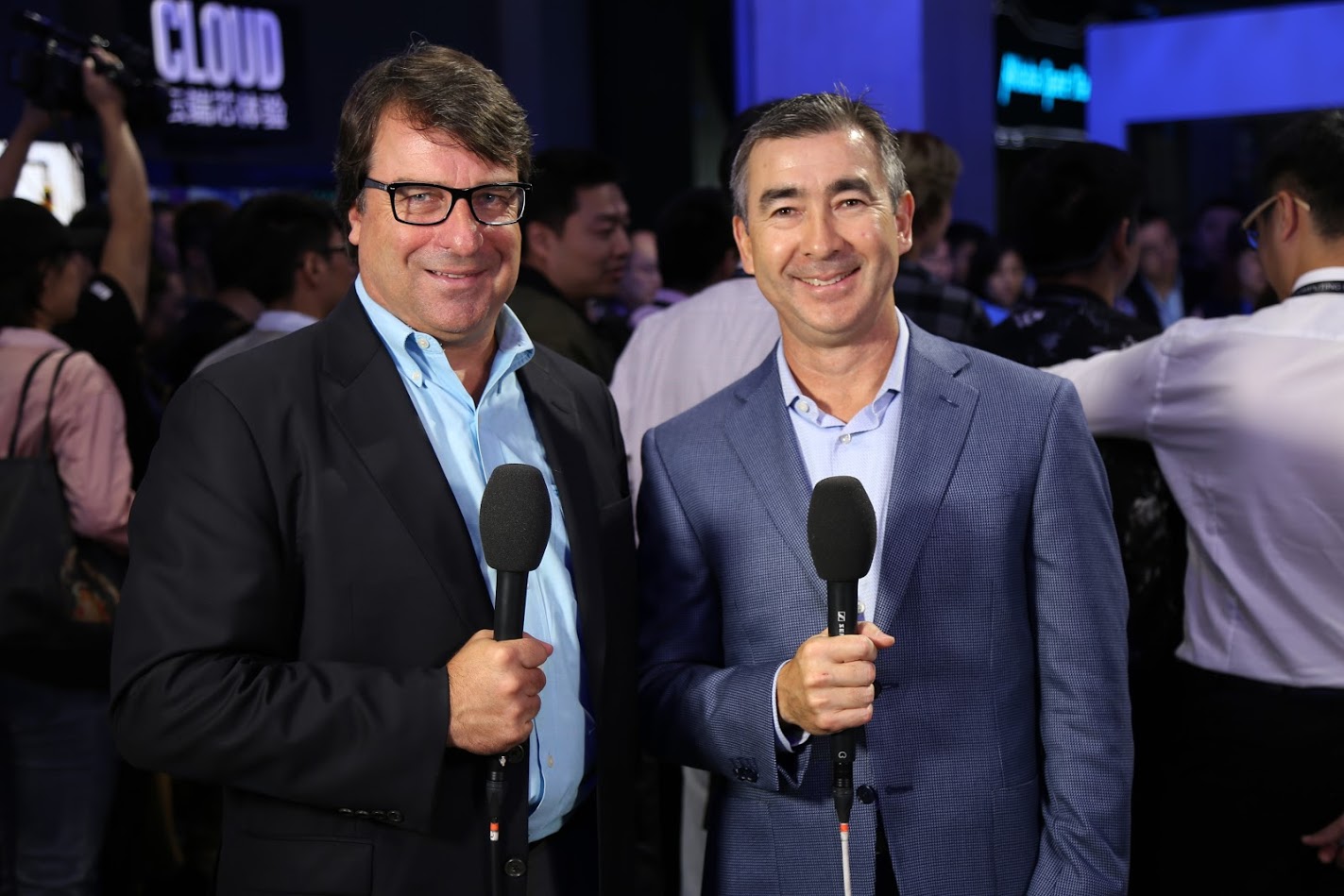
“Acceleration as a service is really having pre-optimized software or applications that are running on the FPGA. We’re trying to democratize FPGAs,” said John Sakamoto (pictured, right), vice president and general manager of the Programmable Solutions Group Data Center and Communications Division at Intel Corp.
Sakamoto paid a visit to theCUBE, SiliconANGLE’s mobile livestreaming studio, and spoke with host John Furrier (@furrier, pictured, left) at The Computing Conference in Hangzhou, China. They discussed specifics around the acceleration as a service announcement and potential future FPGA-related work with Alibaba. (* Disclosure below.)
To make the “democratization” model work, FPGAs need to become more accessible to mainstream developers. In addition to the Intel/Alibaba partnership news, French startup Accelize announced that Intel’s Acceleration Stack would integrate into the company’s solution to facilitate easier developer solutions development.
By investing in the acceleration stack, Intel is catering to developers who are used to programming in higher-level frameworks while not necessarily eager to become recognized authorities in programmable arrays. “We’ve paraded APIs to FPGAs so they don’t have to be an FPGA expert,” Sakamoto said.
The Intel partnership with Alibaba around the FGPA may well be just the beginning of joint endeavors in this arena. The e-commerce giant is clearly interested in finding ways to take a fresh look at infrastructure costs, such as networking and storage. When cycles are running on the processor, they can’t be monetized.
While reluctant to divulge specific details on how Intel might address this, Sakamoto indicated that this could be an area of joint involvement with Alibaba in the near future. “One of the areas we’re working with [Alibaba] is how to accelerate networking and storage functions on an FPGA and therefore freeing up cores that they can then monetize with their own customers,” Sakamoto said.
Here’s the complete video interview, and there’s more SiliconANGLE and theCUBE coverage of The Computing Conference. (* Disclosure: Coverage of the Alibaba Cloud Computing Conference is sponsored by Intel. All content is controlled by SiliconANGLE, and neither Intel nor Alibaba have editorial influence on the coverage.)
… We’d like to tell you about our mission and how you can help us fulfill it. SiliconANGLE Media Inc.’s business model is based on the intrinsic value of the content, not advertising. Unlike many online publications, we don’t have a paywall or run banner advertising, because we want to keep our journalism open, without influence or the need to chase traffic.The journalism, reporting and commentary on SiliconANGLE — along with live, unscripted video from our Silicon Valley studio and globe-trotting video teams at theCUBE — take a lot of hard work, time and money. Keeping the quality high requires the support of sponsors who are aligned with our vision of ad-free journalism content.
If you like the reporting, video interviews and other ad-free content here, please take a moment to check out a sample of the video content supported by our sponsors, tweet your support, and keep coming back to SiliconANGLE.






