 BIG DATA
BIG DATA
BIG DATA







BIG DATA

In the competitive world of Formula One racing, teams of engineers work around the clock to modify car designs in the never-ending quest for a few more seconds of speed. For Red Bull Racing Ltd., one of the leading Formula One racing teams in the world, that quest means using the IBM Spectrum high-performance computing portfolio to run design simulations that could make the difference between finishing last or ending with the checkered flag and a victory lap.
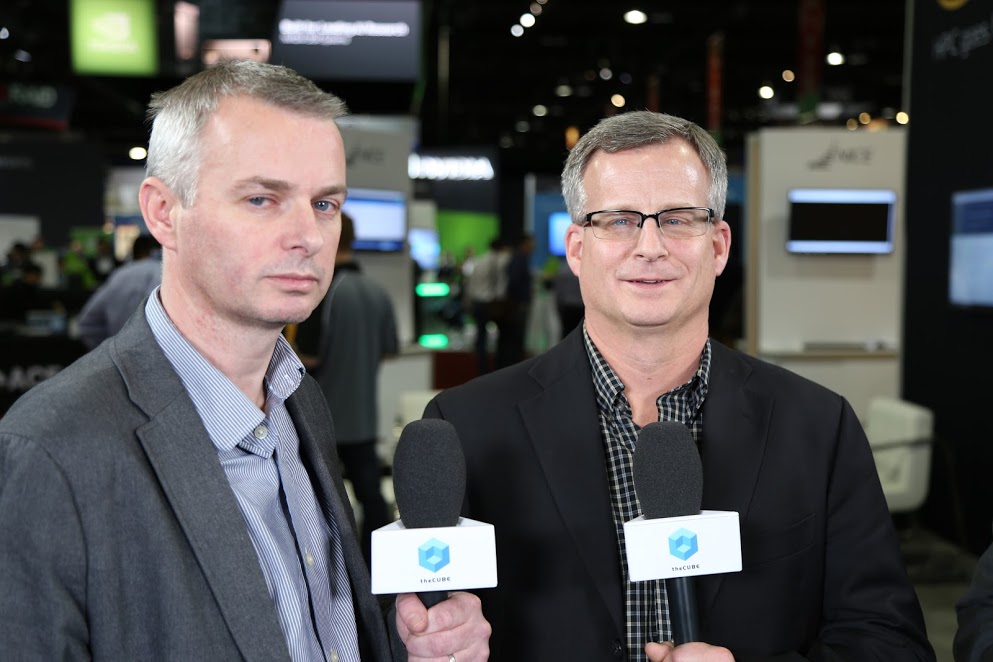
“Our workflows are incredibly complex,” said Wayne Glanfield (pictured, left), HPC manager at Red Bull Racing, who described up to 200 separate job steps for each simulation workflow. “By having an HPC facility we can actually do the design simulations in a virtual environment.”
Glanfield visited theCUBE, SiliconANGLE Media’s mobile livestreaming studio, and spoke with host Jeff Frick (@JeffFrick) at Supercomputing 2017 in Denver, Colorado. He was joined by Bernie Spang (pictured, right), vice president of software-defined infrastructure at IBM Corp., and they discussed Red Bull Racing’s use of IBM’s technology and the importance of managing the rising number of clusters in information technology environments. (* Disclosure below.)
Red Bull Racing relies on IBM’s Spectrum LSF, workload management software for high performance design and simulation applications. Formula One rules limit Red Bull Racing to 25 teraflops of data for the simulations, so efficiency is at a premium.
“They push the performance of the environment and they push us,” said IBM’s Spang, in describing the partnership with Red Bull. “You need a system and an infrastructure that can chew through vast amounts of data, both in performance and compute.”
IBM’s Spectrum Computing platform is designed to help enterprises achieve faster results from data analytics and applications. The company is beginning to see customers who need software-defined management tools to handle the rising tide of Hadoop, Spark and machine learning clusters which are becoming key elements of the enterprise, information technology environment.
“We’re seeing clients who don’t have this virtualization software beginning to have cluster creep,” Spang said. “You can’t afford to have silos of clusters. Spectrum computing virtualizes that shared cluster environment so that you can run all of the different kinds of workloads and drive up the efficiency.”
Watch the complete video interview below, and be sure to check out more of SiliconANGLE’s and theCUBE’s coverage of the Supercomputing 2017 conference. (* Disclosure: TheCUBE is a paid media partner for the Super Computing 2017 conference. Neither IBM Corp., the event sponsor, nor other sponsors have editorial control over content on theCUBE or SiliconANGLE.)
Support our mission to keep content open and free by engaging with theCUBE community. Join theCUBE’s Alumni Trust Network, where technology leaders connect, share intelligence and create opportunities.
Founded by tech visionaries John Furrier and Dave Vellante, SiliconANGLE Media has built a dynamic ecosystem of industry-leading digital media brands that reach 15+ million elite tech professionals. Our new proprietary theCUBE AI Video Cloud is breaking ground in audience interaction, leveraging theCUBEai.com neural network to help technology companies make data-driven decisions and stay at the forefront of industry conversations.





