



 EMERGING TECH
EMERGING TECH
EMERGING TECH
EMERGING TECH

Intel Corp. has enlisted a new and rather unexpected ally in its effort to win the nascent autonomous vehicle market.
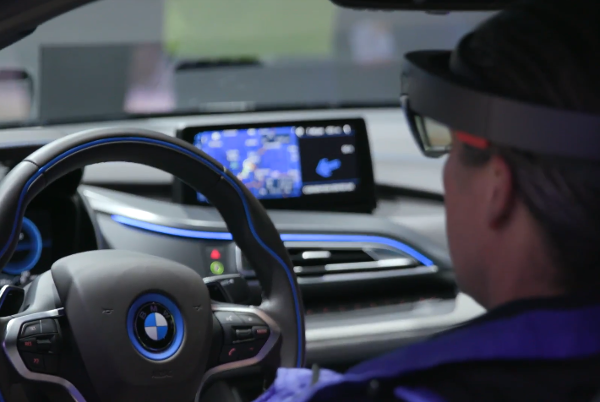
Brian Krzanich, the chip maker’s chief executive, today announced a partnership with Warner Bros. Entertainment Inc. to lay the groundwork for providing “immersive experiences” in self-driving cars. The companies will develop ways to stream augmented and virtual reality content for passengers while a vehicle’s onboard artificial intelligence does the driving. It’s a moonshot effort targeting what could become a massive revenue opportunity.
If the time eventually comes when a person sitting in the driver’s seat of a car won’t have to focus on the road, they’d be free to pursue more engaging activites. Access to entertainment would become an outright necessity given that the average American driver currently spends 300 hours behind the wheel each year. Intel and Warner Bros. are betting that a good portion of rides will be spent consuming media content.
Automakers, for their part, would need to develop new in-vehicle entertainment systems to meet the demand. Having to add more hardware to cars would in turn require them to buy more processors, which is what Intel is counting on. The AR and VR content that it’s focusing on necessities particularly much processing power to render.
For Warner Bros., meanwhile, the revenue opportunity is more direct. Freeing up an extra 300 hours a year for people to consume media could generate a lot of extra revenue, especially when taking the advertising potential into account.
Intel and Warner Bros. plan to build a proof-of-concept vehicle for demonstrating what immersive entertainment would look like inside a self-driving car. They could use the model to pitch the concept to potential partners in the auto industry, which is already showing some interest. Ford Motor Co. last year filed a patent for an “autonomous vehicle entertainment system” designed to be installed in front of a car’s windscreen.
The prototype vehicle will be part of the 100-car test fleet that Intel is assembling to trial its autonomous driving software. Given that the first commercial self-driving taxis could hit the road any day now, it’s no wonder the chip maker is already planning ahead for the opportunities which may emerge once the technology becomes widespread.
… We’d like to tell you about our mission and how you can help us fulfill it. SiliconANGLE Media Inc.’s business model is based on the intrinsic value of the content, not advertising. Unlike many online publications, we don’t have a paywall or run banner advertising, because we want to keep our journalism open, without influence or the need to chase traffic.The journalism, reporting and commentary on SiliconANGLE — along with live, unscripted video from our Silicon Valley studio and globe-trotting video teams at theCUBE — take a lot of hard work, time and money. Keeping the quality high requires the support of sponsors who are aligned with our vision of ad-free journalism content.
If you like the reporting, video interviews and other ad-free content here, please take a moment to check out a sample of the video content supported by our sponsors, tweet your support, and keep coming back to SiliconANGLE.






