



 APPS
APPS
APPS
APPS
APPS

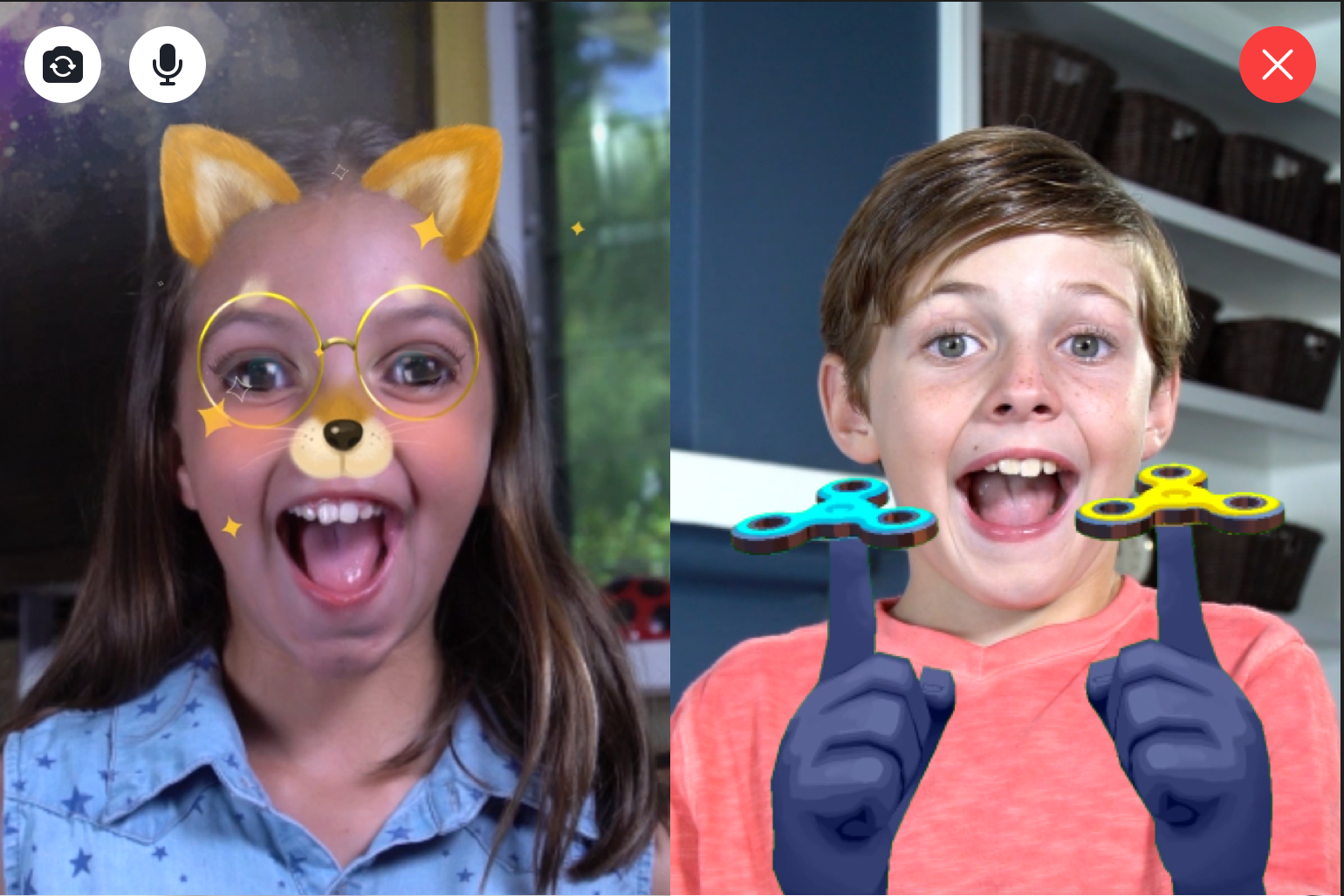
Like many online companies, Facebook Inc. has had a longstanding rule forbidding children under 13 from having their own accounts. Today the social media giant took a step away from that restriction with the launch of Messenger Kids, a standalone chat app specifically designed for young kids.
“Whether it’s using video chat to talk to grandparents, staying in touch with cousins who live far away, or sending mom a decorated photo while she’s working late to say hi, Messenger Kids opens up a new world of online communication to families,” said Facebook Product Management Director Loren Cheng.
Facebook’s new app offers many of the same features as the regular Facebook Messenger, including the ability to share photos and chat through both text and video, but Messenger Kids is a bit different. The app has simplified controls that are a little easier for kids to navigate, and it has its own library of kid-friendly gifs and video filters.
Messenger Kids also has a few extra features aimed at keeping kids safe online. For example, only parents can create a Messenger Kids account.
After downloading Messenger Kids on a child’s device, parents have to authenticate the device using their own Facebook login and password. They must then create a Messenger Kids account, which does not require any personal information other than the child’s name. The Messenger Kids account is tied directly to a parent’s account, and the parent can choose to lock the account at any time.
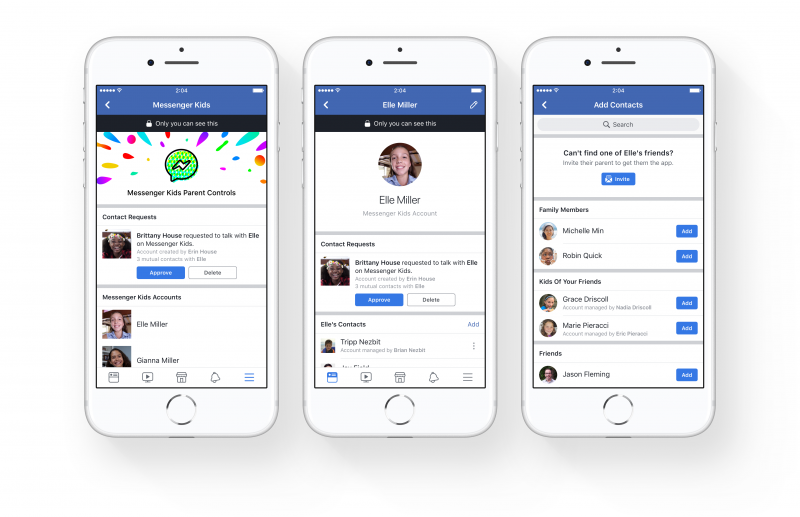
Parents must also approve each individual contact on Messenger Kids, ensuring that their kids cannot chat with anyone without permission. This also means that contact between two kids must be approved by both sets of parents. Messages sent to other children automatically go through the Messenger Kids app, but approved adult contacts can chat with kids through the regular Facebook Messenger.
Another big difference with Messenger Kids is that the app does not display any ads, and Facebook said none of a child’s information is used for advertising purposes. Also, Messenger Kids is designed to be fully compliant with the Children’s Online Privacy and Protection Act, a law enforced by the U.S. Federal Trade Commission that governs how online services must protect personal information for children under 13.
Messenger Kids is currently available for iOS users only in the U.S., but Android and international versions of the app will roll out in the coming months.
To accompany today’s Messenger Kids announcement, Facebook also published a new post in its “Hard Questions” blog series that discusses the challenges of dealing with a rapidly growing population of very young internet users.
“I know I’m not alone in the questions I’ve asked, the mistakes I’ve made and the worries I’ve had as a parent when it comes to kids and technology,” wrote Antigone Davis, global head of safety at Facebook.
In her post, Davis cited a study by research firm Dubit Ltd., which found that 93 percent of 6- to 12-year-olds in the U.S. have at least some access to a tablet or smartphone, and as many as 66 percent have their own device. Davis added that many of these kids are using apps intended for teens and adults, including messaging and social media apps. According to a study conducted by a collaboration between Facebook and National PTA, 81 percent of the parents surveyed said that their kids started using social media between the ages of 8 and 13.
Davis said Facebook recognized that it needed to create a separate platform for kids that would give them the experiences they wanted while also keeping parents in control.
“Kids told us that the primary reason they want to use social media and messaging platforms is to have fun, which means that an environment that emphasizes safety at the expense of joy and laughter will fail the customer satisfaction test — and potentially leave kids vulnerable to less controlled and more risky social environments,” said Davis. “We believe that it’s possible to give kids a fun experience that provides more peace of mind for parents, too.”
In addition to the release of Messenger Kids, Facebook also announced today that it has created a $1 million research fund to explore the long-term impact of technology on children.
… We’d like to tell you about our mission and how you can help us fulfill it. SiliconANGLE Media Inc.’s business model is based on the intrinsic value of the content, not advertising. Unlike many online publications, we don’t have a paywall or run banner advertising, because we want to keep our journalism open, without influence or the need to chase traffic.The journalism, reporting and commentary on SiliconANGLE — along with live, unscripted video from our Silicon Valley studio and globe-trotting video teams at theCUBE — take a lot of hard work, time and money. Keeping the quality high requires the support of sponsors who are aligned with our vision of ad-free journalism content.
If you like the reporting, video interviews and other ad-free content here, please take a moment to check out a sample of the video content supported by our sponsors, tweet your support, and keep coming back to SiliconANGLE.






