



 EMERGING TECH
EMERGING TECH
EMERGING TECH
EMERGING TECH

Updated:
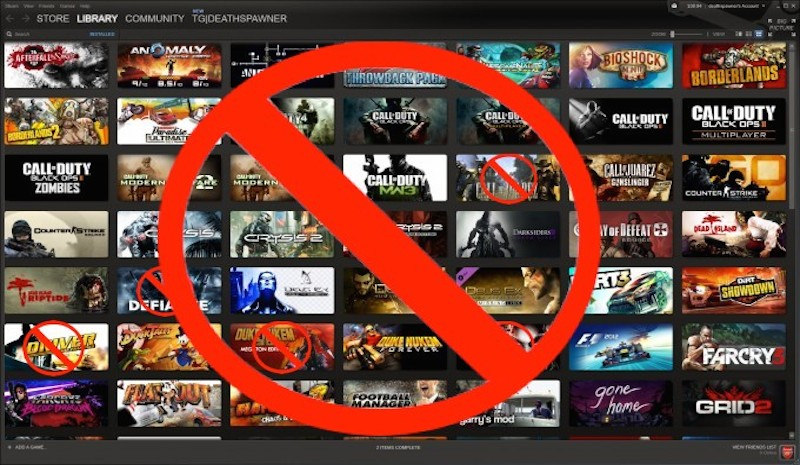
The price of bitcoin keeps on rising, breaking through $14,000 in trading late Wednesday — and then soaring past $16,000 on Thursday. But its status as a currency, crypto or otherwise, has hit a new low as the gaming service Steam stopped accepting bitcoin for payment partly because of those same price fluctuations.
Valve Corp.’s popular online game service, which was cited as an innovator when it started accepting bitcoin payments in April 2016, said in a statement that it would immediately withdraw support for payments in the cryptocurrency. The problem, the service said, is both increased volatility in the price of bitcoin over the past few months as well as a “significant increase” in fees to process transactions on the bitcoin network.
“Transaction fees that are charged to the customer by the bitcoin network have skyrocketed this year, topping out at close to $20 a transaction last week (compared to roughly $0.20 when we initially enabled Bitcoin),” Steam wrote. “Unfortunately, Valve has no control over the amount of the fee. These fees result in unreasonably high costs for purchasing games when paying with bitcoin. The high transaction fees cause even greater problems when the value of bitcoin itself drops dramatically.”
Explaining the issue presented by price volatility, Steam said incidents such as the bitcoin price crash in late November create serious problems not only for customers trying to purchase games with bitcoin but also their ability to then redeem the bitcoin for cash given how quickly the price of bitcoin continues to move. “The value of Bitcoin is only guaranteed for a certain period of time so if the transaction doesn’t complete within that window of time, then the amount of Bitcoin needed to cover the transaction can change,” Steam noted. “The amount it can change has been increasing recently to a point where it can be significantly different.”
Steam’s decision to pull support for bitcoin may come as a shock to some, but bitcoin’s utility as an online currency to purchase goods was already rapidly declining in inverse proportion to its appeal as an investment. There are a number of reasons for that, including those growing transaction costs as well as the time it now takes to process a transaction.
But ultimately the main reason people aren’t spending bitcoin on buying physical goods is the so-called HODL movement. HODL, short for Hold All, is a belief by many people holding bitcoin that they should continue to hold it and wait for further price increases. The market has come to be dominated by those holding bitcoin or those day-trading for profits, making the liquidity of bitcoin on the open market in terms of buying goods all the more limited.
By contrast, as bitcoin has been used less to make purchases, alternative cryptocurrencies have surged as a tool for online and offline transactions. Ethereum, the second-largest cryptocurrency by market cap, surged past bitcoin in October to become the most-traded online currency. It continues to grow as those looking to make purchases, even in online games such as Cryptokitties, use ETH in favor of BTC.
Proving Steam’s point about market volatility in bitcoin prices, bitcoin hit a high of 14,095.42 as of 8:40 p.m. EST before turning south, once more, to drop to as low as $13,337.56, then recovering slightly to $13,874.21 as of 10:20 p.m. EST.
… We’d like to tell you about our mission and how you can help us fulfill it. SiliconANGLE Media Inc.’s business model is based on the intrinsic value of the content, not advertising. Unlike many online publications, we don’t have a paywall or run banner advertising, because we want to keep our journalism open, without influence or the need to chase traffic.The journalism, reporting and commentary on SiliconANGLE — along with live, unscripted video from our Silicon Valley studio and globe-trotting video teams at theCUBE — take a lot of hard work, time and money. Keeping the quality high requires the support of sponsors who are aligned with our vision of ad-free journalism content.
If you like the reporting, video interviews and other ad-free content here, please take a moment to check out a sample of the video content supported by our sponsors, tweet your support, and keep coming back to SiliconANGLE.






