 APPS
APPS
APPS
APPS







APPS

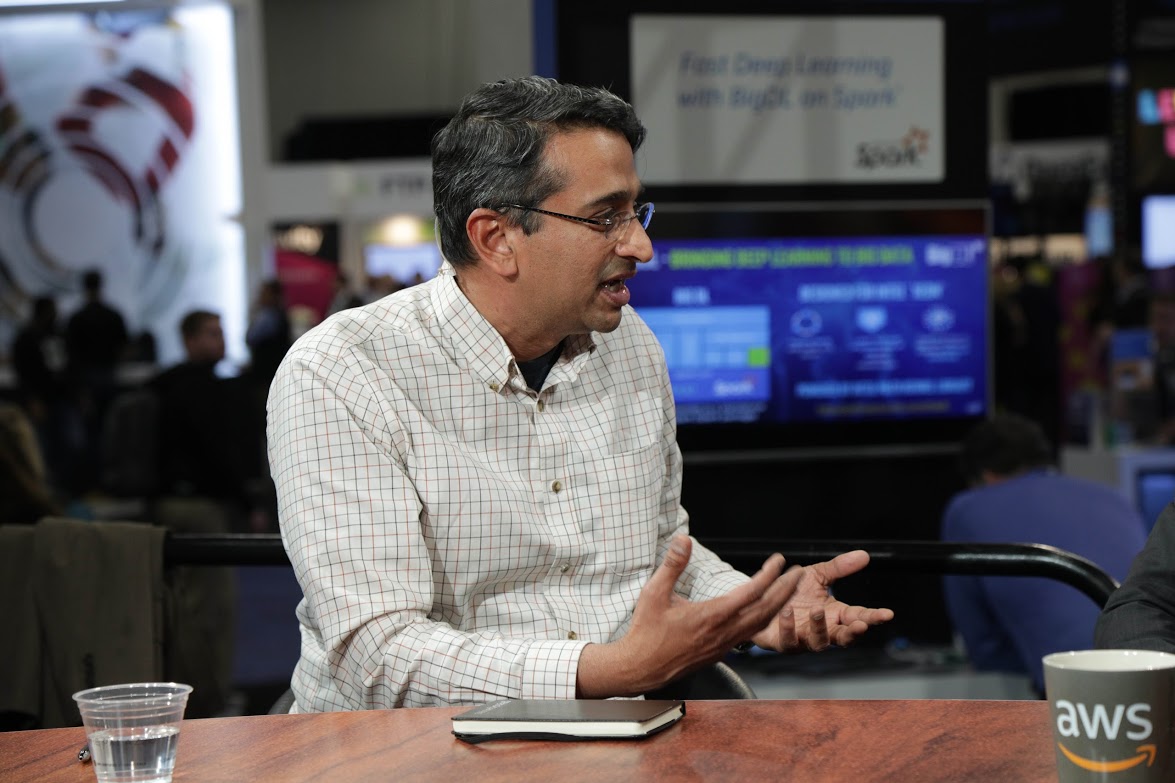
Bad news for those in business to cloud wash legacy applications to modernize them without overhauling the infrastructure: The modern app is a cloud app up and down the stack, according to Kalyan Ramanathan (pictured), vice president of product marketing at Sumo Logic Inc. That’s the gist of Sumo Logic’s special report, “The 2017 State of the Modern Apps in the Cloud.”
Cloud infrastructure advancements are so core to the architecture of modern apps, that foregoing them and tweaking at the app level is “putting lipstick on a pig,” Ramanathan said. “Can you get away with it for a year or so? Absolutely. But when you’re talking about dealing with extreme scalability, high elasticity, security of the kind that is needed for most enterprises, that’s where the legacy technology and just a sprinkling of dust is going to fall apart.”
Ramanthan cracked open the report with John Furrier (@furrier), host of theCUBE, SiliconANGLE Media’s mobile livestreaming studio, and guest host Justin Warren (@jpwarren), chief analyst at PivotNine Pty Ltd, during the AWS re:Invent conference in Las Vegas, Nevada.
Sumo Logic pulled its insights from the anonymous data of its 1,600 customers. Legit modern applications have three characteristics in common, according to Ramanthan. First, they are architected (or re-architected) in a public cloud like Amazon Web Services Inc. or Microsoft Corp.’s Azure. Second, they are usually built with hyper-agile development operations for an off-the-charts iterative cycle. Third, they are built out of microservices for Lego-like arrangement and rearrangement.
Some technologies standout as top picks for modern cloud app developers across the board. “On the infrastructure side, Linux rules as an operating system,” Ramanathan said. Linux is even opted often by users of Microsoft’s cloud despite its association with Windows.
Containers — a virtualized method for running distributed applications — are whisking more and more apps around the cloud lately. Last year, 18 percent of Sumo Logic customers used Docker Inc. containers. This year, it’s one in four, Ramanthan stated.
An interesting quirk of cloud apps is that they can have multiple databases. “In the cloud world, NoSQL and SQL are pretty much head to head,” Ramanathan said. Redis — an open-source, NoSQL in-memory database popular with the Kubernetes community — spiked in popularity this year, he concluded.
Watch the complete video interview below, and be sure to check out more of SiliconANGLE’s and theCUBE’s coverage of AWS re:Invent.
Support our mission to keep content open and free by engaging with theCUBE community. Join theCUBE’s Alumni Trust Network, where technology leaders connect, share intelligence and create opportunities.
Founded by tech visionaries John Furrier and Dave Vellante, SiliconANGLE Media has built a dynamic ecosystem of industry-leading digital media brands that reach 15+ million elite tech professionals. Our new proprietary theCUBE AI Video Cloud is breaking ground in audience interaction, leveraging theCUBEai.com neural network to help technology companies make data-driven decisions and stay at the forefront of industry conversations.





