



 EMERGING TECH
EMERGING TECH
EMERGING TECH
EMERGING TECH

After three years of secrecy and an astonishing $1.9 billion in funding, Magic Leap Inc. is finally ready to reveal its augmented reality technology to the world.
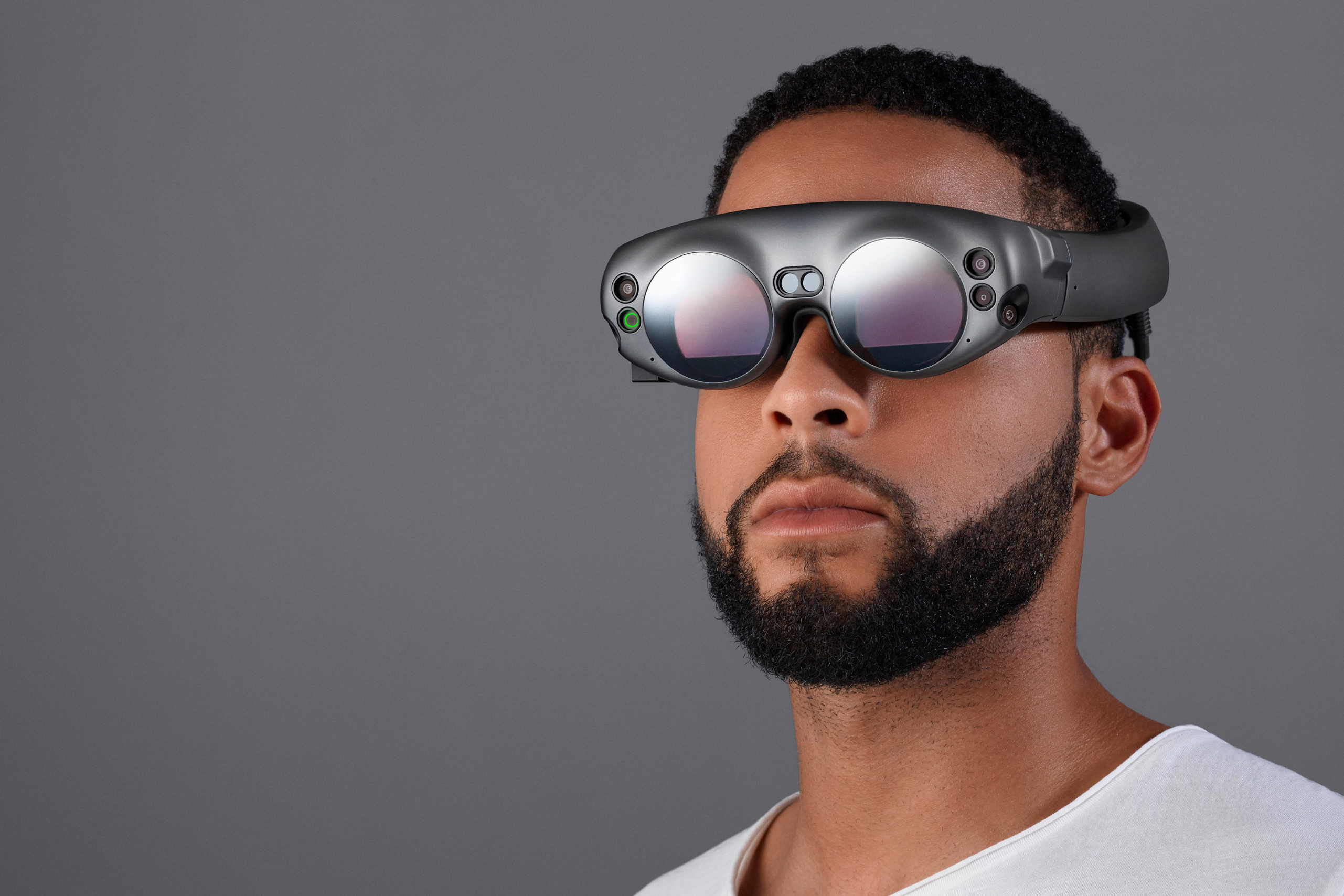
Today, the Florida-based company unveiled Magic Leap One – Creator Edition, a standalone AR product for developers that will launch in 2018.
Magic Leap One includes its own controller and wearable computer, but the real star of the kit is Lightwear, a mixed-reality headset that provides the first real glimpse of the AR technology that boosted Magic Leap to unicorn status, earning major investments from tech giants such as Google LLC and Alibaba Group Holding Ltd.
Lightwear displays digital images using light field technology, which according to Magic Leap “allows our brain to naturally process digital objects the same way we do real-world objects, making it comfortable to use for long periods of time.” Lightwear uses a suite of sensors to detect real world objects and surfaces, allowing the goggles to project images that appear to interact naturally with the environment. These sensors also enable room-mapping features that can create a virtual replica of real locations.
The headset has its own integrated processor, but it is supported by a wearable computing platform and power source called Lightpack, and small disk attached to the goggles by a cable. Lightpack does most of the heavy lifting for the AR headset, and it also includes on-device storage, Wi-Fi and other electronics. Magic Leap Chief Executive Rony Abovitz told Rolling Stone that Lightpack is similar in power to a MacBook Pro or an Alienware gaming PC.
A software development kit for Magic Leap One will launch in spring 2018, but so far the company has not given an exact release date or pricing information for its AR goggles. Magic Leap has also remained silent on when it plans to launch a consumer version of its technology.
After years of hype and outrageous funding rounds, Magic Leap has a lot to prove, especially after reports surfaced last year claiming that the company’s technology was not advancing as quickly as it had hoped. Abovitz told The Information at the time that Magic Leap had to make a few tradeoffs to shrink its headset and wearable computer to an acceptable size, but he added: “We’re entering the third act of the film — the one that has the cool ending and the Death Star explodes.”
… We’d like to tell you about our mission and how you can help us fulfill it. SiliconANGLE Media Inc.’s business model is based on the intrinsic value of the content, not advertising. Unlike many online publications, we don’t have a paywall or run banner advertising, because we want to keep our journalism open, without influence or the need to chase traffic.The journalism, reporting and commentary on SiliconANGLE — along with live, unscripted video from our Silicon Valley studio and globe-trotting video teams at theCUBE — take a lot of hard work, time and money. Keeping the quality high requires the support of sponsors who are aligned with our vision of ad-free journalism content.
If you like the reporting, video interviews and other ad-free content here, please take a moment to check out a sample of the video content supported by our sponsors, tweet your support, and keep coming back to SiliconANGLE.






