



 EMERGING TECH
EMERGING TECH
EMERGING TECH
EMERGING TECH

The tech industry is hard at work applying artificial intelligence to healthcare. Google LLC recently accepted four startups into an incubator program designed to foster new medical applications of machine learning, while Germany’s Ada Digital Health Ltd. raised $47 million in November to harness the technology for a self-service diagnosis service.
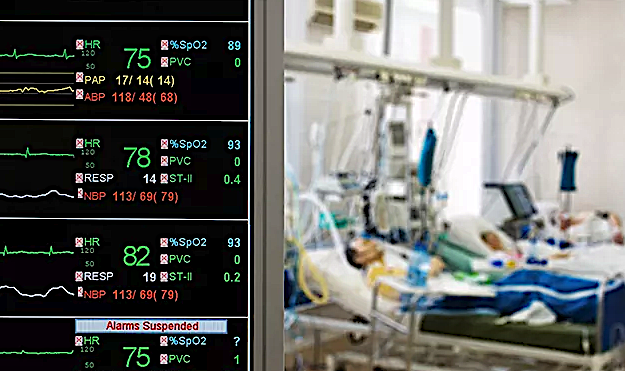
Another up-and-coming player hoping to improve healthcare with AI is Clew Medical Ltd. The Israeli startup, which was previously known as Intensix, today announced the launch of a software system that uses machine learning to give hospital staff early warning if a patient’s condition starts to deteriorate.
Clew monitors a person’s medical status with the help of data from bedside devices and electronic health records. Altogether, the startup tracks a total of about 300 metrics, some of which it said are refreshed every few milliseconds. The information is fed to Crew’s AI to identify patterns that may reveal a potential complication.
One particular focus area for Clew is facilitating early detection of sepsis. This also happens to be the main objective of CytoVale Inc., one of the four startups that Google accepted into its medical AI incubation program. There’s a good reason behind the large amount of activity in this space: Sepsis is a major risk to patients that is often quite difficult to spot in time.
Clew’s technology can ease detection by identifying the significance of symptoms such as fever that often don’t attract enough attention from medical personnel. Gal Salomon, the startup’s chief executive officer, has said that its system may eventually also provide the ability to detect the specific cause of hard-to-diagnose conditions.
Furthermore, Clew claimed, the technology is handy for identifying when a patient is not recovering in the anticipated manner. Alerts are displayed in a dashboard designed to let hospital staff quickly check for changes.
Salomon told VentureBeat that pilot deployments of the startup’s software have been set up at Mayo Clinic and the Tel Aviv Sourasky Medical Center, with several more hospitals currently in the process of starting their own trials. The system is designed primarily for use in intensive-care units. Over time, Clew plans to extend its focus to other care settings as well.
… We’d like to tell you about our mission and how you can help us fulfill it. SiliconANGLE Media Inc.’s business model is based on the intrinsic value of the content, not advertising. Unlike many online publications, we don’t have a paywall or run banner advertising, because we want to keep our journalism open, without influence or the need to chase traffic.The journalism, reporting and commentary on SiliconANGLE — along with live, unscripted video from our Silicon Valley studio and globe-trotting video teams at theCUBE — take a lot of hard work, time and money. Keeping the quality high requires the support of sponsors who are aligned with our vision of ad-free journalism content.
If you like the reporting, video interviews and other ad-free content here, please take a moment to check out a sample of the video content supported by our sponsors, tweet your support, and keep coming back to SiliconANGLE.






