 BIG DATA
BIG DATA
BIG DATA







BIG DATA

For centuries, modern medicine has grappled with the problem of finding the right drug treatment for the correct disease. While incremental progress is made every year, the lag time and expense of bringing a drug successfully to market has frustrated doctors, scientists and patients.
In search of a potential solution to this problem, one startup based in Salt Lake City, Utah, is engaged in a novel approach that uses a combination of artificial intelligence and biological science to enable the discovery of viable drug candidates more quickly and at scale.
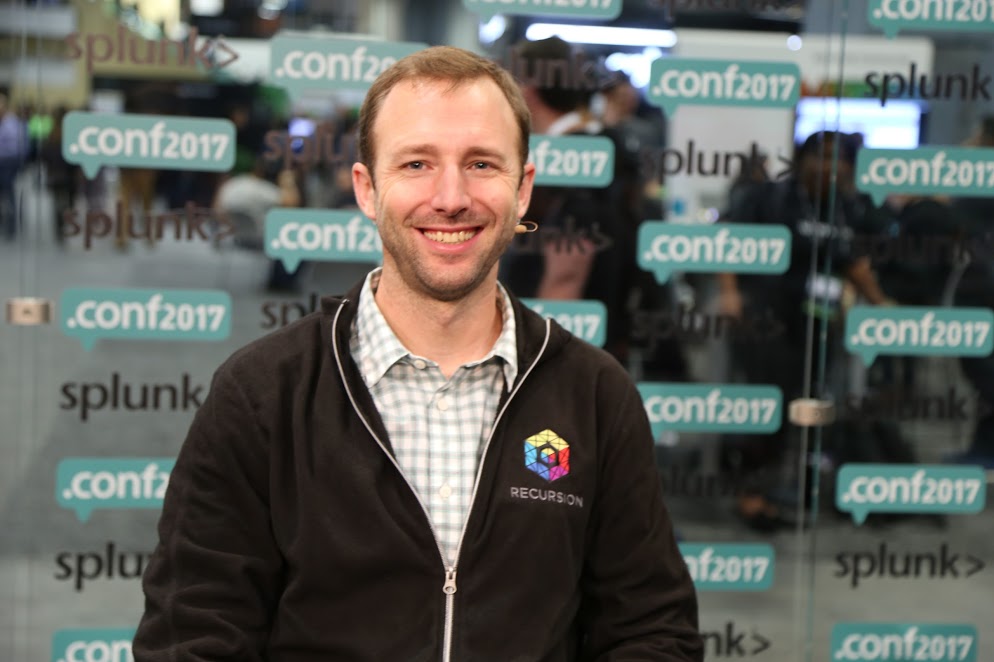
“We’re applying machine learning concepts to biological images to help detect what types of drugs can rescue what types of diseases,” said Ben Miller (pictured), director of HTS operations at Recursion Pharmaceuticals Inc. “We’re really at the cutting edge of technology right now.”
Miller stopped by the set of theCUBE, SiliconANGLE Media’s mobile livestreaming studio, during the Splunk.conf2017 event in Washington, D.C. and spoke with co-hosts Dave Vellante (@dvellante) and John Walls (@JohnWalls21). They discussed the process for Recursion’s cell image collection and the challenge in managing one of the largest biological datasets in the world. (* Disclosure below.)
Recursion’s work involves building a comprehensive dataset of cell images that can then be used to train neural networks in the identification of changes in cellular features. If scientists can match cell changes with disease remission, it could lead to faster advances in the development of drug treatments.
“We can see which compounds cause disease states to revert to a more normal state for the cell,” Miller explained.
This kind of sophisticated science takes a lot of data. At a processing rate of more than 2 million new images and 20 terabytes of data per week, Recursion is well on its way to building the largest biological image dataset in the world.
The company’s data stack begins at hospitals from around the globe, where human cells are collected from medical waste samples. Images are taken and then loaded into Amazon Web Services. Splunk pulls data together and then marries it with image analysis as part of Recursion’s proprietary system.
Recursion, which recently closed a $60 million oversubscribed financing round, clearly believes that machine learning will provide it with the innovative edge necessary to propel biological science to a new level.
“What are the optimal parameters to extract the optimal information?” Miller asked. “That’s the future of what we want to do.”
Watch the complete video interview below, and be sure to check out more of SiliconANGLE’s and theCUBE’s coverage of Splunk .conf2017. (* Disclosure: Splunk Inc. sponsored this segment of theCUBE. Neither Splunk nor other sponsors have editorial control over content on theCUBE or SiliconANGLE.)
Support our mission to keep content open and free by engaging with theCUBE community. Join theCUBE’s Alumni Trust Network, where technology leaders connect, share intelligence and create opportunities.
Founded by tech visionaries John Furrier and Dave Vellante, SiliconANGLE Media has built a dynamic ecosystem of industry-leading digital media brands that reach 15+ million elite tech professionals. Our new proprietary theCUBE AI Video Cloud is breaking ground in audience interaction, leveraging theCUBEai.com neural network to help technology companies make data-driven decisions and stay at the forefront of industry conversations.





