 INFRA
INFRA
INFRA
INFRA







INFRA

Development operations, or DevOps, isn’t a job title; it’s not a single software tool, either. It’s a philosophy embodied by agile people using agile technology for agile business.
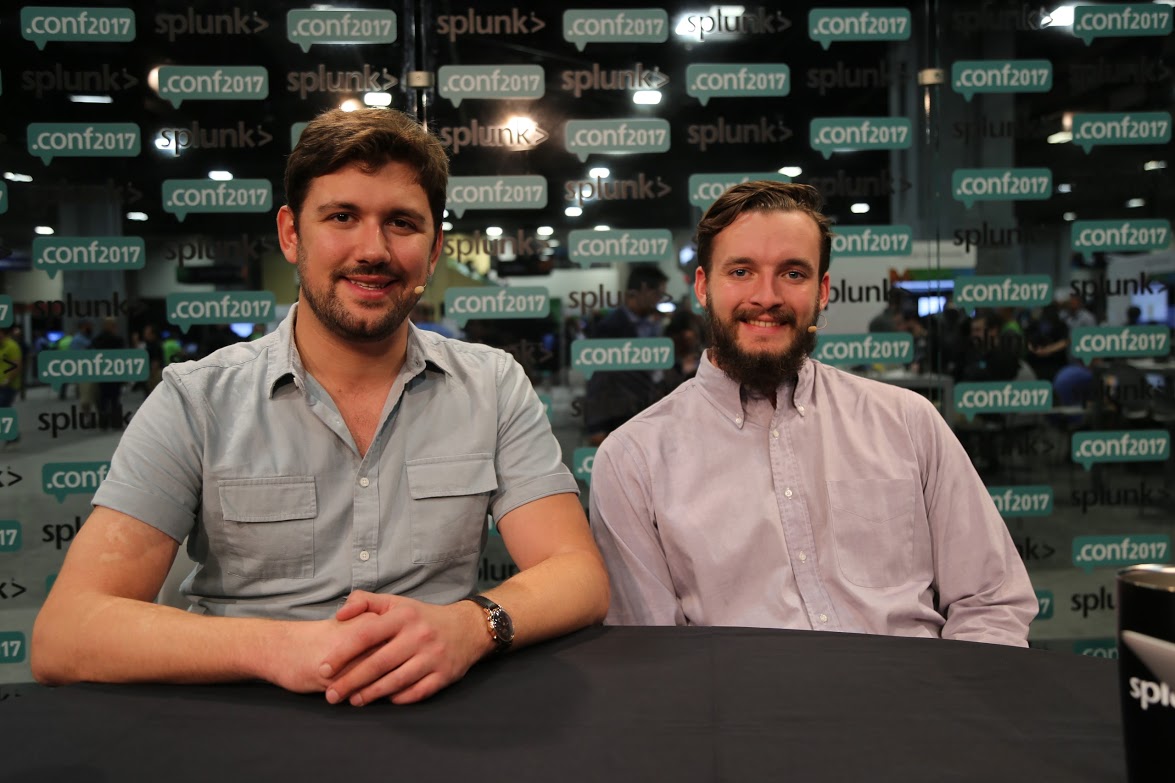
“Pre-DevOps was: The software developers make a thing, and then they throw it over the fence and operations picks it up. And they’re like, ‘Well, what do we do with this? Deploy it.’ OK, good luck,” said Zachary Musgrave (pictured, left), technical lead at Yelp Inc. “What this results in is sort of an us-and-them mentality.”
Musgrave joined Chris Gordon (pictured, right), software engineer at Yelp, in an interview at Splunk .conf2017 in Washington, D.C. They spoke with Dave Vellante (@dvellante) and John Walls (@JohnWalls21), co-hosts of theCUBE, SiliconANGLE Media’s mobile livestreaming studio. (* Disclosure below.)
Developers and operations teams are typically not incentivized to take each other’s unique issues into account, which often results in both punting glitchy apps and software back and forth, according to Musgrave. By cross-pollination of development and operations elements, the food fight ceases.
“DevOps is a we, instead of an us-versus-them,” Musgrave said.
In a DevOps model, product teams may have on-call rotations, while operations and system administrators scratch out some code. “There’s still definitely specializations, but it all comes together in a much more holistic manner,” Musgrave stated.
Versatile technologies that developers and operations teams can approach for a multitude of use cases boost DevOps and agility in general. Splunk Inc.’s broad machine data analytics platform is such a technology, Gordon explained. “Our operations teams get a lot of value out of it when there’s some outage happening, and it’s really useful for them to just look at the access logs and see what’s going on. And Splunk makes that very easy,” he said. Splunk clusters can “mutate,” enabling a whole jambalaya of usecases.
Yelp’s rapid, several-times-per-day deployment cycle demands slippery smooth DevOps functions. “Each one of those [deployments] is going to include changes from a dozen different engineers. We need to be agile in that manner just like with our Splunk cluster,” Musgrave concluded.
Watch the complete video interview below, and be sure to check out more of SiliconANGLE’s and theCUBE’s coverage of Splunk .conf2017. (* Disclosure: Splunk Inc. sponsored this segment of theCUBE. Neither Splunk nor other sponsors have editorial control over content on theCUBE or SiliconANGLE.)
Support our mission to keep content open and free by engaging with theCUBE community. Join theCUBE’s Alumni Trust Network, where technology leaders connect, share intelligence and create opportunities.
Founded by tech visionaries John Furrier and Dave Vellante, SiliconANGLE Media has built a dynamic ecosystem of industry-leading digital media brands that reach 15+ million elite tech professionals. Our new proprietary theCUBE AI Video Cloud is breaking ground in audience interaction, leveraging theCUBEai.com neural network to help technology companies make data-driven decisions and stay at the forefront of industry conversations.





