



 INFRA
INFRA
INFRA
INFRA
INFRA

Ampere Computing Inc., a semiconductor startup led by former Intel Corp. President Renee James, launched out of stealth mode this morning to challenge the chip giant’s long-held dominance of the data center market.
Ampere is developing processors based on designs from ARM Holdings PLC. The latter company’s blueprints are the basis for the vast majority of the chips in today’s mobile devices, partially because they are more power-efficient than Intel silicon. This feature is also appealing for companies looking to reduce the operating costs of their data centers, which is why Qualcomm Technologies Inc. is betting on ARM technology in its push to enter the server market.
Similar considerations seem to be driving Ampere’s strategy. In a press release, the startup said that it’s working to address the “memory performance, cost, space and power constraints” of modern data centers.
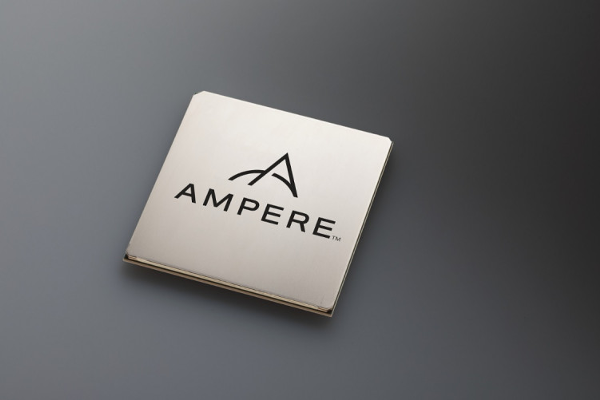
Renee James told VentureBeat that Ampere’s chip builds upon the 64-bit version of the Armv8-A architecture with 32 custom processing cores that can operate at a frequency of up to 3.3 gigahertz. The startup has also incorporated a terabyte of memory into the unit along with eight DDR (for double data rate) channels for transporting data. Together, these components give the chip a power envelope of 125 watts.
The processor is designed to handle a wide a variety of data center workloads. This will likely put Ampere in more direct competition with Intel than many other emerging chip startups, which for the most part offer silicon geared toward a specific use case such as deep learning.
Competing with Intel is no small task, but Ampere apparently has some resources to take up the fight. A cash infusion from private equity giant The Carlyle Group LP has enabled the startup to hire a staff of about 300 people and establish multiple chip design centers. James didn’t specify the value of the investment, but said that the cost of ARM design licenses is alone “more than most VCs give in a round.”
“As Calxeda, AppliedMicro, Marvell, Samsung, and Broadcom found, competing against Intel in the data center is a challenging and expensive proposition,” said Patrick Moorhead, president and principal analyst at Moor Insights & Strategy. “The market does want more companies with competitive offerings and if Ampere has the funding and time, it appears the company has recruited some solid talent, so the outcome could be different.”
James said in a separate interview that Ampere’s chip is currently being tested by multiple prospective buyers. Among them are Microsoft Corp., Oracle Corp. and Lenovo Group Ltd.
Ampere expects to start mass-producing the processors later this year. The current iteration of the chip is based on a 16-nanometer process, while the next version is slated to feature 7-nanometer transistors. James said her team currently has a total of three different products in the pipeline and a fourth on the drawing board.
With reporting from Robert Hof
… We’d like to tell you about our mission and how you can help us fulfill it. SiliconANGLE Media Inc.’s business model is based on the intrinsic value of the content, not advertising. Unlike many online publications, we don’t have a paywall or run banner advertising, because we want to keep our journalism open, without influence or the need to chase traffic.The journalism, reporting and commentary on SiliconANGLE — along with live, unscripted video from our Silicon Valley studio and globe-trotting video teams at theCUBE — take a lot of hard work, time and money. Keeping the quality high requires the support of sponsors who are aligned with our vision of ad-free journalism content.
If you like the reporting, video interviews and other ad-free content here, please take a moment to check out a sample of the video content supported by our sponsors, tweet your support, and keep coming back to SiliconANGLE.






