



 EMERGING TECH
EMERGING TECH
EMERGING TECH
EMERGING TECH

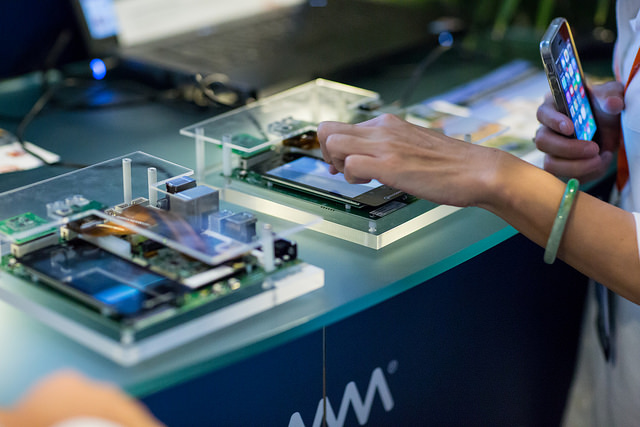
Qualcomm Technologies Inc. this morning pulled back the curtains on the Snapdragon 820E, a new chip designed to power the drones and other increasingly sophisticated devices that make up the “internet of things.”
At the heart of the system is a central processing unit based on the popular 64-bit ARMv8 architecture from British semiconductor designer ARM Holdings plc. The CPU has four cores that can operate at a frequency of up to 2.15 gigahertz, 40 percent higher than Qualcomm’s previous top-end embedded platform. It’s paired with an Adreno 530 graphics card capable of running artificial intelligence models.
Companies are taking advantage of lightweight GPUs to deploy AI in new locations far away from their traditional centers. Last year, for example, Nvidia Corp. partnered with a Japanese heavy equipment manufacturer to harness its graphics cards for improving worker safety on construction sites.
Besides the GPU, Qualcomm’s new 820E has a number of other specialized components. One of them is a Hexagon 680 signal processor for handling visual input, such as footage taken by a drone’s onboard cameras. The module is complemented by GPS positioning and multichannel audio capabilities.
The introduction of the 820E should boost Qualcomm’s already formidable presence in the IoT market. Last May, the company revealed that it’s shipping more than a million chips per day for connected devices.
Qualcomm hopes to secure an even stronger position in this market with the acquisition of NXP Semiconductors NV, which has stalled for over a year due to price disagreements. The chipmaker on Tuesday upped the original $38 billion bid to $44 billion as part of an agreement with shareholders meant to push the transaction through.
The move has prompted Broadcom Ltd., which in turn is trying to acquire Qualcomm, to do the opposite this morning and trim its buyout offer by 4 percent to $117 billion. That prompted another statement from Qualcomm this morning on its belief that Broadcom’s offers are inadequate: “Broadcom’s reduced proposal has made an inadequate offer even worse despite the clear increase in value to Qualcomm stockholders from providing certainty around the NXP acquisition,” the statement said. “Broadcom has refused and continues to refuse to engage with Qualcomm on price.”
The ongoing back-and-forth between the companies is set to reach ahead early next month at Qualcomm’s annual shareholder meeting. That’s when investors will decide if they want to vote for new directors to the chip member’s board who would approve the offer from Broadcom.
… We’d like to tell you about our mission and how you can help us fulfill it. SiliconANGLE Media Inc.’s business model is based on the intrinsic value of the content, not advertising. Unlike many online publications, we don’t have a paywall or run banner advertising, because we want to keep our journalism open, without influence or the need to chase traffic.The journalism, reporting and commentary on SiliconANGLE — along with live, unscripted video from our Silicon Valley studio and globe-trotting video teams at theCUBE — take a lot of hard work, time and money. Keeping the quality high requires the support of sponsors who are aligned with our vision of ad-free journalism content.
If you like the reporting, video interviews and other ad-free content here, please take a moment to check out a sample of the video content supported by our sponsors, tweet your support, and keep coming back to SiliconANGLE.






