



 EMERGING TECH
EMERGING TECH
EMERGING TECH
EMERGING TECH

Elon Musk’s internet-in-space project took to the stars today, as SpaceX Corp. launched two experimental satellites that will form the base of the company’s Starlink broadband service.
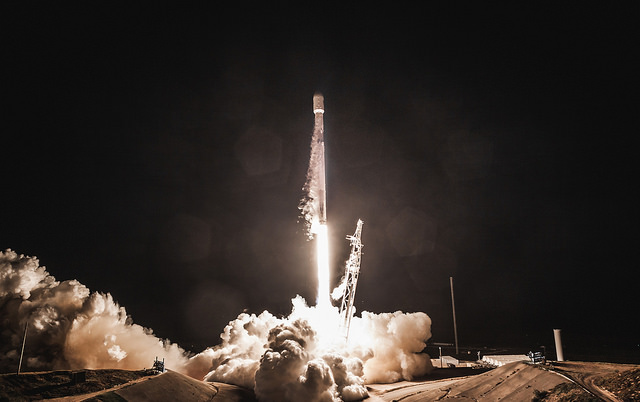
The two satellites, named Tintin A and Tintin B, were deployed from a SpaceX Falcon 9 rocket that took off from the Space Launch Complex 4 East at Vandenberg Air Force Base, California just after 7 a.m. PST. The satellites were deployed into orbit about 20 minutes later.
Musk posted footage of one of the satellites being deployed on Twitter before adding in another tweet, “Don’t tell anyone, but the Wi-Fi password is martians.”
First two Starlink demo satellites, called Tintin A & B, deployed and communicating to Earth stations pic.twitter.com/TfI53wHEtz
— Elon Musk (@elonmusk) February 22, 2018
The Starlink project was announced by Musk at an event in January 2015. The first serious details of the proposed system emerged via an application to the Federal Communications Commission later the same year.
Further details came in November 2016, with the public release of Tesla’s FCC filing. The paperwork detailed a network of 4,425 satellites deployed at altitudes ranging from 715 to 823 miles, referred to as Low Earth Orbit, to provide global access and fast internet access to people in remote areas with limited or no internet access.
A network of 4,425 satellites, presuming the successful deployment of Tintin A and B between now and 2024, may sound like a lot. But Musk and SpaceX have bigger plans yet. Another application lodged with the FCC in March 2017 requested permission to launch an additional 7,500 V-band satellites in a lower orbit than the initial group.
The idea is to reduce the distance and therefore latency between the receiving point and the satellite. Latency isn’t a major issue with broadcasts such as television streams, but it starts to become a more serious problem with two-way communications technology such as a broadband internet connection.
SpaceX wants to deploy the additional satellites to reduce latency to as low as 25 and 35 milliseconds, better numbers than an ADSL connection and similar rates to a cable connection. Existing satellite internet solutions today offer latency of 600 ms or higher.
… We’d like to tell you about our mission and how you can help us fulfill it. SiliconANGLE Media Inc.’s business model is based on the intrinsic value of the content, not advertising. Unlike many online publications, we don’t have a paywall or run banner advertising, because we want to keep our journalism open, without influence or the need to chase traffic.The journalism, reporting and commentary on SiliconANGLE — along with live, unscripted video from our Silicon Valley studio and globe-trotting video teams at theCUBE — take a lot of hard work, time and money. Keeping the quality high requires the support of sponsors who are aligned with our vision of ad-free journalism content.
If you like the reporting, video interviews and other ad-free content here, please take a moment to check out a sample of the video content supported by our sponsors, tweet your support, and keep coming back to SiliconANGLE.






