



 EMERGING TECH
EMERGING TECH
EMERGING TECH
EMERGING TECH

In the latest move to make history more accessible, the British Broadcasting Corp. Thursday launched its first augmented reality app, Civilisation AR.
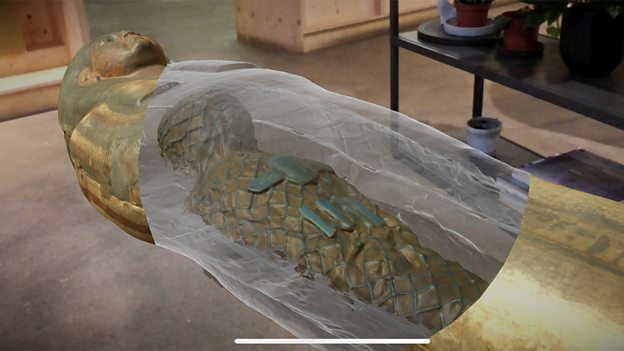
The app, developed by BBC Research and Development, BBC Arts and Nexus Studios features more than 30 captivating artifacts from museums across the United Kingdom. Each object has been digitally scanned by archaeologists and is now available for viewing as 3-D objects as part of a virtual exhibition. The app is available for free on iOS and Android platforms, including phones, tablets and other mobile devices.
“The app enables users to explore an amazing range of exhibits while enabling the BBC R&D team to experiment with a new technology and test how a new format can complement a linear show,” said Eleni Sharp, executive product manager for BBC R&D.
The launch of this app coincides with the launch of a new landmark arts and culture series, Civilisations, which began on the BBC Two broadcast channel and is available to view on BBC iPlayer. Using the camera on a mobile device, the AR app can project a 3-D hologram of an exhibit into the same room with a viewer. Although it is said that television broadcasts can “transport” viewers to faraway lands to show them things they otherwise would not be able to see in their own living room, AR brings things into the living room.
For example, while watching an episode discussing the Rosetta Stone, a viewer could pull out the BBC Civilisations app and see the digitized stone, with its worn but highly detailed carvings projected onto the floor in front of them. The viewer would then be able to move closer to see details in the smoothed black granodiorite surface and the carved hieroglyphs and letters through a “window” provided by the mobile device.
At the core of the Civilisations AR experience is a “magic spotlight” feature that connects annotations to the 3-D object being explored. Much like hyperlinks in a web page, these annotations spill out into audio and extra imagery that add context to the exhibit.
“However, this is just the first outing for the app,” said Sharp. “We’ve designed and built it to be a totally reusable product, and we will be looking to use develop more AR projects in the future once we have had the chance to analyze the data from this one.”
This project from the BBC is similar from an app launched by news website Quartz Media LLC in September, also designed to bring 3-D objects into perspective using AR. With Quartz’s iPhone AR app, users reading certain articles can call up 3-D objects and place them into the world with them, walk around the objects in life-size – for example, a 3-D model of the Cassini-Huygens spacecraft, which just finished a 20-year mission last year to study Saturn.
The ubiquity of mobile phones, tablets and other devices with cameras and powerful processors has led to the release of multiple AR development kits such as ARKit for iPhone and ARCore for Android. This has led to a slow proliferation of apps that take advantage of AR capabilities.
Depending on how well audiences receive this new series and the accompanying AR app, the BBC plans to build out this project for future annotated 3-D objects viewable through augmented reality. Details on a full list of exhibits is available from the BBC and the series can be viewed via the BBC iPlayer app.
… We’d like to tell you about our mission and how you can help us fulfill it. SiliconANGLE Media Inc.’s business model is based on the intrinsic value of the content, not advertising. Unlike many online publications, we don’t have a paywall or run banner advertising, because we want to keep our journalism open, without influence or the need to chase traffic.The journalism, reporting and commentary on SiliconANGLE — along with live, unscripted video from our Silicon Valley studio and globe-trotting video teams at theCUBE — take a lot of hard work, time and money. Keeping the quality high requires the support of sponsors who are aligned with our vision of ad-free journalism content.
If you like the reporting, video interviews and other ad-free content here, please take a moment to check out a sample of the video content supported by our sponsors, tweet your support, and keep coming back to SiliconANGLE.






