



 EMERGING TECH
EMERGING TECH
EMERGING TECH
EMERGING TECH

Uber Technologies Inc.’s autonomous driving plans are not limited to developing robotaxis. The company is also working to apply the technology to freight shipping, an effort that it announced today has reached an important milestone.
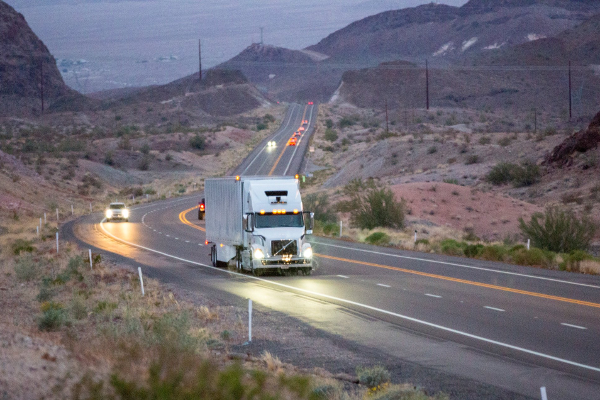
Uber is now using self-driving trucks to transport cargo for commercial customers in Arizona. The vehicles, which have been hauling merchandise for a few months now according to The New York Times, are accessible to companies via the Uber Freight app that launched last May.
The service essentially applies the ride-hailing model to shipping with a few key changes such as the ability to schedule deliveries in advance. Uber’s self-driving truck push kicked off only a few quarters before the launch of Uber Freight with the 2016 acquisition of Otto Inc., a deal that sparked a lawsuit from Alphabet Inc.’s autonomous driving subsidiary Waymo. The companies settled the dispute last month for $245 million.
Despite the bumps along the way, Uber’s self-driving truck initiative has made a great deal of progress since the Otto deal. The newly revealed Arizona pilot implements a model wherein the autonomous vehicles work in tandem with human drivers to carry out shipments.
When an order arrives, a trucker is assigned to pick up the cargo from the loading area and haul it to a transfer station. There, the trailer is attached to one of Uber’s robot trucks, which makes a long-distance highway trip to another transfer station near the final designation. For the last stretch of the journey, the trailer is transferred to a third truck driven by a human, who then hauls it to the customer’s site.
Uber is limiting its robot trucks to highway driving because the onboard artificial intelligence is not yet equipped to handle the busy traffic of urban areas. For added measure, a human safety driver sits behind the wheel during trips and can take over in the event that something throws off the navigation system.
The early trials that Uber is currently conducting in Arizona are no doubt meant as a stepping stone to an eventual national expansion. The $726 billion trucking market represents a major opportunity for the ride-hailing giant, but building an autonomous delivery fleet capable of operating on a large scale won’t be easy.
… We’d like to tell you about our mission and how you can help us fulfill it. SiliconANGLE Media Inc.’s business model is based on the intrinsic value of the content, not advertising. Unlike many online publications, we don’t have a paywall or run banner advertising, because we want to keep our journalism open, without influence or the need to chase traffic.The journalism, reporting and commentary on SiliconANGLE — along with live, unscripted video from our Silicon Valley studio and globe-trotting video teams at theCUBE — take a lot of hard work, time and money. Keeping the quality high requires the support of sponsors who are aligned with our vision of ad-free journalism content.
If you like the reporting, video interviews and other ad-free content here, please take a moment to check out a sample of the video content supported by our sponsors, tweet your support, and keep coming back to SiliconANGLE.






