



 EMERGING TECH
EMERGING TECH
EMERGING TECH
EMERGING TECH

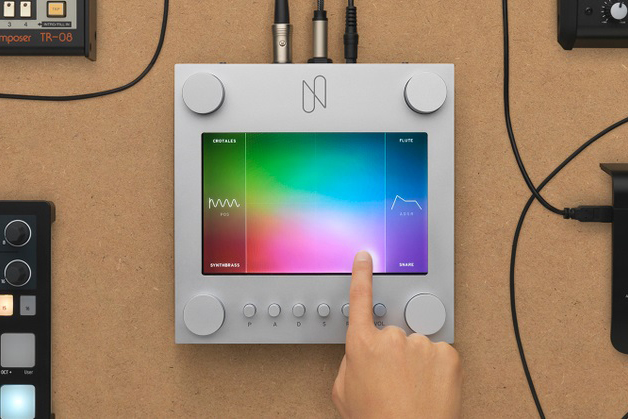
Magenta, Google LLC’s research project to apply artificial intelligence to the arts, has released a new toy for musicians: NSynth Super.
Described as “an open source experimental instrument,” NSynth Super allows musicians to play around with the Magenta team’s NSynth or Neural Synthesizer machine learning algorithm.
Magenta developed the NSynth algorithm using WaveNet, a neural network developed by Google’s own DeepMind to make artificial speech sound more natural. Those same methods allow NSynth to simulate musical instruments that would be impossible in the real world.
“It’s a machine learning algorithm that uses deep neural networks to learn the characteristics of sounds, and then create a completely new sound based on these characteristics,” explained Magenta researcher Douglas Eck and Google Creative Lab Director Steve Vranakis. “Rather than combining or blending the sounds, NSynth synthesizes an entirely new sound using the acoustic qualities of the original sounds — so you could get a sound that’s part flute and part sitar all at once.”
NSynth Super features touch screen and dial controls, along with an OLED display and custom-designed printed circuit board. The source code for NSynth Super gives creators everything they need to build their own instrument, including application software, firmware, PCB schematics, a laser cutting template for the case, 3-D printer design files for the dials and more. The project even includes step-by-step pictures for the entire assembly process.
Magenta, which launched in 2016 as part of the Google Brain team developing machine learning technologies, aims to build tools that “allow artists and musicians to extend (not replace!) their processes.” The team has released a few open-source projects over the last couple of years, including the tools used to create a web app that allows users to play a piano duet with an AI.
“Part of the goal of Magenta is to close the gap between artistic creativity and machine learning,” said Eck and Vranakis. “It’s why we work with a community of artists, coders and machine learning researchers to learn more about how machine learning tools might empower creators. It’s also why we create everything, including NSynth Super, with open source libraries, including TensorFlow and openFrameworks.”
As with all of Magenta’s open-source projects, Google noted that NSynth Super “is not an official Google product.”
… We’d like to tell you about our mission and how you can help us fulfill it. SiliconANGLE Media Inc.’s business model is based on the intrinsic value of the content, not advertising. Unlike many online publications, we don’t have a paywall or run banner advertising, because we want to keep our journalism open, without influence or the need to chase traffic.The journalism, reporting and commentary on SiliconANGLE — along with live, unscripted video from our Silicon Valley studio and globe-trotting video teams at theCUBE — take a lot of hard work, time and money. Keeping the quality high requires the support of sponsors who are aligned with our vision of ad-free journalism content.
If you like the reporting, video interviews and other ad-free content here, please take a moment to check out a sample of the video content supported by our sponsors, tweet your support, and keep coming back to SiliconANGLE.






