



 INFRA
INFRA
INFRA
INFRA
INFRA

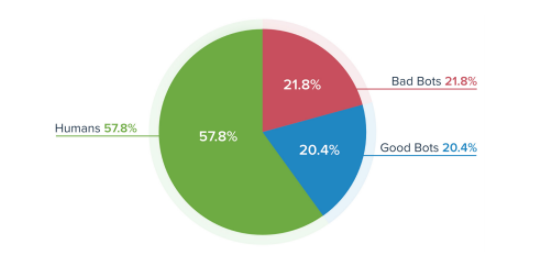
Bad bots are eating the internet, accounting for 21.8 percent of all website traffic in 2017, according to a report released today by Distil Networks Inc.
The “Bad Bot Report 2018: The Year Bad Bots Went Mainstream” analyzed hundreds of billions of bad bot requests for insight and guidance on what they’re doing and what companies can do to protect themselves from them.
“This year bots took over public conversation, as the FBI continues its investigation into Russia’s involvement in the 2016 U.S. presidential election and new legislation made way for stricter regulations,” Tiffany Olson Jones, chief executive officer of Distil Networks, said in a statement. “Yet, as awareness grows, bot traffic and sophistication continue to escalate at an alarming rate.”
As Jones pointed out, that awareness of bots has grown thanks to their involvement in the presidential election. But bad bots can be used for a wide variety of purposes, such as web scraping, brute force attacks, competitive data mining, online fraud, account hijacking, data theft, spam and digital ad fraud.
Along with bad bots accounting for 21.8 percent of website traffic, the report found that good bots now account for 20.4 percent of all website traffic, meaning bots overall are now creeping toward half of website traffic with a combined total of 42.2 percent.
Gambling companies and airlines suffer from the highest levels of bad bot traffic, with 53.1 percent and 43.9 percent of traffic respectively coming from bad bots, while e-commerce, healthcare and ticketing websites were also highly targeted.
A full 82.7 percent of bad bot traffic was found to have emanated from data centers in 2017, compared with 60.1 percent the year before. The report noted that the continually dropping cost of cloud computing was driving the switch.
Of the bad bots, 74 percent were found to be “moderate or sophisticated bots” that attempt to evade detection, while account-takeover attacks remained popular, occurring at least twice a month against all websites.
Perhaps without irony, the country most with the most blocked bots is Russia, with 20.7 percent of websites implementing country-specific internet protocol blocking requests to prevent bad bot access from Russian servers.
… We’d like to tell you about our mission and how you can help us fulfill it. SiliconANGLE Media Inc.’s business model is based on the intrinsic value of the content, not advertising. Unlike many online publications, we don’t have a paywall or run banner advertising, because we want to keep our journalism open, without influence or the need to chase traffic.The journalism, reporting and commentary on SiliconANGLE — along with live, unscripted video from our Silicon Valley studio and globe-trotting video teams at theCUBE — take a lot of hard work, time and money. Keeping the quality high requires the support of sponsors who are aligned with our vision of ad-free journalism content.
If you like the reporting, video interviews and other ad-free content here, please take a moment to check out a sample of the video content supported by our sponsors, tweet your support, and keep coming back to SiliconANGLE.






