



 EMERGING TECH
EMERGING TECH
EMERGING TECH
EMERGING TECH

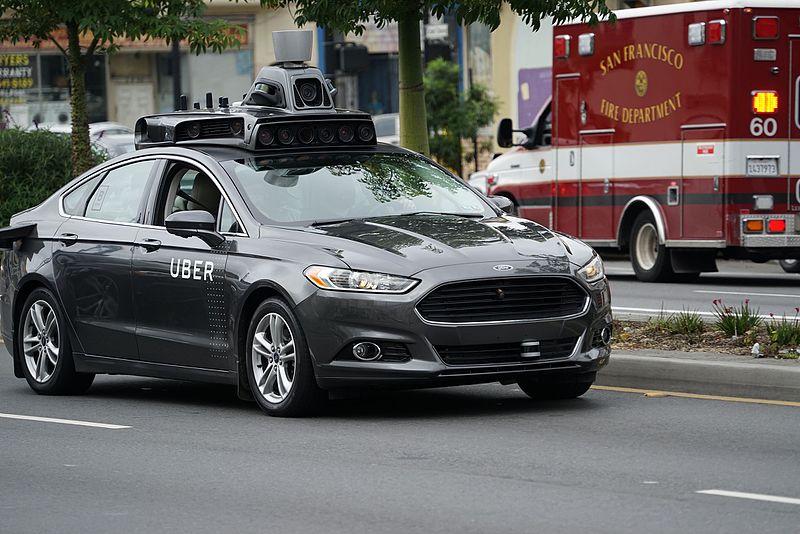
Uber Technologies Inc. can no longer test its self-driving vehicles in the state of Arizona.
Following last week’s tragic accident in which an autonomous Uber vehicle struck and killed a pedestrian, Arizona Governor Doug Ducey has suspended the company’s testing license within the state.
Uber had already voluntarily halted its self-driving operations in Arizona, Pittsburgh, San Francisco and Toronto while it investigates the accident, but Ducey’s order has made the company’s eventual return to the roads more difficult.
“Improving public safety has always been the emphasis of Arizona’s approach to autonomous vehicle testing, and my expectation is that public safety is also the top priority for all who operate this technology in the state,” Ducey wrote in a letter to Uber Chief Executive Dara Khosrowshahi. “Arizona will not tolerate any less than an unequivocal commitment to public safety.”
Ducey updated an executive order on autonomous vehicle testing earlier this month, which included a new requirement that the vehicles must be “capable of complying with all applicable traffic and motor vehicle safety laws and regulations.” Despite the updated order and Ducey’s pledge to public safety, however, some groups have questioned Arizona’s approach to autonomous vehicle testing. For example, consumer advocacy group Consumer Watchdog called the state a “wild west of robot car testing with virtually no regulations in place.”
In a strange coincidence, Ducey’s decision to suspend Uber came exactly one year to the day after Uber voluntarily halted its tests following a non-fatal crash in Tempe, Arizona, the same city as last week’s more serious accident. Uber’s vehicle was ultimately determined to not be at fault in the first crash, and it is still possible that the company will not be held responsible for the more recent incident either.
Elaine Herzberg, the pedestrian killed by Uber’s vehicle, had been crossing an unlit road at night in a location with no crosswalk, and the dashcam video from Uber’s vehicle showed that Herzberg was not fully visible until the last moment. Arizona has one of the highest pedestrian fatality rates in the U.S., and if Uber’s car had been operated by a human driver, last week’s outcome may have been the same.
Of course, self-driving vehicles are also meant to be safer than human drivers, and Uber’s vehicles are equipped with sensors that can detect people and objects even in total darkness. The artificial intelligence that operates the vehicles should also be able to react faster than a human driver, and the investigation into the accident will likely focus on why Uber’s car either did not see or did not react to Herzberg’s presence on the road.
… We’d like to tell you about our mission and how you can help us fulfill it. SiliconANGLE Media Inc.’s business model is based on the intrinsic value of the content, not advertising. Unlike many online publications, we don’t have a paywall or run banner advertising, because we want to keep our journalism open, without influence or the need to chase traffic.The journalism, reporting and commentary on SiliconANGLE — along with live, unscripted video from our Silicon Valley studio and globe-trotting video teams at theCUBE — take a lot of hard work, time and money. Keeping the quality high requires the support of sponsors who are aligned with our vision of ad-free journalism content.
If you like the reporting, video interviews and other ad-free content here, please take a moment to check out a sample of the video content supported by our sponsors, tweet your support, and keep coming back to SiliconANGLE.






