 BIG DATA
BIG DATA
BIG DATA







BIG DATA

Weather data by itself may not sound wildly appetizing, but when kneaded in with additional sources of data, it could bake out a fine predictive analytics meatloaf.
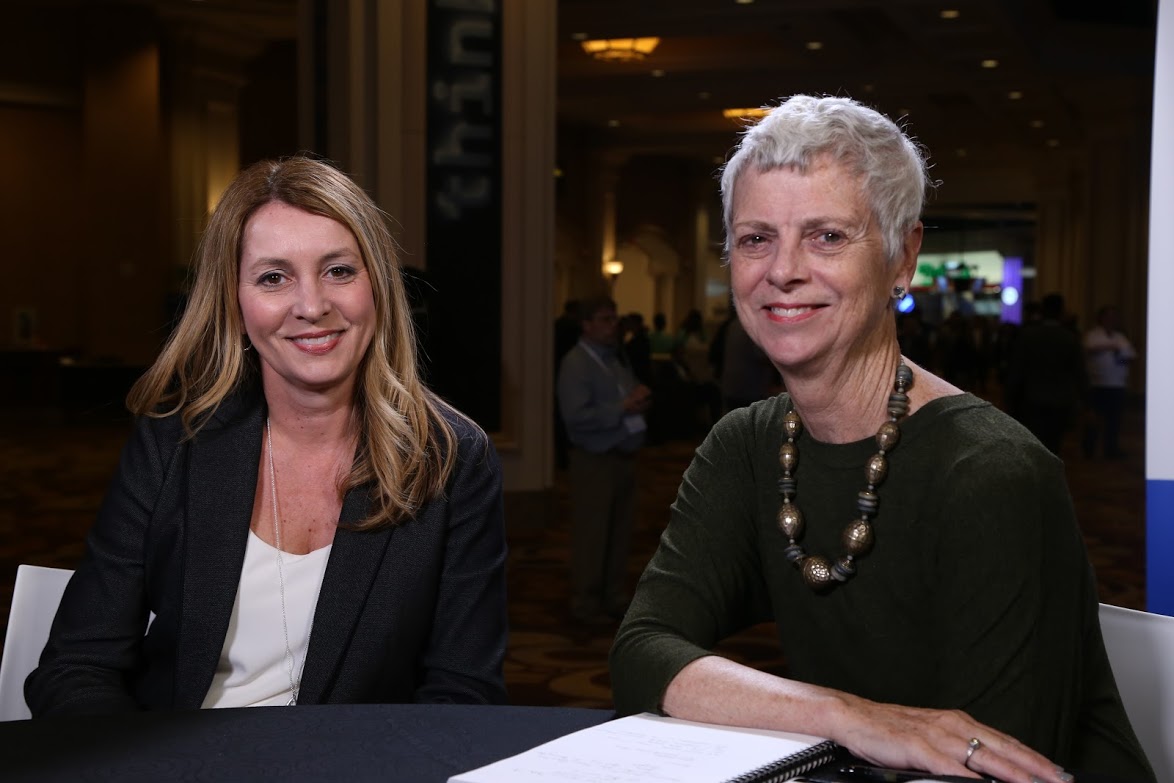
“We’re not in the weather business; we’re in the decision business,” said Mary Glackin (pictured, right), senior vice president of science and forecast operations at The Weather Company, an IBM business.
Since IBM acquired The Weather Company in 2016, the two have been marrying their technologies together for mutual enrichment. IBM Watson’s machine learning and artificial intelligence powers and The Weather Company’s massive data-collecting network are mixing in a number of projects. The results can help a wide range of customers sharpen data-based decision making, according to Glackin.
Glackin and Sheri Bachstein (pictured, left), global head of consumer business at The Weather Company, spoke with Dave Vellante (@dvellante), host of theCUBE, SiliconANGLE Media’s mobile livestreaming studio, at the IBM Think event in Las Vegas. They discussed the companies’ tech transfusions and the evolution of weather data. (* Disclosure below.)
“Users want a personalized experience; they want to know how the weather’s going to impact [them], but they don’t want to personalize,” Bachstein said. For example, machine learning can deliver consumers with seasonal allergies special alerts; they don’t have to go directly to the app, she pointed out.
Enterprise customers can blend weather data into their business decisions with tools IBM and The Weather Company have created. WeatherFX for IBM Watson combines weather intelligence from The Weather Company with a cross-channel digital marketing platform. It takes predictive analytics from retailers and mixes it with historical weather data to come up with insights, Bachstein explained.
“Internet of things” connected devices are making weather data and analytics more interesting all the time, Glackin stated. IBM is pulling atmospheric-pressure data off cell phones; it’s taking data off of airplanes; and soon it will be taking it off cars, “which will tell us when the windshield wipers are moving, is it raining or not …,” she added. This will help improve accuracy of predictions and keep commuters safe.
“When we move into autonomous vehicles, there’s just going to be even more demand for very high-resolution, accurate weather information,” Glackin concluded.
Watch the complete video interview below, and be sure to check out more of SiliconANGLE’s and theCUBE’s coverage of the IBM Think event. (* Disclosure: TheCUBE is a paid media partner for IBM Think. Neither IBM, the event sponsor, nor other sponsors have editorial control over content on theCUBE or SiliconANGLE.)
Support our mission to keep content open and free by engaging with theCUBE community. Join theCUBE’s Alumni Trust Network, where technology leaders connect, share intelligence and create opportunities.
Founded by tech visionaries John Furrier and Dave Vellante, SiliconANGLE Media has built a dynamic ecosystem of industry-leading digital media brands that reach 15+ million elite tech professionals. Our new proprietary theCUBE AI Video Cloud is breaking ground in audience interaction, leveraging theCUBEai.com neural network to help technology companies make data-driven decisions and stay at the forefront of industry conversations.





