



 INFRA
INFRA
INFRA
INFRA
INFRA

A vulnerability in Nvidia Corp.’s Tegra X-1 chips used by the Nintendo Switch, Google LLC’s Pixel C tablet and the Nvidia Shield digital media box that allows the devices to be easily hacked has been uncovered by a security researcher, but the worst part is that it may not be patchable.
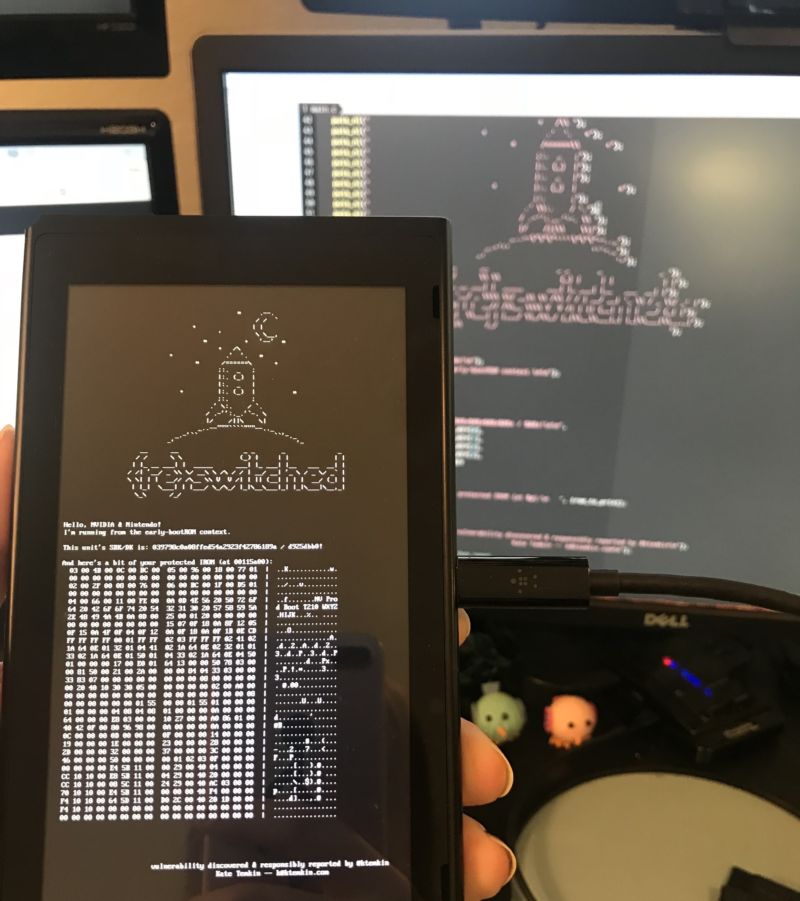
A proof-of-concept attack exploiting the vulnerability, dubbed Fusée Gelée by researcher Katherine Temkin, allows an attacker to bypass the device lockdown and run custom code on the Nintendo Switch specifically. But in theory, it could be used on any device with a Tegra X-1 chip.
The hack involves exploiting the chip’s USB recovery mode to circumvent the lock-out operations that protect the bootROM, which is the first code executed by the processor when a device is turned on or reset. A buffer overflow, essentially a bunch of bad data, is sent through the USB control procedure, overflowing the direct memory access buffer in the bootROM, allowing data to be copied to the previously protected application stack.
In the proof of concept, Temkin installed Linux on a Nintendo Switch, but given that the access opens the door to hacking, anything could be installed, including malicious software.
Although a vulnerability alone may be bad, what’s worse is that Temkin says that it’s unpatchable because it’s built into the hardware. “The relevant vulnerability is the result of a ‘coding mistake’ in the read-only bootROM found in most Tegra devices,” Temkin explained in a FAQ. “This bootROM can have minor patches made to it in the factory (‘ipatches’), but cannot be patched once a device has left the factory.”
Nintendo is yet to officially comment on the disclosure, but there may be at least some hope for the company. Ars Technica noted that previous software-level exploits of Nintendo systems could be mitigated via downloadable system updates, which Nintendo attempts to force on users by making them a requirement for new software and access to Nintendo’s online servers. Although adding that such an application isn’t helpful for a chip-level bootROM exploit, Nintendo may still be able to detect hacked systems via a software update, allowing it to restrict access to machines that have been hacked.
… We’d like to tell you about our mission and how you can help us fulfill it. SiliconANGLE Media Inc.’s business model is based on the intrinsic value of the content, not advertising. Unlike many online publications, we don’t have a paywall or run banner advertising, because we want to keep our journalism open, without influence or the need to chase traffic.The journalism, reporting and commentary on SiliconANGLE — along with live, unscripted video from our Silicon Valley studio and globe-trotting video teams at theCUBE — take a lot of hard work, time and money. Keeping the quality high requires the support of sponsors who are aligned with our vision of ad-free journalism content.
If you like the reporting, video interviews and other ad-free content here, please take a moment to check out a sample of the video content supported by our sponsors, tweet your support, and keep coming back to SiliconANGLE.






