



 THOUGHT LEADERSHIP
THOUGHT LEADERSHIP
THOUGHT LEADERSHIP
THOUGHT LEADERSHIP

If you think the tech-fueled disruptions of the past few years have been dramatic, hold on to your seats. Things are just getting started.
The next round of disruption, fueled by powerful technologies such as blockchain, machine learning, robotics and humanlike machine interactions, will make the past 10 years look mild in comparison, according to the author of the new book “Seeing Digital: A Visual Guide to the Industries, Organizations and Careers of the 2020s.”
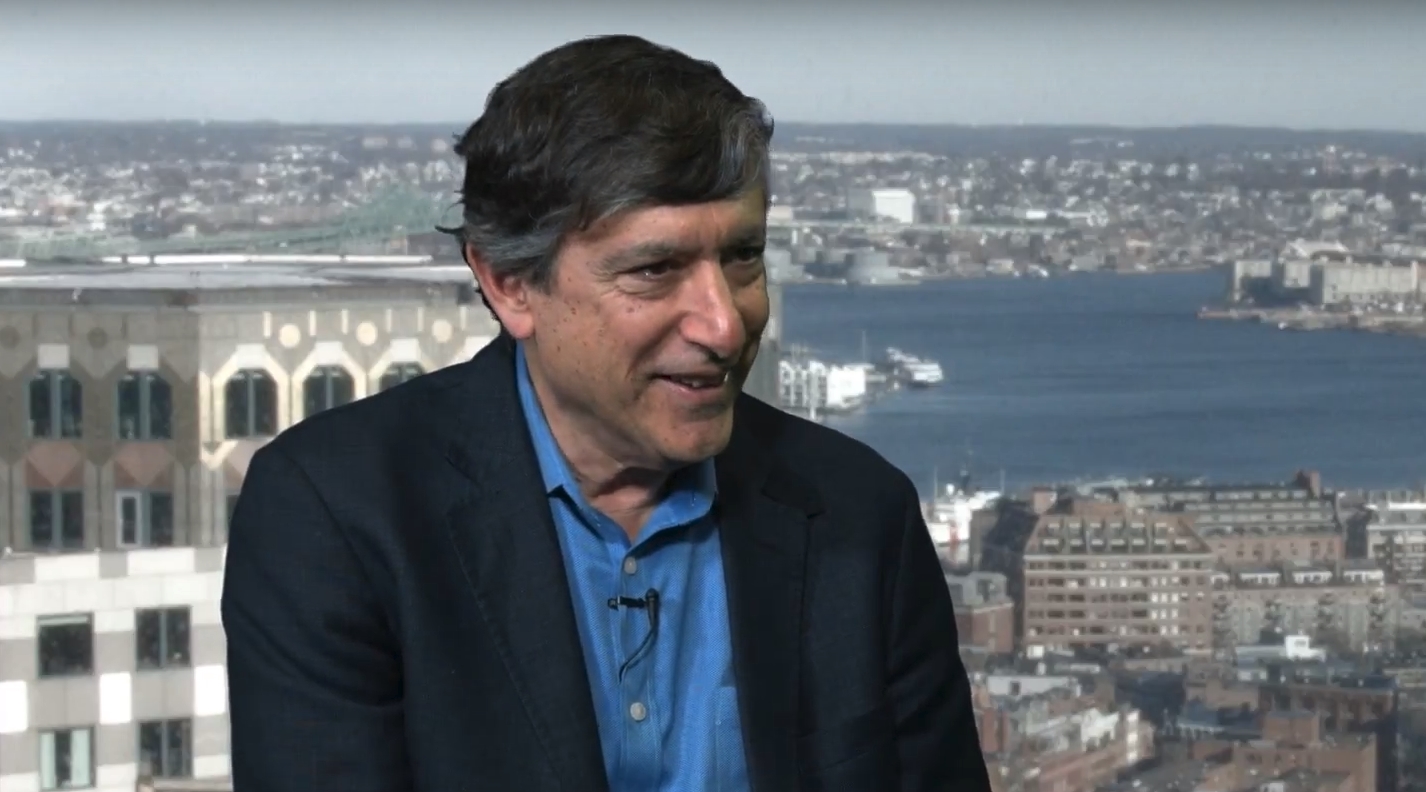
The five largest U.S. companies by market capitalization — Apple Inc., Google Inc. parent Alphabet Inc., Microsoft Corp., Amazon.com Inc. and Facebook Inc. — are early prototypes of the powerful organizations of the future, said author David Moschella (pictured), research director and fellow at the Leading Edge Forum. These companies were founded to serve the needs of businesses, but they’re increasingly encroaching on their customers.
“They are an invading army, increasingly competing with the very customers that they’ve traditionally supplied,” he said, citing Amazon’s forays into health insurance and banking as an example. Moschella spoke recently with Dave Vellante, host of theCUBE, SiliconANGLE Media’s mobile livestreaming platform, at SiliconANGLE Media’s studio in Boston.
The next generation of disruptive companies will leverage what Moschella called a technology matrix. “Traditionally, every industry had a vertical stack of what it did, but today those platforms are horizontal,” he said. Matrix-based organizations can leverage their technology strengths across multiple industries.
For example, a firm with expertise in blockchain could compete with banks, real estate brokers, legal firms, media companies and any other business that requires secure transactions. That means whole industries will be redefined around labels like “fintech” and “medtech,” with technology being a defining characteristic.
Successful companies such as Netflix Inc. have discarded the traditional corporate structure defined by departments such as marketing, sales and customer service and replaced it with a customer experience that is consistent, personalized and entirely digital. The result is an organization that is vastly more efficient and scalable.
“Tension between the traditional vertical stacks and these enormously powerful horizontal technology firms is the structural dynamic that is in play right now,” Moschella said. “We’re building an intelligent, societal infrastructure of the 2020s that will be vastly different than what we have today.”
The technologies that are commonly seen as disruptive to this point, such as cloud computing and the web, were actually actually fairly simpler, Moschella said. Yet they gave birth to such giants as Amazon and Salesforce.com Inc. As more powerful technologies come along, their disruptive effect will be magnified.
“The industries that have been disrupted are relatively low-security and low-risk, such as music, advertising, taxi services and retail,” he said. “The ones that haven’t are the ones where the stakes are higher, like banking, insurance, healthcare and aerospace.”
But their day of reckoning is coming. “Technologies of the 2020s are aimed almost directly at high-risk industries,” he said. “Machine intelligence is aimed at healthcare, autonomous systems are aimed at defense and blockchain is aimed at banking and insurance.”
Cracks in the foundation of even these resilient industries are beginning to show. “Banks have been incredibly good at keeping control, but you can see entire countries getting rid of cash and going to digital currencies,” he said. Bankers may give lip service to supporting these new technologies, but most are unenthusiastic.
They will be the first to go. The challenges confronting many of these vulnerable industries are complacency and uncertainty around how to transform themselves. “Complacency has been baked in for years,” Moschella said.
Adapting to the evolving business landscape of the 2020s will mean embracing technology as a core competence. “This is why getting digital right is so important,” Moschella said. “People need to commit to significant change programs.”
The author believes change will come about more slowly than many people expect, but in retrospect, we’ll see that the changes were fundamental. “These things that are an entire new layer of intelligence,” Moschella said. “We’re looking at a whole wave of fundamentally powerful technologies, and we’re trying to anticipate what that’s going to mean.”
One thing is for sure: There’s no more business as usual.
Here’s the complete video interview, one of many CubeConversations from SiliconANGLE and theCUBE:
… We’d like to tell you about our mission and how you can help us fulfill it. SiliconANGLE Media Inc.’s business model is based on the intrinsic value of the content, not advertising. Unlike many online publications, we don’t have a paywall or run banner advertising, because we want to keep our journalism open, without influence or the need to chase traffic.The journalism, reporting and commentary on SiliconANGLE — along with live, unscripted video from our Silicon Valley studio and globe-trotting video teams at theCUBE — take a lot of hard work, time and money. Keeping the quality high requires the support of sponsors who are aligned with our vision of ad-free journalism content.
If you like the reporting, video interviews and other ad-free content here, please take a moment to check out a sample of the video content supported by our sponsors, tweet your support, and keep coming back to SiliconANGLE.






