



 EMERGING TECH
EMERGING TECH
EMERGING TECH
EMERGING TECH

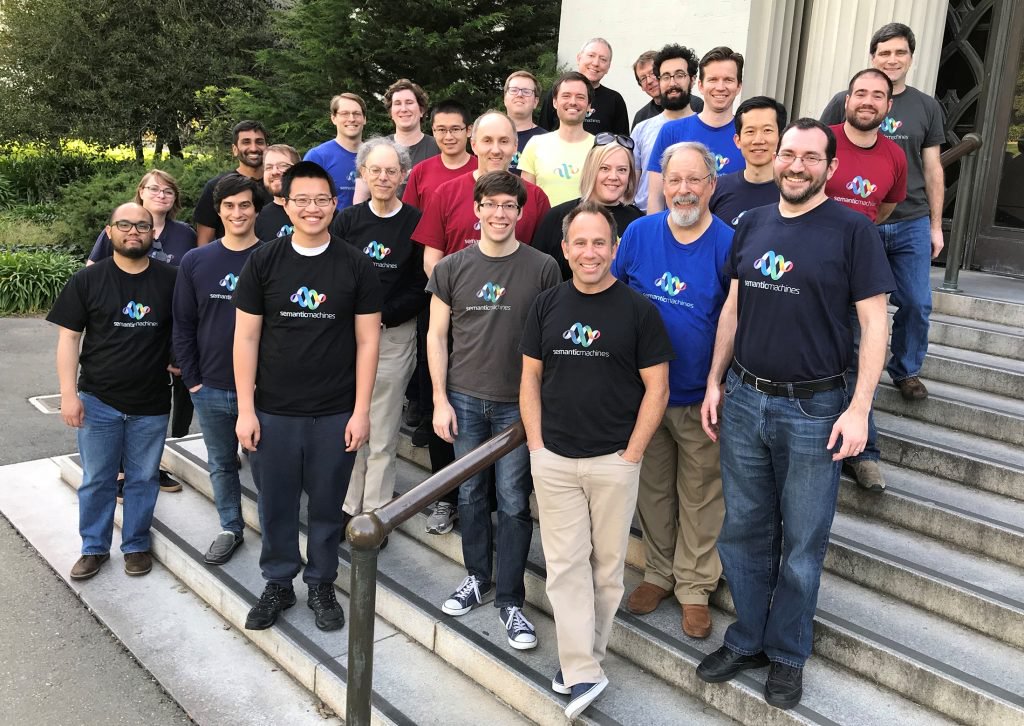
Microsoft Corp. Sunday said it has acquired Semantic Machines Inc., a Berkeley, California-based company that has built a conversational artificial intelligence platform that competes with the likes of Google Inc., for an undisclosed sum.
Founded in 2014, Semantic Machines has designed a new, language-independent technology platform that claims to go beyond understanding commands to understanding conversations. Compared with a neurolinguistic programming approach, the company said, it offers a new technology that extracts semantics across “multiturn” natural language exchanges to maintain contextual understanding over time, enabling computers to communicate, collaborate, understand goals and accomplish tasks.
The acquisition for Microsoft is aimed at boosting its existing conversational AI efforts in services such as Microsoft Cognitive, Cortana and the Azure Bot. The technology and the company itself will be used by Microsoft to establish a conversational AI center of excellence in Berkeley “to push forward the boundaries of what is possible in language interfaces.”
But the acquisition is also partly a talent buy. With the deal, Microsoft picks up “many pioneers in conversational AI,” including entrepreneur Dan Roth and “two of the most prominent and innovative natural language AI researchers in the world,” University of California at Berkeley professor Dan Klein and Stanford University professor Percy Liang, as well as former Apple Inc. chief speech scientist Larry Gillick.
For many, conversational AI may be known through consumer appliances such as Amazon.com Inc.’s Echo and Google Inc.’s Home, or corporate uses such as chatbots. But the field is at the forefront of AI development, moving from one of simple natural-language processing, the typical model today, to one of true language understanding.
A recent, headline-grabbing example was the recent demonstration of Google Duplex, which while still somewhat relying on NLP for its primary functionality demonstrated an evolution toward a truer understanding of meaning and context. Although that demo triggered moral outrage among some, it only demonstrated a consumer-facing use. But the technology has far broader implications for the development of true AI.
Put more simply, true AI is the point where a machine is both able to think for itself and also fully understand for itself. It’s a step toward what some scientists call the singularity, the point where machines become smarter than humans.
Prior to the acquisition, Semantic Machines had raised $20.9 million from Bain Capital Ventures and General Catalyst, according to Crunchbase.
… We’d like to tell you about our mission and how you can help us fulfill it. SiliconANGLE Media Inc.’s business model is based on the intrinsic value of the content, not advertising. Unlike many online publications, we don’t have a paywall or run banner advertising, because we want to keep our journalism open, without influence or the need to chase traffic.The journalism, reporting and commentary on SiliconANGLE — along with live, unscripted video from our Silicon Valley studio and globe-trotting video teams at theCUBE — take a lot of hard work, time and money. Keeping the quality high requires the support of sponsors who are aligned with our vision of ad-free journalism content.
If you like the reporting, video interviews and other ad-free content here, please take a moment to check out a sample of the video content supported by our sponsors, tweet your support, and keep coming back to SiliconANGLE.






