



 EMERGING TECH
EMERGING TECH
EMERGING TECH
EMERGING TECH

Facebook Inc. and Qualcomm Inc. are joining forces for an ambitious initiative that aims to provide a dramatic jump in wireless connectivity speeds in urban areas.
The collaboration, which was announced this morning, centers on the social network’s Terragraph Project. It’s a development program that was revealed to the public in 2016 and seeks to create an ultrafast internet service capable of efficiently handling consumers’ growing bandwidth demands.
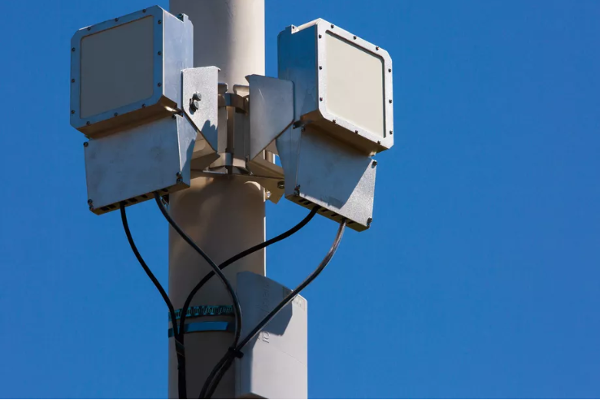
Alphabet Inc. is pursuing a similar vision with its Google Fiber offering. But whereas the search giant’s service transmits data via fiber optic cables, which can be expensive and time-consuming to lay in dense urban areas, Terragraph will send information over the air. To do so, it will rely on specialized base stations (pictured) that Facebook said can be installed atop telephone polls or mounted on a building.
Each system sports several dozen antennas that transmit information in the 60-gigahertz frequency band. That’s nearly 100 times higher than the radio frequency used by home Wi-Fi networks, which makes it possible to send considerably more data. Facebook has claimed that just one of its base stations can handle a staggering 8.4 gigabits per second of traffic.
Another benefit of the 60Ghz band is that it’s unlicensed spectrum, which removes the need to secure the expensive government licenses normally required for such projects. But there’s a catch as well. Radio waves in this band can only travel relatively short distances and don’t pass through walls, meaning that covering an entire city would require a significant number of base stations.
Facebook doesn’t plan to take on this project all by itself, but will rather seek to partner with carriers. The new alliance with Qualcomm fills in an important missing piece that will enable the social network to push the plan forward.
The collaboration will see Qualcomm make its QCA6438 and QCA6428 60Ghz chip families, which are designed to power networking hardware, compatible with Terragraph. The goal is to let hardware makers build routers that will enable consumers and businesses to access future Wi-Fi networks based on the project.
Qualcomm executive Jesse Burke told PCWorld that field trials are set to begin next year. He detailed that the technology has the potential to provide “two-digit gigabit bandwidth,” which is more than what Alphabet currently offers with Google Fiber.
… We’d like to tell you about our mission and how you can help us fulfill it. SiliconANGLE Media Inc.’s business model is based on the intrinsic value of the content, not advertising. Unlike many online publications, we don’t have a paywall or run banner advertising, because we want to keep our journalism open, without influence or the need to chase traffic.The journalism, reporting and commentary on SiliconANGLE — along with live, unscripted video from our Silicon Valley studio and globe-trotting video teams at theCUBE — take a lot of hard work, time and money. Keeping the quality high requires the support of sponsors who are aligned with our vision of ad-free journalism content.
If you like the reporting, video interviews and other ad-free content here, please take a moment to check out a sample of the video content supported by our sponsors, tweet your support, and keep coming back to SiliconANGLE.






