 CLOUD
CLOUD
CLOUD
CLOUD







CLOUD

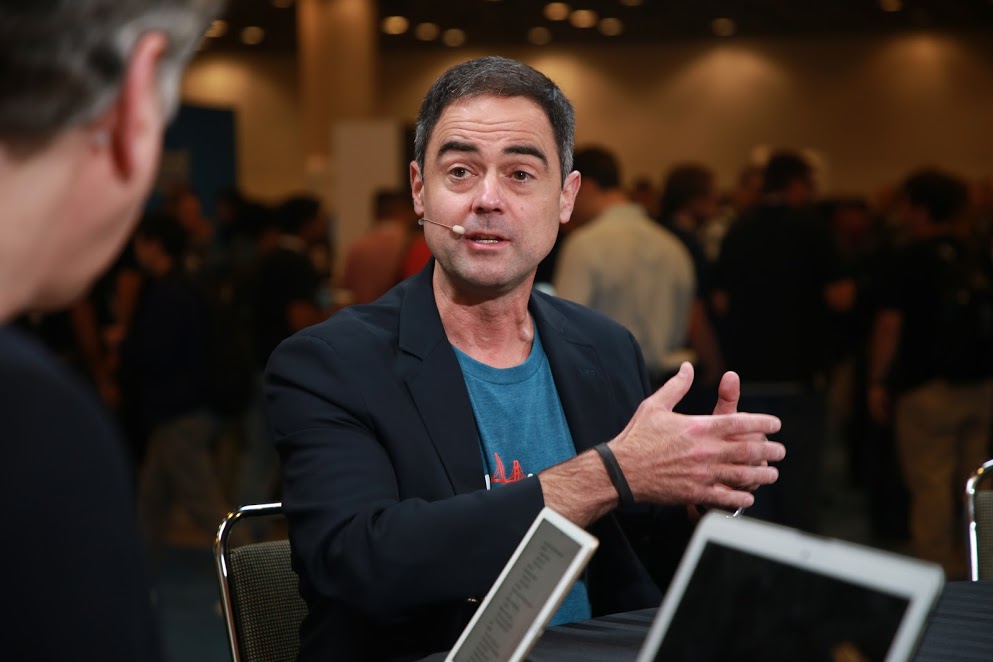
The announcements this week at DockerCon, which include cross-cloud provider management and expanded Windows capabilities, didn’t just originate in a hermetically sealed room deep inside Docker Inc.’s San Francisco headquarters. The container technology company has a small customer advisory group it relies on to deliver advice, according to Scott Johnston (pictured), chief product officer at Docker.
For Docker executives, the process of deciding when and where to push the innovation button can be a tricky one, so customer input becomes an important element. “They tell us straight talk in terms of where it’s working and where we need to improve,” Johnston said. “You want to be out in front and go where folks aren’t asking you. At the same time, hear where [customers] are today and make sure you aren’t getting too far ahead.”
Johnston spoke with Lisa Martin (@LuccaZara), co-host of theCUBE, SiliconANGLE Media’s mobile livestreaming studio, and guest host John Troyer (@jtroyer), chief reckoner at TechReckoning, during the DockerCon event in San Francisco. They discussed new tools for customers looking for simpler management of container orchestration in the cloud and the critical role being played by developers in enterprise transformation. (* Disclosure below.)
It was the customer experience that played a role in Docker’s decision announced on Wednesday to improve Kubernetes container orchestration system functionality across three of the largest cloud provider platforms. Through Docker Enterprise Edition, enterprise users can now enjoy centralized management for Google GKE, Amazon EKS and Microsoft Azure AKS.
“We were seeing customers wanting to take advantage of these different clouds, but getting frustrated every time they went to a different cloud, because they were setting up another stack of process and tooling and automation,” Johnston explained. “The cloud providers are doing a wonderful job of investing in Kubernetes and making it a managed service on their platforms.”
Docker is focused on staying closely attuned to the needs of developers as well. The company has seen firsthand the emergence of the development community as a crucial element in the transformation of organizations from legacy applications and infrastructures to new technologies built on Docker and Kubernetes.
“Developers are absolutely pivotal in that conversation, core to helping these very large Fortune 500, hundred-year-old companies transform into new, agile software-driven businesses,” Johnston concluded.
Watch the complete video interview below, and be sure to check out more of SiliconANGLE’s and theCUBE’s coverage of the DockerCon event. (* Disclosure: Docker Inc. sponsored this segment of theCUBE. Neither Docker nor other sponsors have editorial control over content on theCUBE or SiliconANGLE.)
Support our mission to keep content open and free by engaging with theCUBE community. Join theCUBE’s Alumni Trust Network, where technology leaders connect, share intelligence and create opportunities.
Founded by tech visionaries John Furrier and Dave Vellante, SiliconANGLE Media has built a dynamic ecosystem of industry-leading digital media brands that reach 15+ million elite tech professionals. Our new proprietary theCUBE AI Video Cloud is breaking ground in audience interaction, leveraging theCUBEai.com neural network to help technology companies make data-driven decisions and stay at the forefront of industry conversations.





