



 EMERGING TECH
EMERGING TECH
EMERGING TECH
EMERGING TECH

Australia has suddenly become ground zero in the global ride-hailing wars.
Chinese giant Didi Chuxing Technology Co. will open for business June 25 in direct competition with Uber Technologies Inc. and India’s Ola, the first time the world’s biggest ride-hailing companies have competed head-to-head in the same market.
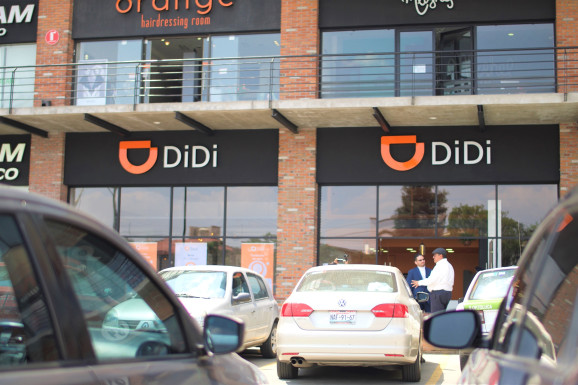
Didi’s first stop in the Australian market is Melbourne. The launch, which will follow a trial of its service in nearby regional city Geelong, is the first time the company has opened in an English-speaking country. The move, part of Didi’s global expansion plans, in turn follows its expansion into Mexico in April and a joint venture with SoftBank in Japan.
The Australian market, dominated by Uber, saw its first serious competition when Ola, India’s largest ride-hailing company and like all three counts SoftBank as a major investor, opened its doors in the country in March, first in Sydney, followed by Melbourne, Brisbane, the Gold Coast and Canberra. Australia has a number of small, indigenous ride-hailing services, mostly owned or driven by the local taxi industry, which have failed to make even a small dent in terms of market share.
“In 2018, Didi will continue to cultivate markets in Latin America, Australia and Japan,” the company said in a statement reported by TechCrunch. “We are confident a combination of world-class transportation AI technology and deep local expertise will bring a better experience to overseas markets.
All three companies not only share SoftBank as a major investor but also own shares in each other, Uber owning 20 percent of Didi while Didi is an investor in Ola. Direct competition will be a test case in whether Uber can be successfully challenged in a market it already dominates.
Uber has been successfully challenged in the past, and it not only felt forced to sell its China business to Didi but more recently its Southeast Asia business to Grab Taxi Pte Ltd. But Uber never dominated either market to begin with.
That Uber can potentially be challenged has been proved to some extent in its own backyard. The company has lost market share to Lyft Inc. in the U.S., though it remains the market leader.
… We’d like to tell you about our mission and how you can help us fulfill it. SiliconANGLE Media Inc.’s business model is based on the intrinsic value of the content, not advertising. Unlike many online publications, we don’t have a paywall or run banner advertising, because we want to keep our journalism open, without influence or the need to chase traffic.The journalism, reporting and commentary on SiliconANGLE — along with live, unscripted video from our Silicon Valley studio and globe-trotting video teams at theCUBE — take a lot of hard work, time and money. Keeping the quality high requires the support of sponsors who are aligned with our vision of ad-free journalism content.
If you like the reporting, video interviews and other ad-free content here, please take a moment to check out a sample of the video content supported by our sponsors, tweet your support, and keep coming back to SiliconANGLE.






