



 WOMEN IN TECH
WOMEN IN TECH
WOMEN IN TECH
WOMEN IN TECH

Though we are living in the 21st century, school systems in the U.S. and many other countries are still based on 19th-century methods of learning. Sometimes called the “factory model,” this system came about during the Industrial Revolution. The emphasis was on training children to be good future factory workers, emphasizing things such as sitting still for long periods; minding teachers; and entering or leaving class when a bell rings.
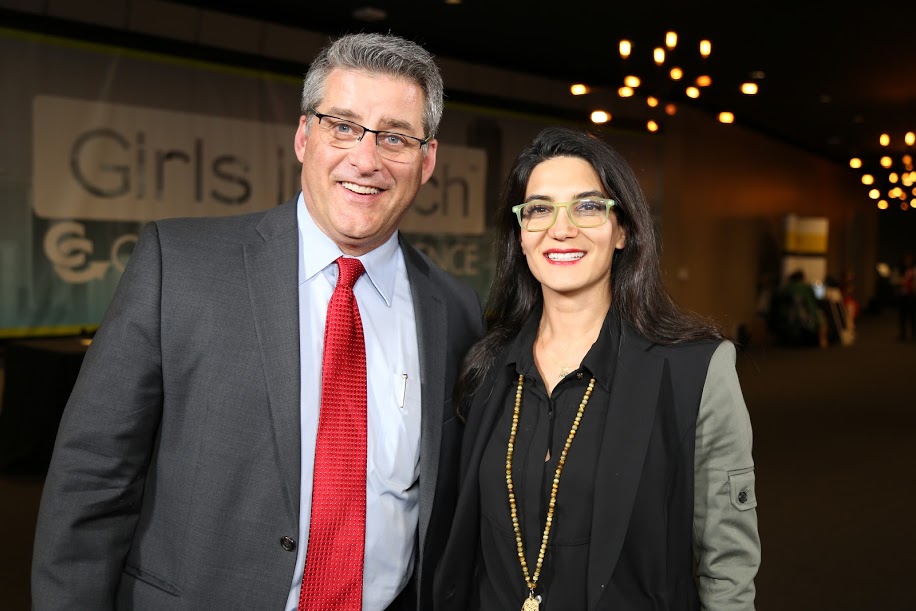
“So we’re sending kids to school. They’re going and learning how to become industrial workers,” said Lawdan Shojaee (pictured), chief executive officer of Axosoft LLC. “We never introduce them to programming at all until they hit college. And then we say, ‘Pick a career path.’ How do they even know that they want to go into programming if during high school, or lower years, they haven’t touched it?”
Shojaee spoke with Jeff Frick (@JeffFrick) (pictured), host of theCUBE, SiliconANGLE Media’s mobile livestreaming studio, during the Girls in Tech Catalyst Conference in San Francisco. They discussed the lack of computer education in schools, as well as how Shojaee’s company is working to educate female programmers. (* Disclosure below.)
Today, every company is essentially a software company, according to Shojaee. No matter the field, it needs software to run its business, and that software has to be written by trained people. She gave the example of the state of Arizona, where her company is located; the schools are not supporting computer training. Therefore, in 10 years, when Axosoft is looking for developers, there will not be enough developers, much less diverse developers to write code, because many girls are being completely left out of software development.
To help address this issue, in combination with Girls in Tech, a global non-profit organization focused on the engagement, education and empowerment of women in technology, Shojaee put a campaign together called It Was Never a Dress. Fifty teenage girls were taught how to program, making them ambassadors of anything science, technology, engineering, arts, and math related. After their training, they returned to their public schools, where they are creating their own clubs with sponsors.
“I feel like, if each company took a small amount of time and created little grassroots movements, we could make a pretty large impact,” Shojaee concluded.
Watch the complete video interview below, and be sure to check out more of SiliconANGLE’s and theCUBE’s coverage of the Girls in Tech Catalyst Conference. (* Disclosure: TheCUBE is a paid media partner for the Girls in Tech Catalyst Conference. Neither Girls in Tech, the event sponsor, nor other sponsors have editorial control over content on theCUBE or SiliconANGLE.)
… We’d like to tell you about our mission and how you can help us fulfill it. SiliconANGLE Media Inc.’s business model is based on the intrinsic value of the content, not advertising. Unlike many online publications, we don’t have a paywall or run banner advertising, because we want to keep our journalism open, without influence or the need to chase traffic.The journalism, reporting and commentary on SiliconANGLE — along with live, unscripted video from our Silicon Valley studio and globe-trotting video teams at theCUBE — take a lot of hard work, time and money. Keeping the quality high requires the support of sponsors who are aligned with our vision of ad-free journalism content.
If you like the reporting, video interviews and other ad-free content here, please take a moment to check out a sample of the video content supported by our sponsors, tweet your support, and keep coming back to SiliconANGLE.






