



 EMERGING TECH
EMERGING TECH
EMERGING TECH
EMERGING TECH

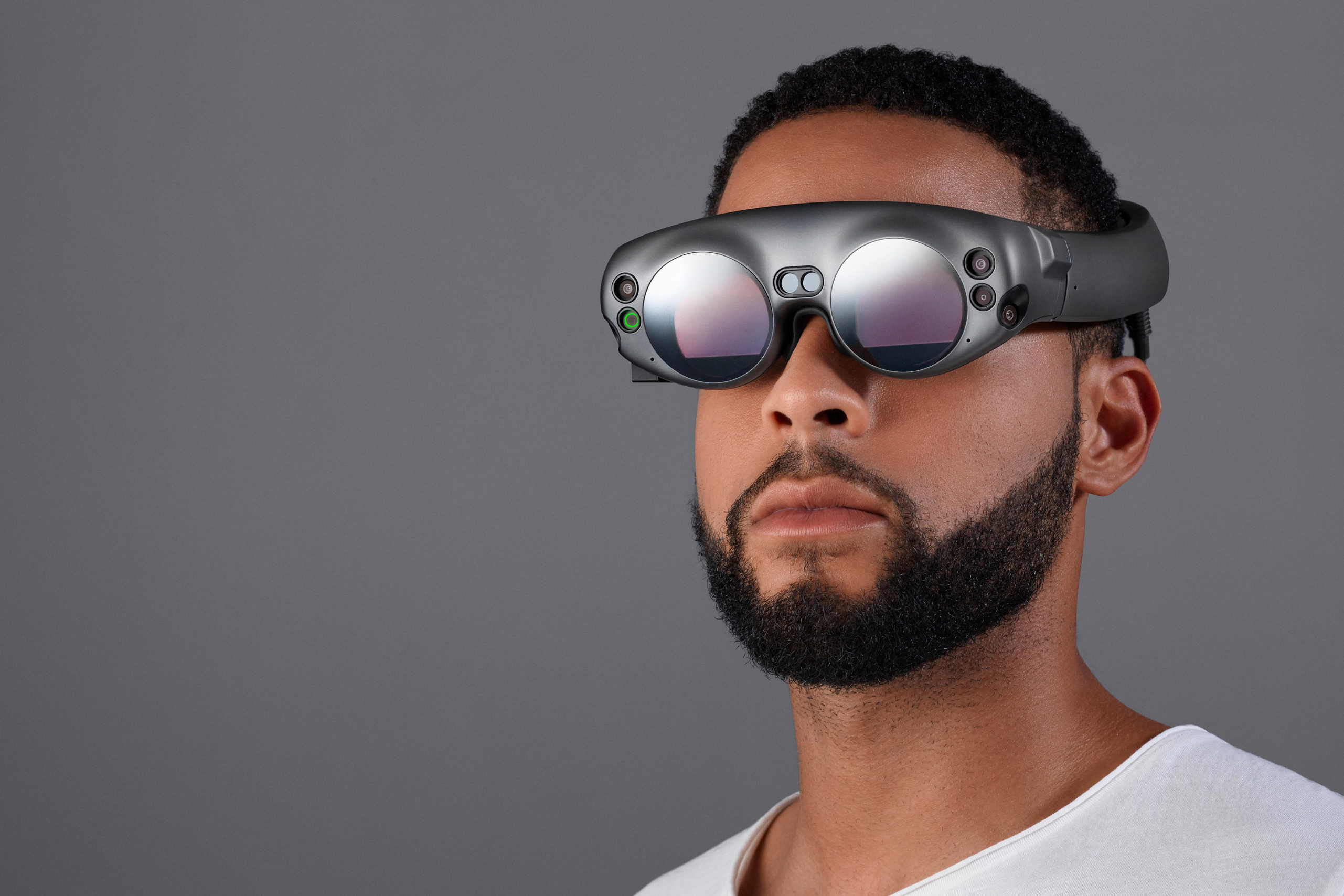
Magic Leap Inc. is promising to deliver the long-awaited developer edition of its mixed-reality goggles this summer.
The pledge came as the company announced a new investor and exclusive retail launch partner in the form of AT&T Inc.
The”Magic Leap One Create Edition” goggles come to market more than three years after Magic Leap first demonstrated their capabilities. They will be powered by Nvidia Corp.’s Tegra X2 system-on-a-chip, negating the need for the goggles to be tethered to a PC. But it does require a dedicated hip pack, called a “LightPack,” to house it.
According to VentureBeat, the hardware in the Lightpack includes a Parker system-on-chip consisting of two ARM A57 CPU cores, a Denver “special use case” central processing unit core and a 256-core Nvidia Pascal graphics processing unit. One of the ARM cores is said to be dedicated to feeding graphics, the other used for game and app logic.
The software running the goggles is a 64-bit Linux-based operating system called Lumin that includes a unified memory system that developers are allowed to partition as they need.
What was lacking in the announcement was how much memory will be provided in the device, not to mention perhaps the most important consideration of all: how much it will sell for.
On the investment front, AT&T joins Google, Alibaba, Andreessen Horowitz, Alibaba Group, Qualcomm Ventures and a range of others with an undisclosed “strategic” investment in Magic Leap. AT&T gets exclusive retail rights in the U.S.
Along with lacking a date for launch other than saying this summer, which runs until Sept. 22, the media release from AT&T would suggest that it will be limited release as well. It said that “when available for consumers,” AT&T customers will be among the first to experience it in certain AT&T stores in Atlanta, Boston, Chicago, Los Angeles and San Francisco, “with more markets to follow.”
The company has raised a stunning $2.3 billion since being founded in 2011, its last round on a whopping $6 billion valuation despite never bringing a product to market. As a result, it’s easy to be skeptical about Magic Leap, particularly given that multiple companies have launched mixed-reality headsets in the meantime, the most notable Microsoft Corp.’s Hololens.
Magic Leap’s technology wowed when it was first demonstrated in 2015, but the question is whether the appeal will still be there — not just this summer, since a final consumer release may still be over a year away.
… We’d like to tell you about our mission and how you can help us fulfill it. SiliconANGLE Media Inc.’s business model is based on the intrinsic value of the content, not advertising. Unlike many online publications, we don’t have a paywall or run banner advertising, because we want to keep our journalism open, without influence or the need to chase traffic.The journalism, reporting and commentary on SiliconANGLE — along with live, unscripted video from our Silicon Valley studio and globe-trotting video teams at theCUBE — take a lot of hard work, time and money. Keeping the quality high requires the support of sponsors who are aligned with our vision of ad-free journalism content.
If you like the reporting, video interviews and other ad-free content here, please take a moment to check out a sample of the video content supported by our sponsors, tweet your support, and keep coming back to SiliconANGLE.






