



 CLOUD
CLOUD
CLOUD
CLOUD
CLOUD

Kubernetes, the software that manages the deployment of software containers, has grown in usage like a weed since Google LLC announced it in 2014.
That’s because containers have become enormously popular for allowing developers to create one version of their software that can run on many operating systems and servers, and Kubernetes standardized the process of “orchestrating” these containers.
But even after Google contributed the Kubernetes project to the just-formed Cloud Native Computing Foundation in 2015, it was still providing the infrastructure needed for hosting, testing and other project activities, and the project’s contributors wanted more control of cloud resources. Unfortunately, Google couldn’t oblige because its security rules didn’t allow it to add external people to its domain.
Today, it’s announcing a fix, creating CNCF Google domain so it can open up its cloud resources to any and all contributors. It’s also funding the move with a $9 million grant in the form of Google Cloud Platform credits.
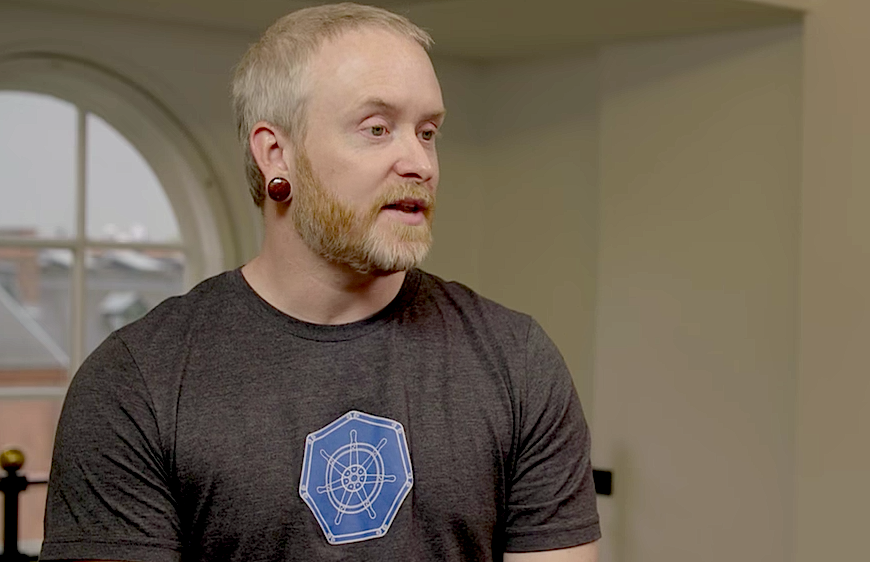
“The community should own these things,” Tim Hockin (pictured), a Google principal software engineer and leader of the Kubernetes project, said in an interview. “There should be nothing where they say, ‘I can’t do that, somebody at Google has to do this.’”
The infrastructure handles everything from network and storage capacity, testing, container downloads and other services such as domain name serving. “That infrastructure will now be managed and run by the community,” said CNCF Executive Director Dan Kohn.
And it’s a fearsomely large chunk of infrastructure thanks to the rapidly growing popularity of Kubernetes. Last month, Google said, the Kubernetes container registry it hosts served nearly 130 million container image downloads of core Kubernetes components, or more than 4 million a day. Much of the grant will be used to fund scalability testing, which often runs 150,000 containers across 5,000 virtual machines, or servers emulated in software.
“As organizations look to modernize … they’re finding that that move to cloud-native is absolutely essential,” said Kohn, and containers and Kubernetes are critical to making that happen. “2018 is the year Kubernetes has really crossed the chasm from early adopter to early majority.”
Indeed, according to a CNCF survey of 2,400 developers and information technology staff released this morning, 58 percent of respondents are now using Kubernetes in production, while 42 percent are evaluating it for future use. And it’s not just agile startups: Some 40 percent of respondents from enterprise companies with more than 5,000 employees are running Kubernetes in production.
… We’d like to tell you about our mission and how you can help us fulfill it. SiliconANGLE Media Inc.’s business model is based on the intrinsic value of the content, not advertising. Unlike many online publications, we don’t have a paywall or run banner advertising, because we want to keep our journalism open, without influence or the need to chase traffic.The journalism, reporting and commentary on SiliconANGLE — along with live, unscripted video from our Silicon Valley studio and globe-trotting video teams at theCUBE — take a lot of hard work, time and money. Keeping the quality high requires the support of sponsors who are aligned with our vision of ad-free journalism content.
If you like the reporting, video interviews and other ad-free content here, please take a moment to check out a sample of the video content supported by our sponsors, tweet your support, and keep coming back to SiliconANGLE.






