



 APPS
APPS
APPS
APPS
APPS

Chinese bike-sharing pioneer and industry leader Ofo Inc. is being sued to the tune of $10.2 million for unpaid bills as competitors take a toll on the company’s profits.
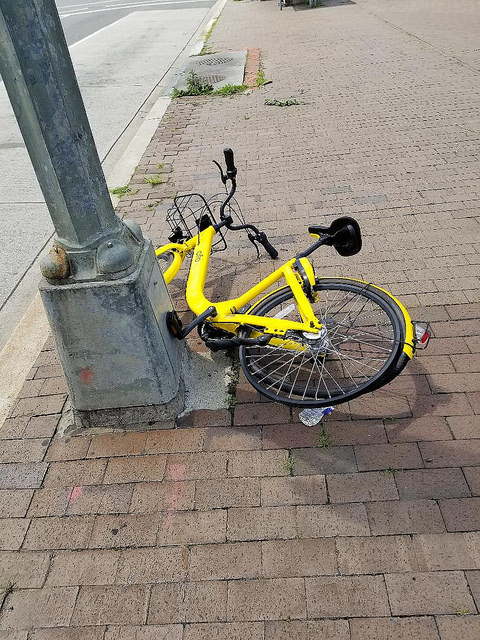
The Beijing-based outfit got off to a flying start after it was founded in 2014, soon deploying legions of bikes in around 250 cities in 20 countries. Using a new “dockless” bicycle-share model, it looked like a success despite some critics saying the bikes littered the streets somewhat like abandoned shopping trolleys – some of them literally dumped.
The company scaled back operations in the U.S. recently, not long after it said it would expand to more U.S. cities. Ofo blamed local legislation for the setback. Although bike-sharing has seen a rapid rise over the years and is forecast to keep rising, Ofo itself is showing signs of a slowdown.
According to report in The Financial Times Sunday, Ofo signed a contract in May 2017 with manufacturer Shanghai Phoenix Enterprise Group Co. for an order of 5 million new bikes, but it purchased less than million. The company said that between January and April this year, Ofo had bought just 100,000 bikes.
Business was booming, but then came steady competitor Mobike Technology Co. Ltd., which now operates in more than 200 cities globally and seems to be pulling ahead of its main rival.
In the U.S., both Lyft Inc. and Uber Technologies Inc. have not helped Ofo’s American ambitions either. In July, Lyft acquired the core assets of Motivate International Inc., a company responsible for the lion’s share of bike rentals in the country. It’s believed that a more traditional model of bicycle rental is preferable in the U.S., mostly because of the unsightliness of bikes strewn throughout cities.
While Lyft has promised “growth and innovation,” Uber offers a slightly different model. In April, the company bought Jump Bikes Inc. for $200 million. The dockless, battery-powered “pedal assist” mechanism might not be quite in line with marketing a product better for one’s health, but expansion is now underway. Bikes will be placed in optimal locations, and then riders can use the Uber app to find out where the nearest bike is and receive a code to open the lock.
… We’d like to tell you about our mission and how you can help us fulfill it. SiliconANGLE Media Inc.’s business model is based on the intrinsic value of the content, not advertising. Unlike many online publications, we don’t have a paywall or run banner advertising, because we want to keep our journalism open, without influence or the need to chase traffic.The journalism, reporting and commentary on SiliconANGLE — along with live, unscripted video from our Silicon Valley studio and globe-trotting video teams at theCUBE — take a lot of hard work, time and money. Keeping the quality high requires the support of sponsors who are aligned with our vision of ad-free journalism content.
If you like the reporting, video interviews and other ad-free content here, please take a moment to check out a sample of the video content supported by our sponsors, tweet your support, and keep coming back to SiliconANGLE.






