



 CLOUD
CLOUD
CLOUD
CLOUD
CLOUD

While the price of a four-year college degree climbs higher and higher, studies have found that only 19 percent of full-time students achieve their bachelor’s degree within four years. For most students, it’s now taking six years. That’s two more years of potential student loans, two more years of arduous study to get that elusive degree, and a two-year delay to finding and working at a real-world job, courtesy of a degree.
With many traditional four-year schools now offering online courses, Arizona State University established a Technology Innovation Action Lab that uses the digital footprint that its students leave to research their learning experiences, defining how students are succeeding in their studies and helping them achieve success in their online university experience.
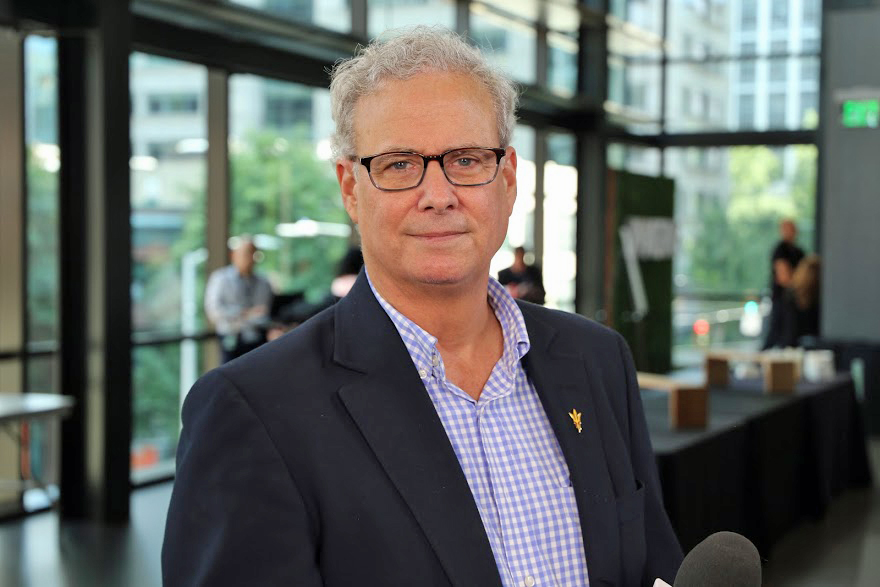
“It’s not necessarily about the technology; it’s [about] how the technology can point and draw a direct line between what the data says and how we create an intervention with students,” said Lou Pugliese (pictured), senior innovation fellow and managing director of the Technology Innovation Action Lab at Arizona State University.
Pugliese spoke with Jeff Frick (@JeffFrick), host of theCUBE, SiliconANGLE Media’s mobile livestreaming studio, during the AWS Imagine: A Better World event in Seattle, Washington. In addition to talking about how the Action Lab benefits students, they also discussed how research helps faculty improve.
In early studies, Pugliese explained that the Action Lab looked at how demographic populations succeed or don’t succeed. It found out that there are certain demographics of students that flourish in an online environment, while others don’t.
The Lab then researched the types of design features within a university course, such as the interactions between students, exposing learning objectives, getting students to really understand rubrics of measurement, or how content is being used and paced throughout the curriculum.
“[It’s] a lot of really detailed information that faculty needs to reorient and redesign their instruction, and so we can see a direct predictive value of improvement based on those changes,” Pugliese said.
Watch the complete video interview below, and be sure to check out more of SiliconANGLE’s and theCUBE’s coverage of the AWS Imagine: A Better World event.
… We’d like to tell you about our mission and how you can help us fulfill it. SiliconANGLE Media Inc.’s business model is based on the intrinsic value of the content, not advertising. Unlike many online publications, we don’t have a paywall or run banner advertising, because we want to keep our journalism open, without influence or the need to chase traffic.The journalism, reporting and commentary on SiliconANGLE — along with live, unscripted video from our Silicon Valley studio and globe-trotting video teams at theCUBE — take a lot of hard work, time and money. Keeping the quality high requires the support of sponsors who are aligned with our vision of ad-free journalism content.
If you like the reporting, video interviews and other ad-free content here, please take a moment to check out a sample of the video content supported by our sponsors, tweet your support, and keep coming back to SiliconANGLE.






