 CLOUD
CLOUD
CLOUD
CLOUD







CLOUD

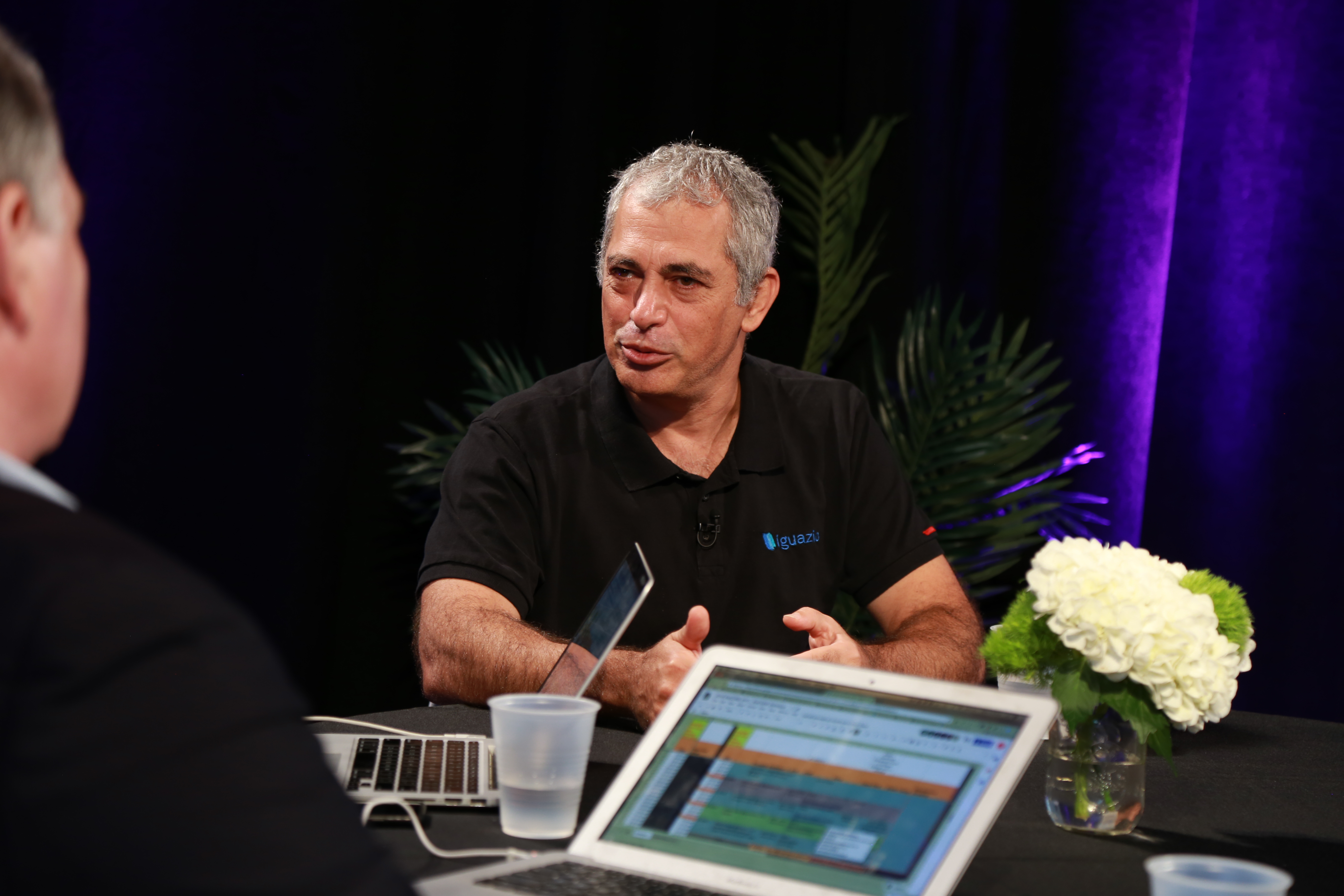
Is Hadoop dying? Will cloud solutions help mark the end of an era when companies relied on Hadoop for essential information technology and data operations like file systems and storage and server scheduling? Yaron Haviv (pictured), founder and chief technology officer of Iguazio Systems Ltd., believes that Hadoop may be outmaneuvered in the future with other solutions.
“I think cloud native is sort of starting to kill Hadoop,” Haviv said.
Haviv spoke with John Furrier (@furrier) and Peter Burris (@plburris), co-hosts of theCUBE, SiliconANGLE Media’s mobile livestreaming studio, during theCUBE NYC event in New York. They discussed the possible end of Hadoop and innovations like real-time Kubernetes. (* Disclosure below.)
As the cloud becomes a more and more viable option for things like file systems, file storage, and server scheduling, there are other options.
“I can use a database as a service as … a pretty efficient way of storing data,” Haviv said. “For scheduling, Kubernetes is a much more generic way of scheduling workloads. If I can take the traditional tools people are now evolving in and using, like Jupyter Notebooks, Spark, Tensorflow … with Kubernetes on top of a database as a service and some object store, I have a much easier stack to work with. And I could mobilize that, whether it’s in the cloud, on prem … on different vendors.”
Hadoop versus Kubernetes is a topline story, according to Haviv. There’s also a fundamental shift going on where, while Hadoop was about ranking pages in a batch form, real-time solutions are much more important as people apply artificial intelligence to business applications.
“So that’s why you’ll see more and more workloads mobilizing to things like serverless functions, into … pre-canned services, etc.,” he said. “And Kubernetes is playing a good role here, is providing the transport for migrating workloads across cloud providers.”
Iguazio is creating real-time Kubernetes solutions, and this will play hugely into the database world with time series databases. “What everyone wants to do is ingest huge amount of time series data,” Haviv stated. “So, essentially, what they need to do is something called multi-volume analysis of multiple time series to be able to extract some meaning.”
Watch the complete video interview below, and be sure to check out more of SiliconANGLE’s and theCUBE’s coverage of theCUBE NYC event. (* Disclosure: Iguazio sponsored this segment of theCUBE. Neither Iguazio nor other sponsors have editorial control over content on theCUBE or SiliconANGLE.)
Support our mission to keep content open and free by engaging with theCUBE community. Join theCUBE’s Alumni Trust Network, where technology leaders connect, share intelligence and create opportunities.
Founded by tech visionaries John Furrier and Dave Vellante, SiliconANGLE Media has built a dynamic ecosystem of industry-leading digital media brands that reach 15+ million elite tech professionals. Our new proprietary theCUBE AI Video Cloud is breaking ground in audience interaction, leveraging theCUBEai.com neural network to help technology companies make data-driven decisions and stay at the forefront of industry conversations.





