 INFRA
INFRA
INFRA
INFRA







INFRA

Think getting accurate big-data analytics insights for a retail business is a big hassle? Try solving some of the planet’s most menacing challenges, such as marine-life preservation and global warming. The answer is: a monster of a supercomputer that requires two-way collaboration between scientists and researchers and the makers of the necessary hardware and software.
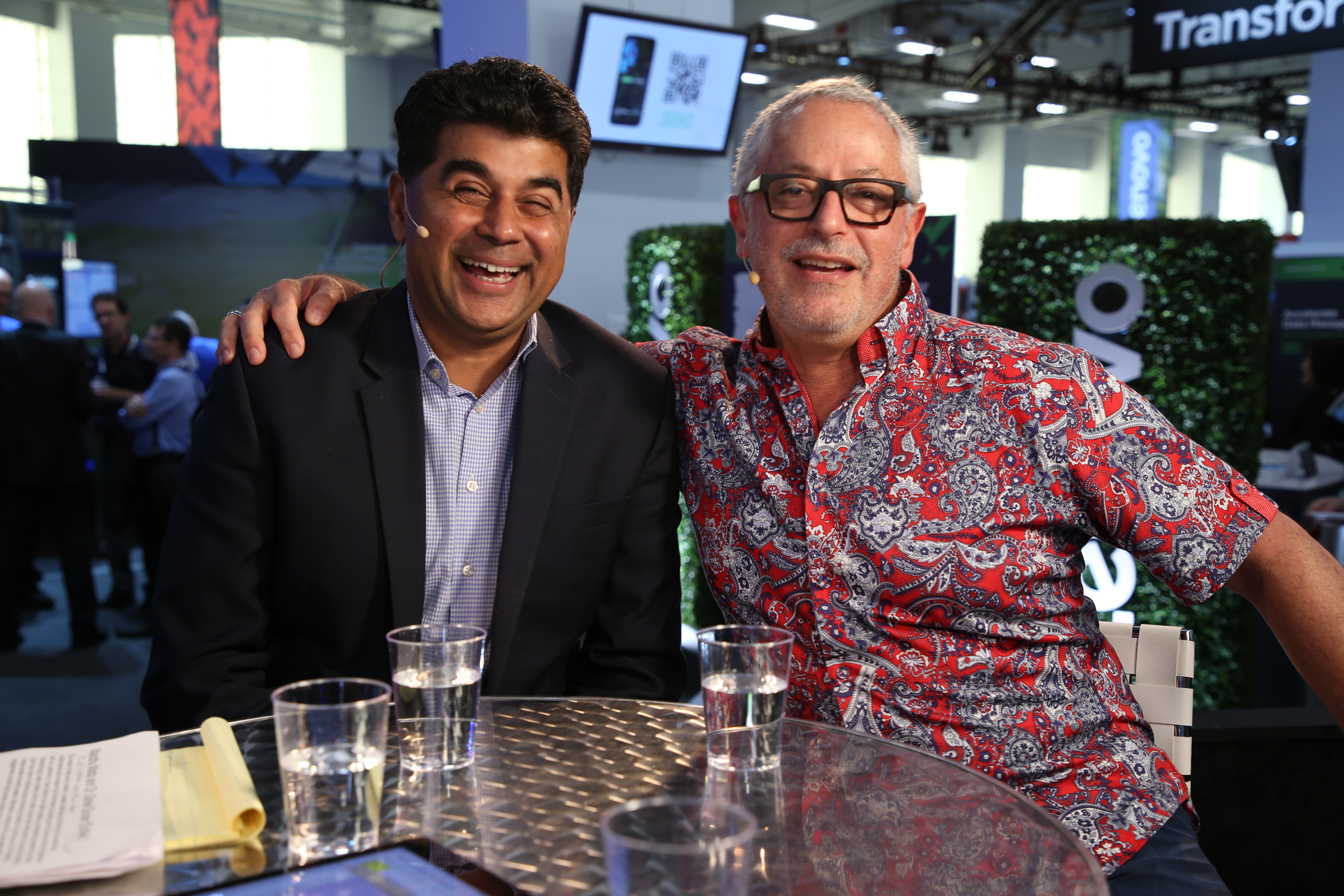
Lenovo Group Ltd is now the number one supercomputer provider in the world, according to Madhu Matta (pictured, left), vice president and general manager of high-performance computing and artificial intelligence at Lenovo. His teams work with academics to support massive data-crunching initiatives.
“It’s not a segment or a division,” he said. “I see high-performance computing as a practice. And within any practice, it’s many pieces that come together. You have a conductor, you have the orchestra, but at the end of the day, the delivery of that many systems is the concept. That’s the way to look at this.”
Matta and Dr. Daniel Gruner (pictured, right), chief technology officer of the SciNet High Performance Computing Consortium, spoke with Stu Miniman (@stu) and Rebecca Knight (@knightrm), co-hosts of theCUBE, SiliconANGLE Media’s mobile livestreaming studio, during the Lenovo Transform 2.0 event in NYC. They discussed the work required to build supercomputers for intense scientific research. (* Disclosure below.)
The University of Toronto and its associated research hospitals use SciNet’s supercomputing resources in their research. It runs the largest supercomputer in Canada, according to Gruner. The team that runs SciNet are scientists who turned to computers because they did the best job of answering certain scientific queries of massive scale, such as ocean-circulation calculations.
“We really are about helping the researchers do their research,” Gruner said.
Three distinct teams within Lenovo work with end users to tune supercomputer hardware and software for their specific needs. One is dedicated to benchmarking; they look at the app researchers will run, and they tune the performance of the cluster accordingly. Another team includes solution architects that work with the benchmarking team “to say, ‘Against this application, let’s build … the biggest, baddest, best-performing solution for that particular application,'” Gruner explained. A third team goes on-site to deploy, manage and install the supercomputer.
Lenovo developed its own open-source software for its supercomputers and a special water-cooling system, branded Neptune, to cool them.
Watch the complete video interview below, and be sure to check out more of SiliconANGLE’s and theCUBE’s coverage of the Lenovo Transform 2.0 event. (* Disclosure: TheCUBE is a paid media partner for Lenovo Transform 2.0. Neither Lenovo Group Ltd, the event sponsor, nor other sponsors have editorial control over content on theCUBE or SiliconANGLE.)
Support our mission to keep content open and free by engaging with theCUBE community. Join theCUBE’s Alumni Trust Network, where technology leaders connect, share intelligence and create opportunities.
Founded by tech visionaries John Furrier and Dave Vellante, SiliconANGLE Media has built a dynamic ecosystem of industry-leading digital media brands that reach 15+ million elite tech professionals. Our new proprietary theCUBE AI Video Cloud is breaking ground in audience interaction, leveraging theCUBEai.com neural network to help technology companies make data-driven decisions and stay at the forefront of industry conversations.





