



 APPS
APPS
APPS
APPS
APPS

Google LLC has brought out a couple of new features in Google Maps that might help deal with the stress of being stuck in gridlocked traffic.
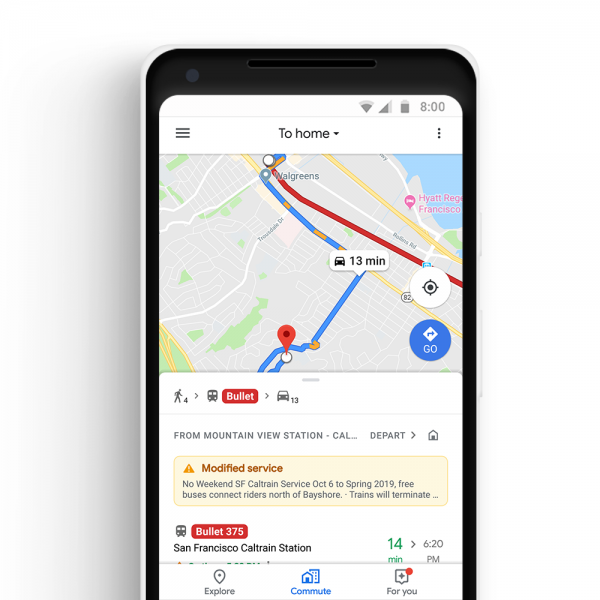
Announced Monday, the new “Commute” tab is tailored to a person’s daily drive, bus ride or train ride to and from the workplace. Once Maps knows the details of your journey, you can hit the tab and be told if today’s journey will be as normal or if something such as an accident is holding up traffic. If so, alternative routes can be offered.
Whether you’re diving, cycling or catching a bus, you can hit the tab before leaving the house and then decide if you should choose a different route that day. If you want to take the same route, problematic that day, you’ll be told how much extra time you’ll need to get to your destination.
Since all this functions in real time, people driving cars can be informed if something is happening en route, such as unforeseen heavy traffic. If you’re taking the bus or train, you’ll be told where that vehicle is and its expected time of arrival.
In Sydney, at least, people can see how full their bus or train is, letting them know if they’ll get a decent seat. Google hopes to offer this feature to people in other cities soon.
Lastly, to ease the burden of commuting further, Google will now let you control music apps such as Spotify, Apple Music or Google Play music while you’re in Maps. It’s possibly a small change, but certainly useful given that fiddling about with apps while you’re navigating is never a good idea. People using Spotify on Android will get more control to browse through songs, albums, podcasts and playlists.
The updates will appear on iPhone and Android this week, first in 80 regions around the world but later covering more regions. There will be small differences between iOS and Android.
… We’d like to tell you about our mission and how you can help us fulfill it. SiliconANGLE Media Inc.’s business model is based on the intrinsic value of the content, not advertising. Unlike many online publications, we don’t have a paywall or run banner advertising, because we want to keep our journalism open, without influence or the need to chase traffic.The journalism, reporting and commentary on SiliconANGLE — along with live, unscripted video from our Silicon Valley studio and globe-trotting video teams at theCUBE — take a lot of hard work, time and money. Keeping the quality high requires the support of sponsors who are aligned with our vision of ad-free journalism content.
If you like the reporting, video interviews and other ad-free content here, please take a moment to check out a sample of the video content supported by our sponsors, tweet your support, and keep coming back to SiliconANGLE.






