



 POLICY
POLICY
POLICY
POLICY

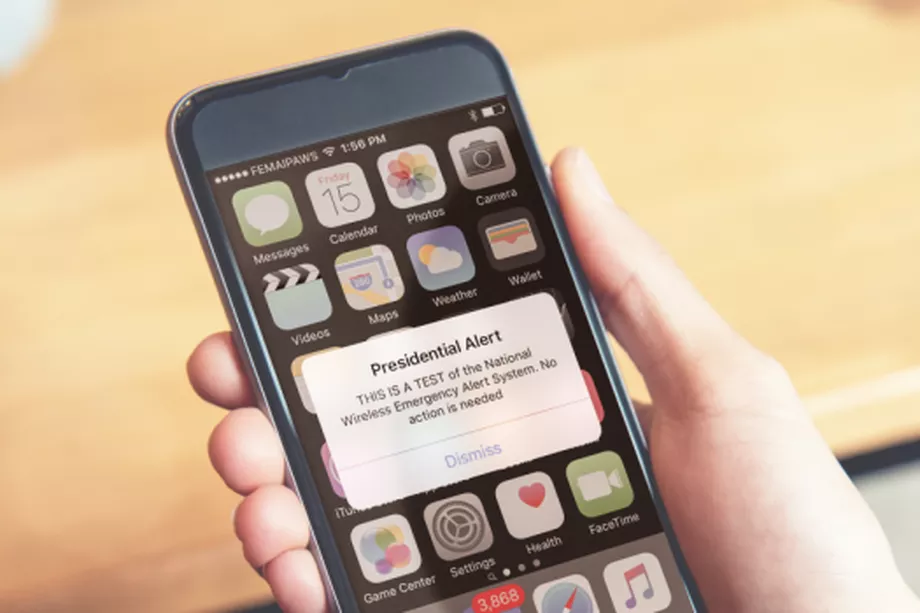
Millions of Americans on Wednesday received what may have looked like a text message from U.S. President Donald Trump.
The text was sent out at 2:18 p.m. EDT to test the Integrated Public Alert and Warning System, a joint operation led by FEMA and the Federal Communications Commission.
A FEMA official told CNN that the system is designed to let people know if a “coordinated attack on our major cities across the country” is taking place or people face “some other type of public peril that is ongoing in the country at the time.”
Such tests have been done before via television or radio, but this was the first time cellphones were used to spread the word through what is called a Wireless Emergency Alert. While a surprise to some, the message read, “THIS IS A TEST of the National Wireless Emergency Alert System. No action is needed.”
It’s not known how many people actually got the alert on their phones. On its website, FEMA wrote, “During this time, WEA-compatible wireless phones that are switched on, within range of an active cell tower, and whose wireless provider participates in WEA, should be capable of receiving the test message. Wireless phones should receive the message only once.”
FEMA also said that the text, even though called a Presidential Alert, didn’t involve Donald Trump typing it out on his phone and pressing send. “You would not have a situation where any sitting president would wake up one morning and attempt to send a particular message,” said FEMA.
If an emergency were to happen, say a weather emergency or an imminent strike by a rogue meteor, several federal agencies would get in touch with the White House and select one of a few prewritten messages to be sent out to the public. People cannot opt out from receiving the alert, unless of course their phone is not switched on.
Such testing has been mandated by law since 2015 and tests must be done every three years. Testing was first planned for September this year, but because of Hurricane Florence it was delayed lest people in some parts of the U.S. think it was the real thing.
… We’d like to tell you about our mission and how you can help us fulfill it. SiliconANGLE Media Inc.’s business model is based on the intrinsic value of the content, not advertising. Unlike many online publications, we don’t have a paywall or run banner advertising, because we want to keep our journalism open, without influence or the need to chase traffic.The journalism, reporting and commentary on SiliconANGLE — along with live, unscripted video from our Silicon Valley studio and globe-trotting video teams at theCUBE — take a lot of hard work, time and money. Keeping the quality high requires the support of sponsors who are aligned with our vision of ad-free journalism content.
If you like the reporting, video interviews and other ad-free content here, please take a moment to check out a sample of the video content supported by our sponsors, tweet your support, and keep coming back to SiliconANGLE.






